A startup can put another country on its pitch deck in seconds. Finding the person who can help it sell there is a different undertaking. A map supplies a border, a population and a capital city. It does not supply a willing customer. Bridge Ventures has organized its investment proposition around the distance between those two things: identifying a market and becoming useful inside it.
- Bridge connects U.S. startups with family enterprises in emerging markets.
- Its offer combines investment, regional partnerships and expansion support.
- It advertises five AI agent roles, with human judgment still central.
The missing person in the expansion plan
There is an appealingly concrete idea underneath the language of global innovation. A founder needs somebody who knows what happens after the introductory meeting. Who can arrange a trial? Who understands the purchasing process? Who will answer when a delivery problem appears? These questions make an expansion plan smaller, more awkward and considerably more useful. They also explain why the identity of a local partner deserves attention before the launch announcement.
Bridge describes itself as an early-stage investor linking American innovation with established family enterprises abroad. That places it at an intersection: venture investing, business development and international expansion. The proposed advantage is the combination. A founder evaluating the firm should therefore examine the regional relationship with the same care as the investment terms. The money and the route to market need to make sense together.
Two sides of the same introduction
The firm's pairing has two constituencies. Startups seek access to markets; family enterprises seek a connection to innovation. An introduction becomes commercially interesting when each side can name something it needs from the other. A prestigious surname alone cannot establish that fit. Neither can an impressive product demonstration. The practical question is whether the two organizations can do something useful together that each would struggle to do alone.
This also helps explain Bridge's place among alternatives. A founder could separately approach a venture fund, an expansion adviser and a regional business partner. Bridge proposes bringing those functions into one relationship. The sensible comparison is consequently about responsibilities: who evaluates the opportunity, who contributes capital, and who helps move the commercial work forward? A coordinated offer is valuable only to the extent that those responsibilities stay clear.
Five jobs for the machines
Bridge advertises AI agents for deal sourcing, portfolio intelligence, market entry, partnerships and investor relations. In plain English: finding opportunities, following companies, researching markets, identifying partners and informing investors. These are the firm's stated capabilities. The five-part division is useful because it makes an expansive AI promise easier to interrogate. Each role should produce something a person can inspect, question and use.
“They don't replace judgment - they multiply it.”Bridge Ventures, on its AI agents
Consider a market brief. A productive review would ask when the underlying information was checked, which assumptions affect the conclusion and who owns the next decision. A partner shortlist needs a different examination: commercial relevance, willingness to participate and a credible introduction. Treating both outputs as finished answers would miss the point. Their practical value lies in helping an operator decide what deserves attention next.
The distinction matters for both audiences Bridge addresses. Founders need research they can turn into action; investors need information they can use to assess a company. More material is not automatically more clarity. The revealing test is whether a briefing changes a decision, catches a mistaken assumption or narrows the next piece of work. That is a useful standard for any AI-assisted investment service.
A partner who has built before
The website names Hisham El Farouki and Jawad Nabulsi as partners. Nabulsi's public record includes co-founding Egypt's Nebny Foundation, alongside education at Harvard Kennedy School and Stanford's business school. His earlier work adds a human dimension to a firm concerned with connecting institutions across borders. It is a separate history, with its own problems and achievements.
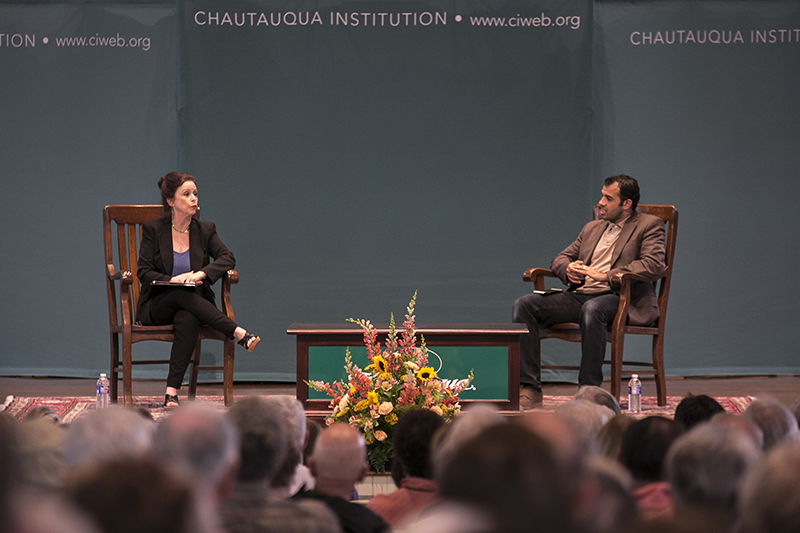
In Egypt, Nebny's work evolved from connecting injured protesters with medical help to community development. A planned neighborhood improvement effort encountered deeper problems involving education, health and employment. That earlier experience offers an instructive parallel: the problem visible at the beginning may not be the problem that determines the outcome. For a company entering a country, discovering the actual constraint is work worth doing before committing to a grand plan.
The right to stay in the room
Bridge emphasizes pro-rata rights in its investment approach. These generally allow an investor to participate in later financing to maintain its ownership percentage. Exercising them requires additional capital. They connect the initial investment conversation to a possible longer relationship, without making future financing automatic. Founders should understand the distinction when considering how an investor might support expansion over several rounds.
The cost conversation should be equally specific. Ask what investment is proposed, what ownership it purchases, which operating support accompanies it and which expenses the company must budget separately. Research, local execution and follow-on funding are different commitments. Putting them on separate lines makes the offer easier to evaluate and makes disagreements easier to catch while they are still inexpensive to resolve.
Make the introduction earn its keep
The practical lesson to borrow from Bridge's thesis is to design the first collaboration before celebrating the partnership. An editorial checklist: choose one customer problem, identify the partner's contribution, assign an owner on each side and agree on the evidence that would justify continuing. That turns “help us expand” into a proposition somebody can accept, price and test.
A founder preparing for that conversation could bring a one-page brief rather than another expansive slide deck. Name the intended customer, the evidence of demand, the obstacle a local partner would remove and the resources available for a first trial. Add a decision date. For the family enterprise, make the reciprocal benefit just as explicit. The result is a more demanding introduction, but also a more honest one. Both sides can see what they are being asked to contribute, and both can decide whether the proposed experiment deserves their time before a larger commitment takes shape.
This approach is most persuasive when a startup actually needs a regional operating relationship and has the capacity to act on it. A business still searching for a repeatable customer problem may gain little from another geography. A partner without a clear commercial reason to participate may offer little beyond a meeting. Bridge's proposition invites founders to be precise about both sides. The first useful door opens onto work that somebody has agreed to do.