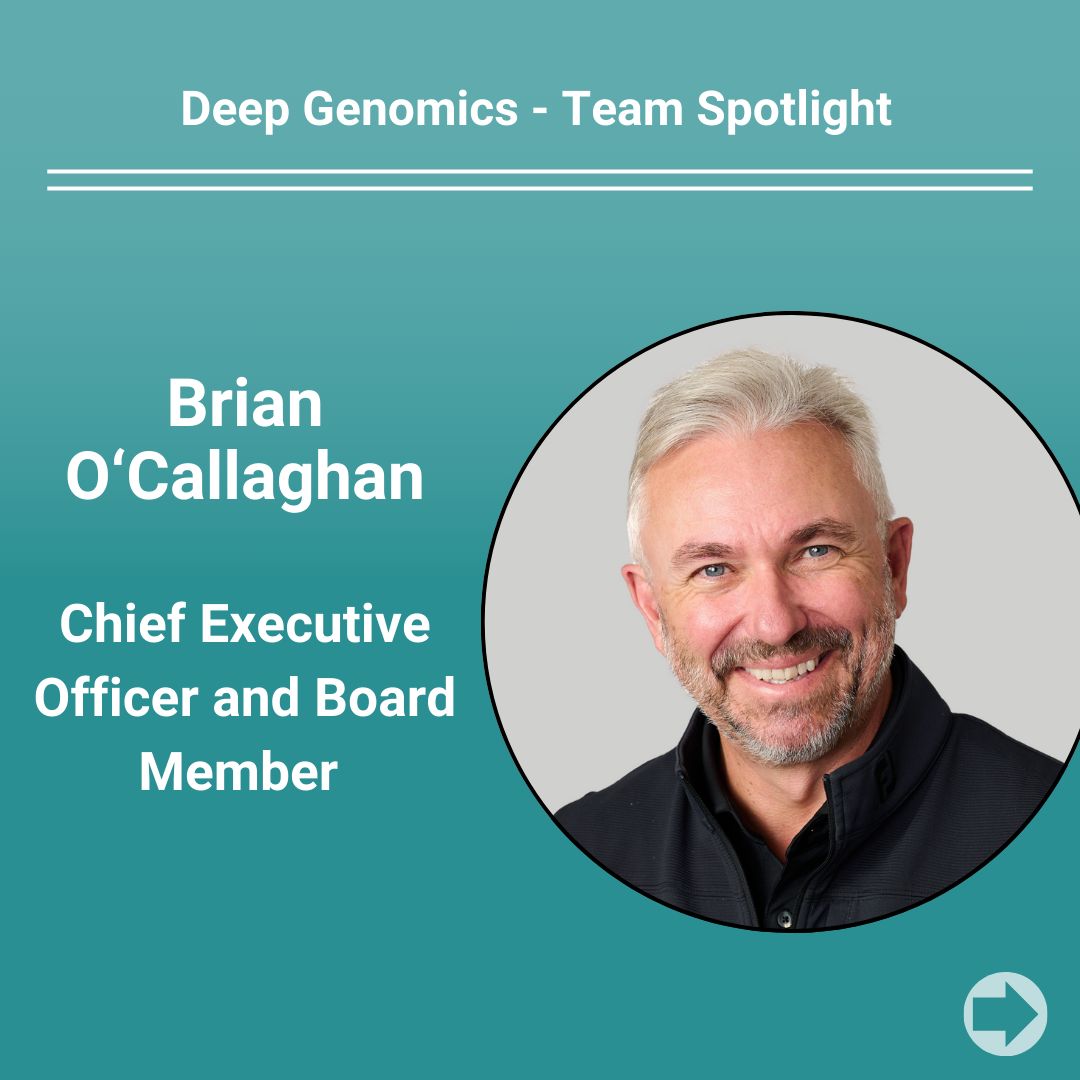
Brian O’Callaghan has a wonderfully unsentimental test for a company: does it matter if you come to work? He developed the question by contrast. In the first act of his career, which began in 1990, he worked inside large pharmaceutical groups. They taught him scale, process and the stately choreography by which a compound becomes a product. They also taught him that a giant institution can keep breathing when one executive is absent.
Biotech felt different. Its companies were smaller, their cash clocks louder, their portfolios often concentrated in one or two programs. An ordinary Tuesday could alter the company. “In a biotech company, it truly matters that everyone shows up every day,” O’Callaghan once said. He was explaining why he crossed from big pharma into a succession of smaller businesses, but he was also offering a compact theory of management. Presence is not attendance. It is consequence.
That theory now has an unusual laboratory. Since September 2023, O’Callaghan has been chief executive and a board member at Deep Genomics, a company built at the intersection of machine learning and RNA biology. Its scientists make models that read biological sequences, predict regulatory behavior and help design therapeutic candidates. The models deal in probabilities across vast datasets. O’Callaghan deals in the less tidy variables around them: people, capital, partnerships and time.
“In a biotech company, it truly matters that everyone shows up every day and always performs to the best of their abilities.”Brian O’Callaghan on why smaller companies appealed to him
First, learn the machine
O’Callaghan describes his professional life in two phases. The first ran through Bayer, Pfizer, Merck Serono, Novartis and the contract-research company Covance. He worked across sales, marketing, business development and general management, and across therapeutic areas broad enough to make specialization seem almost impolite. In his telling, those years taught him how to do the job right.
This was the age of large product launches and sturdy departmental walls. A global drug company contained immense expertise, but individuals usually occupied narrow ground. O’Callaghan learned the system from inside, including what a product needs long after a scientific idea has proved interesting: regulatory preparation, market knowledge, commercial planning and a patient tolerance for complexity.
By 2000 he had moved to Zug, Switzerland, where he co-founded BioPartners and served as president and CEO. Life supplied some cheerful administrative evidence of commitment. He built a house, his second child was born there, and he obtained both a Swiss driving licence and a Swiss boating licence. The last qualification remains a pleasing line on an otherwise stern résumé. There are executives who claim to navigate uncertainty. O’Callaghan can, at minimum, navigate Lake Zug legally.
Then, choose the smaller room
After BioPartners came a series of roles in which the stakes were close enough to touch. At Covance, O’Callaghan managed business units. In 2007, NPS Pharmaceuticals hired him as chief commercial officer, responsible for marketing, business development and late-stage commercial planning. The following year he took the top job at Sangart. Acucela, Petra Pharma and ObsEva followed.
The pattern is more revealing than the logos. Again and again, O’Callaghan entered companies facing a transition: from a founding idea toward a product organization, from private ambition toward public-market scrutiny, or from clinical development toward commercialization. He has led private and public businesses, raised money, worked through restructurings and negotiated partnerships. Much of a biotech CEO’s craft lies here, in deciding what the company must become before the balance sheet decides for you.
He speaks often about “optionality,” a word that can sound like consultant varnish until the cash runway shortens. To O’Callaghan, it means arranging partnerships, financing and commercial routes early enough that a company still has choices. Optionality is freedom purchased in advance. The best moment to build it is usually before anybody thinks it is urgent.
Large-pharma roles build experience in launches, markets and global organizations.
Co-founds and leads BioPartners in Switzerland.
Moves through NPS, Sangart, Acucela and Petra Pharma in commercial and CEO posts.
Leads Swiss biotech ObsEva from a base in the United States.
Joins Deep Genomics as CEO and board member.
A founder, an operator and a handoff
Deep Genomics did not bring in O’Callaghan because its science had run out of imagination. It brought him in because imagination was no longer the only requirement. Founder Brendan Frey moved from the chief executive position to become chief innovation officer, remaining on the board and close to the technology. O’Callaghan took responsibility for the company around it.
The arrangement is a useful rebuke to the cult of the all-purpose founder. A scientist who can build a new model need not also be the person best suited to build a late-stage company. Nor must the arrival of an operator exile the inventor. Deep Genomics split the problem: Frey would keep extending what the technology could see; O’Callaghan would make sure the organization knew what to do with the view.
The translation job
That middle box is O’Callaghan’s territory. It is easy to underrate because it lacks the cinematic clarity of an algorithm discovering something unexpected. Yet drug development is full of promising discoveries that could not survive their organizations. Translation requires an institution capable of repeating good decisions across years.
Numbers large enough to hide behind
Deep Genomics’ flagship model, BigRNA, has 1.8 billion tunable parameters and was trained on more than a trillion genomic signals. These are impressive numbers, and also dangerous ones. Large numbers can give a young technology the appearance of inevitability. Drug development offers no such courtesy. A model can narrow a search or propose a candidate; experiments still have to challenge its predictions, and a company still has to decide which results deserve years of work.
During O’Callaghan’s tenure, Deep Genomics has moved from presenting one flagship foundation model toward describing a coordinated platform. DeepADAR addresses RNA editing. REPRESS predicts microRNA binding and RNA degradation. The names are technical; the strategic idea is plain. A single model may solve a task. A platform of models can address different parts of a research problem and create more reasons for partners to engage.
The company has also changed physically. It opened a lab and office in Cambridge, Massachusetts, expanded its Toronto headquarters and hired leaders in technology, science, machine learning, business development and platform biology. Those decisions are a corporate diagram made concrete. Toronto connects the company to a deep AI and genomics ecosystem. Cambridge puts it beside a dense concentration of biotechnology talent and potential partners. O’Callaghan’s career has always been geographic; his company now is too.
Geography is more than scenery in his biography. O’Callaghan has lived and worked in at least five countries, managed Swiss companies while based in the United States and spent long stretches travelling between a home coast and a company coast. The experience gave him a feel for the small frictions that international businesses often mistake for footnotes: different capital markets, regulatory habits, working cultures and definitions of urgency. When he joined ObsEva during pandemic travel restrictions, he initially led a Geneva-based team without meeting its members face to face. It was an extreme version of a familiar assignment - learning a company from a distance, then creating enough common language for people to make decisions together.
Deep Genomics presents a related problem even when everybody occupies the same room. A machine-learning researcher and a drug-development executive may use the word “validation” differently. A model can improve quickly while a laboratory experiment keeps its own calendar. The CEO does not resolve that tension by choosing one discipline over the other. He builds a cadence in which each can challenge the other without bringing the work to a halt.
The value of the visible contribution
O’Callaghan’s public manner is notably collegial. When he received a Gold Stevie Award as Biotech Executive of the Year for 2025, he redirected the compliment toward the multidisciplinary team. Such gestures are standard leadership etiquette. In his case, though, the emphasis is consistent with the reason he says he chose biotech in the first place. He likes organizations where individual work can be seen.
Visibility creates pressure, but it also creates meaning. At a small company, the molecular biologist, machine-learning engineer and business-development lead can understand how their choices touch the same program. The chief executive’s task is to keep those people from becoming adjacent tribes. Deep Genomics describes itself through the integration of AI and biology. The harder integration is always human.
“Ultimately, it’s all about creating optionality.”Brian O’Callaghan on corporate strategy
There is no tidy ending available. Foundation models are still earning their place in pharmaceutical research, and a candidate proposed with AI must travel the same long road as any other. O’Callaghan has not promised to abolish that difficulty. His assignment is more credible and, in its way, more demanding: build a company sturdy enough to learn whether its technology works.
That brings us back to showing up. In O’Callaghan’s telling, biotech is compelling because nobody is ornamental. The observation carries a warning for any company dazzled by its own machinery. A model may contain billions of parameters, but it cannot accept responsibility. People must still arrive, argue, choose and try again tomorrow.