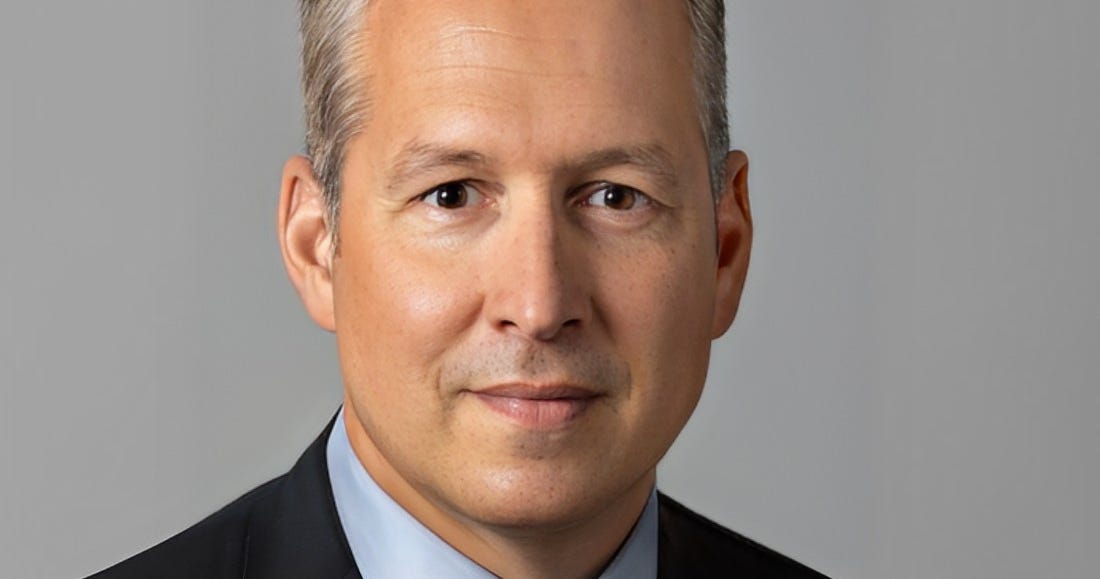
The first management job Jim Robinson ever wanted was a job nobody else seemed to want. He had been doing well as a pharmaceutical sales representative when a newly created division needed a sales manager. The upside was uncertain. Robinson was the only person who interviewed. He got the post, hired a district and expected to teach. A year later, he understood that the education had mostly run the other way.
The representatives showed him fresh ways to read an opportunity. They demonstrated how collaboration could turn confidence into momentum. Above all, they taught him a lesson he would keep repeating through three decades of increasingly large titles: encouragement is not a courtesy added to management. It is a form of fuel.
This is an unexpectedly tidy origin story for the president and chief executive of A2 Biotherapeutics, a company whose science is built around a more complicated form of instruction. A2 Bio engineers T cells with two receptors. One tells the cell to act when it encounters a target on a tumor. The other can tell it to stop when it recognizes a marker on normal tissue. The system, called Tmod, behaves like a biological logic gate. An immune cell receives two signals and makes one consequential decision.
The Tmod idea, simplified
The operator's routeFrom the bag to the boardroom
Robinson did not arrive through the laboratory. He graduated from DePaul University in 1992 with a degree in marketing and began at Schering-Plough. He moved through sales and commercial leadership, then spent more than 12 years at Astellas Pharma. By the time he served as president of the Americas, he held responsibility for a business generating roughly $4 billion in revenue.
The scale kept changing. At Alkermes, where he was president and chief operating officer from 2018 to 2019, operations generated more than $1 billion a year. After a year as president and COO of Paragon Biosciences, he became CEO of Urovant Sciences in March 2020, just as ordinary office life disappeared. Urovant still had to build a national commercial organization, secure approval for its first medicine and take that medicine to market.
The launch happened in April 2021. According to the account that accompanied Robinson's 2023 PM360 CEO of the Year award, first-year sales finished 35 percent above goal, second-year sales tripled and market share more than doubled. Urovant itself tripled its staff. Its parent acquired the remaining shares in 2021, and the business was ultimately absorbed into Sumitomo Pharma America in 2023.
Those are commercial facts, but Robinson talks about the period in the language of culture. Values, he has argued, have to operate as verbs. Integrity must survive pressure. Employees should be able to offer ideas across rank and function. When the corporate phrase “stay in your lane” appears, Robinson sees a warning light. His own rule asks people to work two levels up and two levels down, stretching toward both strategy and practical help.
“The greatest form of motivation is encouragement.”Jim Robinson, recalling his first sales-management role
A moving playThe rugby lesson
There is a sporting picture behind that rule. Robinson played baseball and football in school, then rugby in college and in an adult league through his twenties. Rugby is a useful school for anyone suspicious of fixed lanes. The play keeps moving. Support must arrive from changing angles. Coaching is immediate and mutual because the person carrying the ball can see only part of the field.
At one company, Robinson helped create a series of annual “Guiding Coalitions.” Employees at different levels met to identify obstacles and ideas that could accelerate the business, then carried those findings to the relevant leaders. Junior people sometimes found themselves asking senior vice presidents to reconsider how work was done. The first year brought skepticism. By the third, Robinson recalled, executives were inviting the groups in and asking for more. He connected six years of the coalitions with six years of double-digit compound annual growth.
The story is neat enough to invite caution. A committee does not cause six years of growth by itself, and an encouraging manager cannot repeal physics, regulation or a disappointing clinical result. Robinson's point is more practical. Organizations contain information that hierarchy routinely muffles. A good operator builds a route for that information to travel.
April 2024Why A2 Bio, why now
When Robinson joined A2 Bio on April 1, 2024, he inherited neither a blank sheet nor a finished product. Founder and chief scientific officer Alexander Kamb and the company's researchers had already built the Tmod platform. Two programs were in clinical testing. Robinson's assignment was the middle passage that defeats many biotechnology companies: move an ingenious mechanism through trials, manufacturing, financing and, if the evidence holds, toward broader use.
He has described three attractions. First came oncology, the field that occupied much of his career and gave him a close view of what successful medicines can mean to patients and families. Second came the science, especially the attempt to direct an engineered T cell at a tumor without sending it after normal tissue. Third came the ensemble: a committed board, long-term investors and a team already experienced in oncology and cell therapy.
Nine months after his arrival, A2 Bio closed an $80 million Series C led by a syndicate that included The Column Group and Samsara BioCapital. The money was assigned to three clinical programs and further pipeline work. Financing was an enabling event, not proof of the platform. The more revealing sequence came afterward.
In 2025, A2 Bio reported an early complete response in an EVEREST-2 participant with non-small cell lung cancer. In 2026, the company advanced A2B543, a version of its autologous therapy equipped with a membrane-tethered IL-12 booster, from regulatory clearance to first-patient dosing and Fast Track designation. That September, it announced initial data from 10 patients in DENALI-1, its allogeneic program, including a reported complete response in metastatic anal cancer and a confirmed partial response in head and neck cancer.
The numbers are early and the studies remain in their first phases. Robinson's job is partly to preserve the distinction between a signal and an answer. Biotech has a tendency to celebrate the former in the vocabulary of the latter. A logic gate is an apt emblem for disciplined enthusiasm: receive the information, test it against another condition, then decide.
The next signalPersistence without theater
Robinson's interest now extends beyond the first solid-tumor programs. He has discussed applying Tmod to blood cancers and, over a longer horizon, developing in vivo cell therapies that might reach more patients and potentially serve autoimmune disease. The ambition is substantial. His public manner remains that of an operator checking the joints of the machine.
Details matter, he says. Leaders need to know the business backward and forward. Performance problems should be addressed quickly, not left to harden into custom. Talent attracts talent, but talented people still need authority to take sensible risks. Authenticity matters because employees are excellent readers of nonsense.
The stubbornness comes from home. Robinson once described his father, fondly, as Murphy from Murphy's Law: almost anything could go wrong around him. At the worst moment, however, his father would say, “Don't worry, Jim, we'll make it work.” The younger Robinson turned that refrain into a management posture. Expect trouble. Prepare for it. Learn from it. Do not confuse perseverance with pretending the obstacle is not there.
A biological logic gate asks for two compatible signals. Robinson's career offers its own pair: know the work, and support the people doing it.
It is tempting to imagine biotechnology as a parade of discoveries. In practice it is an immense relay. Scientists hand work to development teams, clinicians, manufacturers, regulators, funders and treatment centers. Every handoff can lose meaning or momentum. Robinson's particular usefulness is translation: he has carried a sales bag, run multibillion-dollar operations, built commercial teams, sat on public-company boards and now leads a platform company while its hypotheses meet patients.
The first management job taught him that leadership can begin with the humility to be instructed by the people one has been assigned to instruct. A2 Bio presents the adult version of that lesson. The science sends a signal. The clinic sends another. The organization must remain alert enough to hear both.