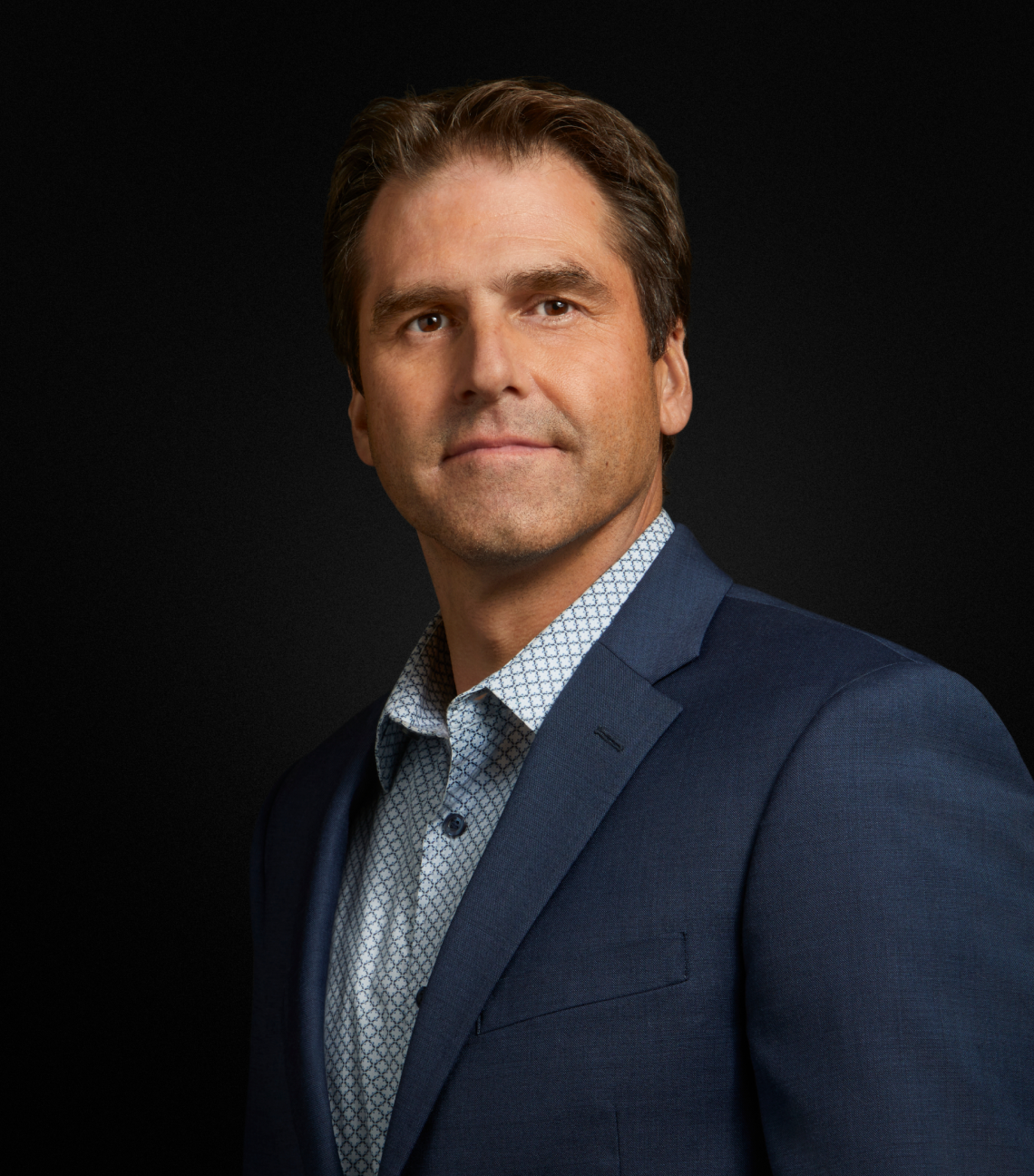
The wheel of the most audacious idea in surgery
On April 7, 2026, Sovato handed Brian Miller a company with a single, almost unreasonable premise: that a surgeon in one city should be able to operate on a patient in another. Not consult. Not supervise. Operate. Sovato calls itself the first and only platform built to let health systems deploy and scale remote robotic surgery, and Miller arrived as its Chief Executive at the exact moment the company shifted from "interesting idea" to "prove it."
The Santa Barbara company had just closed a $41 million Series B the previous November. Co-founder Cynthia Perazzo, who ran Sovato as CEO from 2022, stepped into the President role. Yulun Wang, the roboticist who founded Computer Motion and InTouch Health, remained executive chairman. Into that seat walked a man who had watched this exact technology take its first breath - and who happened to have written some of its earliest code.
Miller's pitch is not hype. It is pattern recognition. He has already lived through one technology going from laboratory curiosity to global standard of care. He thinks he is watching the second one begin.
I've seen this pattern before - a technology that works and a market that's ready.
A front-row seat to the first surgery across an ocean
In 2000, Miller joined a small California outfit called Computer Motion as a software engineer. It built surgical robots with names that sounded like Greek mythology: AESOP, an arm that held a laparoscope, and ZEUS, a full robotic surgical system. Miller wrote software for both.
Then, in 2001, he watched something that would quietly organize the rest of his working life. A surgeon in New York removed the gallbladder of a patient lying in an operating room in Strasbourg, France, using the ZEUS system and a dedicated fiber link across the Atlantic. They called it Operation Lindbergh, after the aviator who first flew that same route solo. It was the first transatlantic remote surgery ever performed.
Most people would file that away as a spectacular one-off. Miller filed it as a preview.
Eight titles, one company, no exit
When Intuitive Surgical acquired Computer Motion in 2003, Miller went with it. What followed was one of the more patient careers in medtech: 23 years inside a single company, climbing without ever leaving. He started as a control-systems analyst - about as far from a magazine cover as engineering gets - and kept going up.
Director of engineering for simulation and networking. Director of advanced development. Vice president of system engineering. Senior vice president and general manager of systems, imaging and digital. Executive vice president and Chief Digital Officer. Head of Digital and AI Strategy. Somewhere along the way he stopped being the person who built the thing and became the person who decided what the thing should be.
He also collected patents - the kind that read like a map of the problems remote surgery has to solve. Tele-robotic motion control. 3D telestration. Adaptive video streaming. Virtual-reality simulation for surgeon training. He was, in other words, working on how robots move, how their video travels, and how surgeons learn them, long before those became the load-bearing walls of a company like Sovato.
Why he thinks the timing is finally right
Miller's argument is deceptively simple. Robotic surgery, he points out, did not become normal overnight. It started as early innovation, viewed with suspicion, and then over two decades became a global standard of care. He believes remote surgery is on precisely the same curve, just earlier along it. A technology that works, meeting a market that is finally ready.
The prize he keeps naming is access. Roughly five billion people on the planet cannot reach safe, timely surgical care when they need it. A great surgeon can only be in one operating room at a time - unless the operating room stops mattering. Sovato's bet is that a network connecting sites, specialties and any robotic or device system can stretch the world's best surgeons across distances that used to be fatal.
The test is coming. Sovato plans to launch its first remote procedure programs with health-system partners in early 2027. Everything before that is preparation. Everything after is history, or it isn't.
Robotic surgery went from early innovation to global standard of care, and remote surgery and procedures is on the same trajectory.
He rejoined the mission he started on
Here is the detail that makes the whole arc snap into place. Yulun Wang, Sovato's executive chairman, is the man who founded Computer Motion - Miller's very first employer, the company where he wrote code for ZEUS and watched Operation Lindbergh. Miller did not stumble into remote surgery. He took a 23-year detour through Intuitive and came back to the same lineage, the same problem, and effectively the same founder's mission he started under in 2000.
Careers rarely close a loop this cleanly. Miller's did.
Two lines, one worldview
"I've seen this pattern before - a technology that works and a market that's ready."
"Robotic surgery went from early innovation to global standard of care, and remote surgery and procedures is on the same trajectory."
Where the toolkit came from
Iowa State University
BS, Electrical and Computer Engineering
Northwestern University
MS and PhD, Mechanical Engineering - haptic interfaces and robotics
Harvard Business School
Advanced Management Program
The through-line is touch. His doctoral work centered on haptics - force feedback, the science of how you feel resistance through a machine. It is exactly the sensation a surgeon needs when the tissue is 5,000 miles away and the only thing between them is a network.
Things that stick
His PhD was in haptics - the physics of feeling force through a machine, which is the entire sensory problem of operating at a distance.
He held patents on how robots move, how surgical video streams, and how surgeons train in VR before he ever held a CEO title.
He climbed through roughly eight distinct roles at Intuitive across 23 years without once leaving the company.
He gave a keynote at DeviceTalks Boston in May 2026 on whether surgical robotics will follow the trail Sovato is blazing.