The Operator's Operator
Sheri
Sheri
Rudberg
She spent a career writing the rules of big healthcare. Then she went and broke one of them.
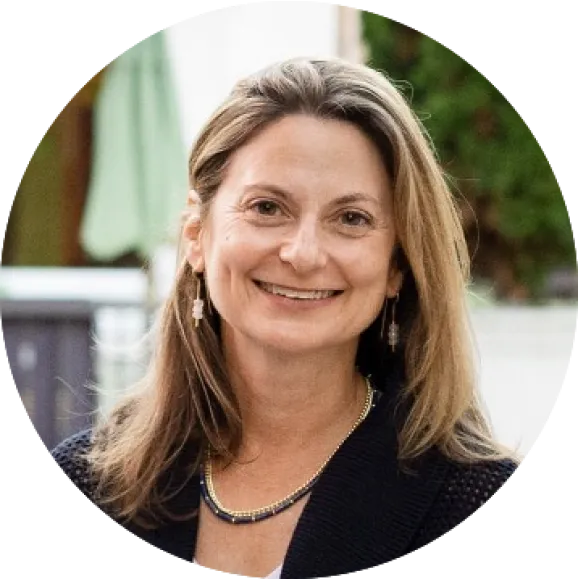
The face that decided the wait was unacceptable.
She spent a career writing the rules of big healthcare. Then she went and broke one of them.
A patient in her family needed a specialist. The calendar said months. That gap - the one between knowing you need care and actually getting it - is where Sheri Rudberg decided to build a company.
Rudberg is the co-founder and CEO of WovenX Health, a Chicago-based digital-health company aimed at one stubborn problem: getting people in front of a specialist before their condition gets worse. The fix is not another app patients download and forget. WovenX plants a specialty-trained virtual care team and an AI-native platform directly inside the practices and health systems that already exist.
The sequence is almost boringly practical. Insurance is verified. A patient is routed and assessed in minutes. AI agents flag the complicated cases so a physician's attention lands exactly where it should. The boring part is the point - it scales. By Rudberg's own count, WovenX is on track to reach roughly 100,000 patients.
WovenX started in gastroenterology, where the backlogs are notorious, and has since stretched into hepatology and urology. The pitch to a busy practice is blunt and a little contrarian: you don't need more software, you need throughput. WovenX promises to use the infrastructure already in the building - the same exam rooms, the same physicians - and simply move more people through it.
GI practices don't need more tools. They need results. We're delivering a model that works inside the system, not around it.
- Sheri Rudberg, CEO, WovenX HealthShe was a litigator first
Before she was a founder, Rudberg was a lawyer. She started as a litigation associate at Winston & Strawn LLP, then moved in-house at Baxter Healthcare as senior counsel for its integrated pharmacy business, with stints in ethics and compliance. The legal mind never really left - it's visible in how she frames WovenX, always circling back to the friction between payers, physicians, health systems, and regulators that has to be untangled before access actually improves.
Then she ran the business
At Hillrom, the medical-device maker, Rudberg climbed an unusual ladder. She was Deputy General Counsel. She ran global mergers-and-acquisitions strategy as VP of Business Development. And from 2015 to 2022, she was Vice President and General Manager for Canada, running a business worth roughly $100 million. Lawyer, dealmaker, then full P&L operator - it's a rare trajectory, and it explains a lot about why WovenX is built the way it is: as a business that has to pencil out for the provider, not just feel good in a pitch deck.
The only way to sustainably improve access is by partnering with specialist practices and health systems, optimizing clinical and staff capacity with seamlessly integrated solutions.
- Sheri RudbergThe company didn't always have its grown-up name. It launched as Telebelly Health - a name pointed cheerfully and unmistakably at the gut. As the model proved out beyond gastroenterology, the belly joke stopped fitting. In 2024 the company rebranded to WovenX Health, a name meant to signal the weave: clinical teams, technology, and existing practices stitched into one fabric. The rebrand came with a fuller product line - WovenX Virtual, On-Demand visits, Open Access scheduling software, and an Analytics layer.
The expansion was not cosmetic. Early adopters like Washington Gastroenterology and US Digestive Health signed on, and the company kept landing partnerships - including a deal with St. Charles Health System to transform GI access and free up capacity. The throughline in every announcement is the same word Rudberg keeps returning to: partnership. WovenX wins when the practice wins.
There is also a sharper edge to her advocacy. In 2025, Rudberg put her name to commentary on the gap in care facing midlife women - the patients who feel something is wrong but get waved off. Her argument is that ordinary telehealth, a video call with whoever's available, simply isn't built for specialty problems. What's needed, she says, is purpose-built: specialty-trained providers wired into intelligent workflows. It's the same thesis as the company, aimed at a specific human being who was told to wait.
Women know when something's off, but too often, no one listens.
- Sheri Rudberg, on the specialty-care gapMost health-tech founders fall into one of two camps: the clinician who knows medicine but not the business, or the technologist who knows software but not the patient. Rudberg is a third thing. She is the executive who ran the numbers, knew the legal machinery, and still decided the most interesting problem was a scheduling backlog that nobody had bothered to treat as a business.
She didn't build WovenX to disrupt doctors. She built it to make their day work better - more patients seen, physician time preserved, the access problem quietly converted into faster care and a healthier bottom line. That's an unglamorous mission. It's also, arguably, the kind that actually sticks. And she surrounded herself accordingly: her co-founders are a practicing gastroenterologist, Russ Arjal, MD, and a healthcare technologist, Nakort Valles. A lawyer, a doctor, and an engineer - the three sides of the problem, in the room.
The company is still early - seed-stage, a lean team, the unglamorous grind of signing one health system at a time. But the bet is clear-eyed. Specialty access is broken in a way everyone agrees on and almost nobody fixes. Rudberg, who has spent her whole career inside the machinery of healthcare, is betting she knows which gears to turn.
Figures drawn from WovenX Health communications and public profiles.
Profile compiled from public sources. Quotes drawn from WovenX Health communications, press releases, and published commentary.