Brian McNamara once moved down two levels to get closer to the work he wanted. At Procter & Gamble, after years in manufacturing, he became an assistant brand manager. It was a peculiar way to improve a career, at least by the usual office arithmetic. Two steps down rarely earns a congratulatory cake. Yet the decision supplies a useful opening to the story of Haleon’s founding chief executive: a willingness to become a beginner while already knowing quite a lot.
The direction mattered more than the rank. Manufacturing had taught him about making things; marketing would bring him closer to the decisions that made a business grow. That move gives his subsequent career a particular shape. Long before he became responsible for an independent public company, he had crossed a boundary within one. He exchanged the authority that comes from experience for the inconvenience of having something new to learn.
Today, the company attached to his name is Haleon. Its independence dates to July 2022. His preparation stretches much further back, through P&G, Novartis, and GSK, across manufacturing, brands, regional operations, and global leadership. There are several familiar corporate names in that list. The more interesting story lies in the changes of perspective between them.
The demotion that opened a door
McNamara’s first academic language was electrical engineering. He earned his undergraduate degree at Union College in New York, then an MBA in finance at the University of Cincinnati. Those subjects offer two rather exacting ways to look at a business. One asks how a system works. The other asks what its workings cost, and what they produce. Neither guarantees that someone will choose your product from a shelf.
His P&G years added that third question. Across a 16-year tenure, he worked in product supply, brand marketing, and customer leadership. A corporate biography can make this sound like a well-planned rotation. The demotion makes it more human. Learning another discipline sometimes requires surrendering the reassuring position of being the person in the room who already knows the answer.
There is a practical value in that combination. Manufacturing decisions have consequences for availability and cost. Marketing decisions affect demand and the promises a company makes. Customer relationships bring those choices into commercial reality. A leader who has worked across them has more than one way to interrogate a promising plan. Can it be made? Will it sell? Can the organisation deliver it reliably?
The episode also complicates the tidy idea of a career ladder. A ladder gives you only two directions and rather little room to turn around. McNamara’s choice suggests a floor plan with connecting doors. The immediate title can become less impressive while the future job becomes more reachable. It is a useful distinction for anyone whose next opportunity comes with an awkward explanation at dinner.
Brands & customers
Global division
Independent company
A business assembled in chapters
He joined Novartis in 2004, initially leading its North American business. European and Americas responsibilities followed, along with leadership of its OTC division and membership of the executive committee. His work had expanded from the mechanics of individual functions to the difficult business of coordinating them across markets. Regional leadership adds an unavoidable question: which decisions should travel, and which should stay close to the people making the sale?
In 2015, the GSK and Novartis joint venture brought him into GSK as head of Europe and the Americas. He worked under Emma Walmsley, then succeeded her as chief executive of the consumer business in 2016. Later came the combination with Pfizer’s consumer business. By the time Haleon emerged, its chief executive had experience of companies coming together as well as a company preparing to stand apart.
That distinction matters. A merger announces that organisations now belong together. A demerger announces that one will operate on its own. Both leave an enormous amount of ordinary work to be settled: responsibilities, reporting lines, competing priorities, and decisions that cannot wait for everyone to become comfortable. The transaction has a date. The working relationships take longer to arrange.
McNamara became Haleon’s CEO designate in July 2021. His formal appointment followed on 23 May 2022. The company separated from GSK and entered the stock market that July. Those dates mark different stages of the same undertaking: choosing the leader, establishing the company, and placing its performance before investors. The founder’s title here describes the beginning of an independent organisation built from businesses with substantial histories.
There is an unusual continuity in that sequence. McNamara was already leading the underlying business before its public debut. He therefore brought knowledge of its operations into the new company, rather than arriving after the transaction to discover what he had inherited. At the same time, the listing gave outsiders a clearer way to judge the results. A business that had been part of a larger group now had to explain its own performance, choices, and prospects.
- July 2021Named CEO designate
- May 2022Appointed Haleon CEO
- July 2022Separation and listing
The shelf has the last word
There is a photograph of McNamara in Istanbul in March 2024, looking at a box in a store while colleagues gather around. Shelves fill the background. It is a wonderfully ordinary setting for someone whose working life also includes boardrooms and investor presentations. The chief marketing officer, Tamara Rogers, joined the visit, which included time with local colleagues and time in stores.
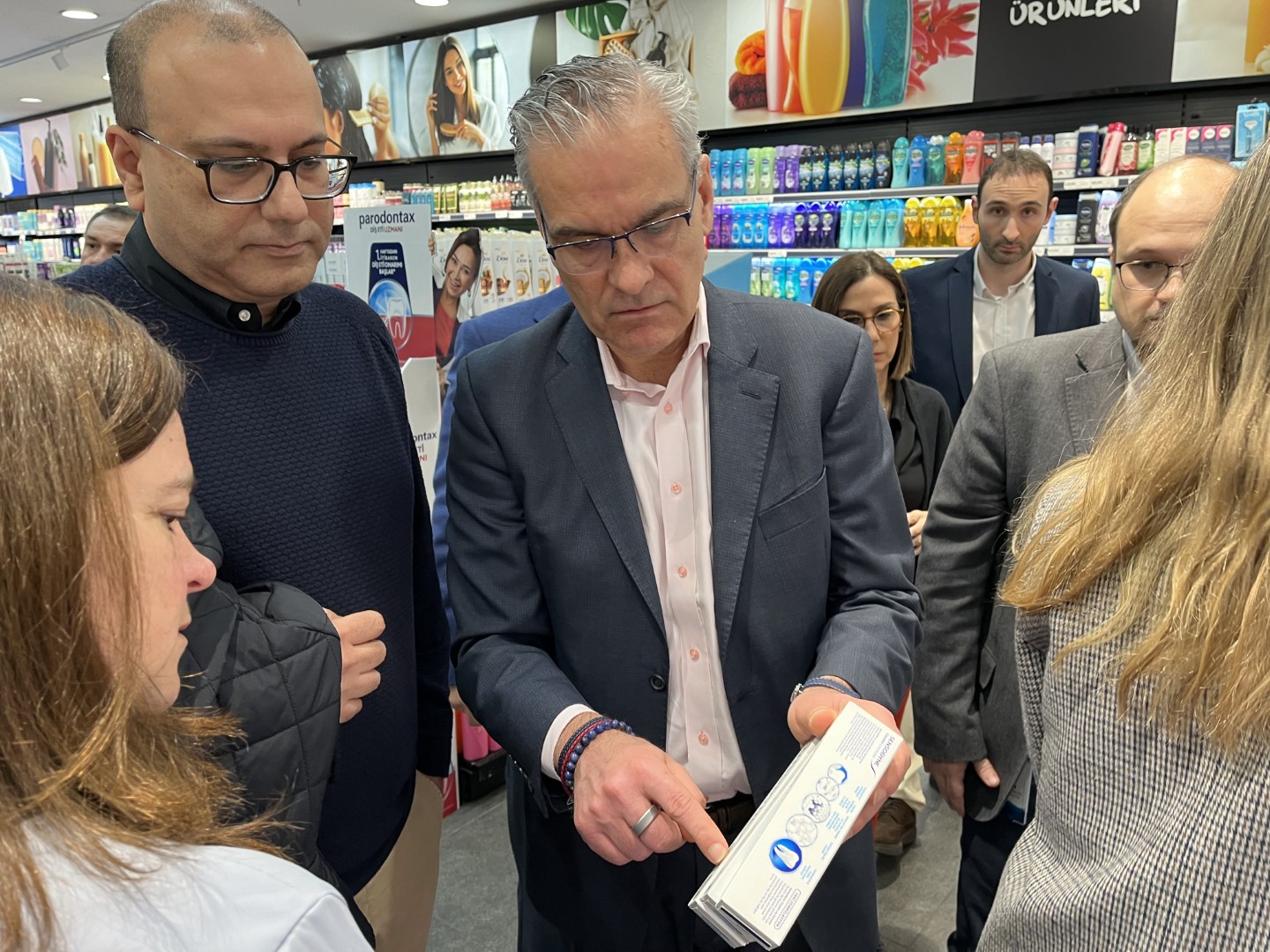
A shop has a useful habit of shrinking corporate abstractions. Market presence becomes space on a shelf. The brand proposition becomes a package someone has to notice and understand. Competition stands conveniently nearby. An executive can spend months discussing a business and still learn something by standing at the point where its plans meet somebody else’s shopping trip.
It would be excessive to make one visit carry an entire theory of management. Its value is smaller and more concrete. McNamara’s career has involved both producing goods and building demand for them. In the store, those responsibilities occupy the same few feet. The photograph gives a physical setting to a career that can otherwise dissolve into job titles.
There is also a difference between visiting a market and seeing only its meeting rooms. A local team has knowledge that can disappear in a global average: how people shop, what competitors are doing, what gets in the way. Giving that knowledge a place in an executive visit makes the conversation more specific. The shelf is rarely impressed by the elegance of an organisational chart.
The job after the bell
Running a division had prepared McNamara for a substantial business. Independence widened the assignment. In September 2026, he estimated that only about a fifth of his previous role was comparable with the standalone CEO job. Board relationships, capital allocation, and debt all took on a different significance. Knowing the business did not mean that every part of the new job was familiar.
He also described a workforce worn down by the sequence of integrations and separation. “The organization was quite tired,” he said. Over the following chapter, 13 of the 15 leadership-team positions changed. New executives arrived with experience at companies including P&G, Estée Lauder, Unilever, and L’Oréal. His stated ambition now includes reaching a billion more consumers.
“The organization was quite tired.”
Brian McNamara, September 2026
The observation is revealing because a company’s public milestones can conceal its internal calendar. Employees do the work before the announcement and continue after it. An integration finishes; preparation for another transaction starts. Successful delivery can leave the organisation with less energy for the next assignment. A chief executive has to account for the people who have already carried the last one.
Changing the leadership team then raises its own questions. New experience can broaden the discussion, while knowledge of the existing business remains valuable. The challenge is to turn appointments into better decisions. An organisation cannot live indefinitely inside the announcement of its next chapter. Eventually, the chapter needs a recognisable working day.
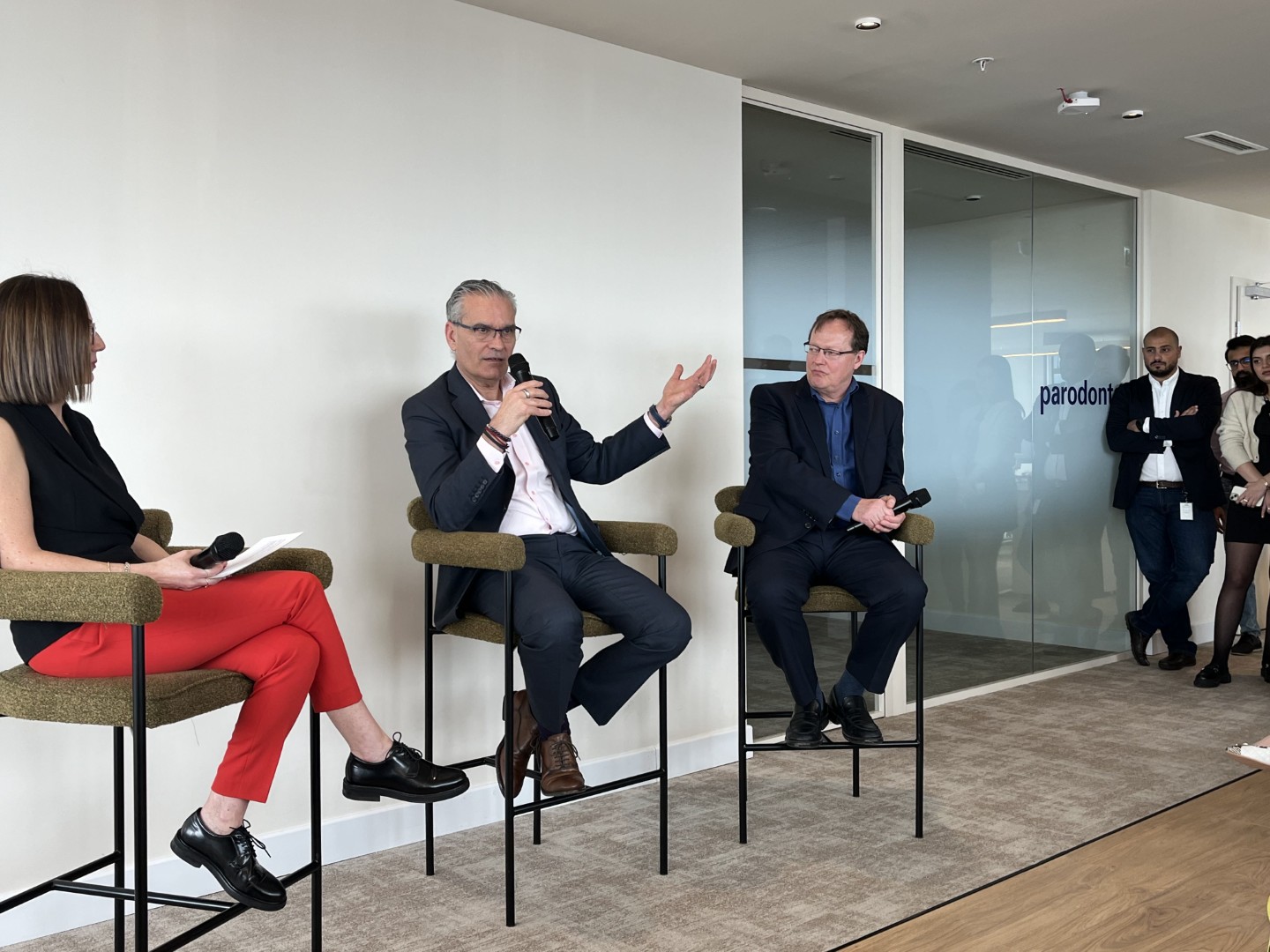
An engineer’s unfinished assignment
At Haleon’s May 2025 Capital Markets Day, McNamara and his colleagues introduced Win as One, organised around growth, productivity, and culture. The three subjects are closely connected. Growth creates demands on the organisation. Productivity determines how much room there is to invest. Culture influences whether people can resolve the inevitable disagreements without turning every decision into a small diplomatic summit.
The first-half 2026 results offer one dated view of that work. Haleon reported revenue of £5.602 billion, with organic revenue growth of 2.6%. Reported operating profit fell 2.6%, while adjusted operating profit increased 8.2% at constant currency. The difference deserves attention: restructuring costs affected the reported figure. A progress report becomes more useful when the reader can see what the headline leaves underneath.
Six months ended 30 June 2026. Company performance, not personal financial figures.
McNamara’s responsibilities also extend into the boardrooms of Mondelēz International and the Consumer Goods Forum. These are further settings in which the operating questions of consumer businesses get discussed. His base is London, and he has publicly defended the city as a practical place from which to run a global company. The emphasis is characteristically on doing the work.
The assistant brand manager and the founding CEO occupy very different positions. What connects them is the need to learn an unfamiliar job while bringing earlier experience to bear. Independence gave Haleon its own identity and McNamara a wider field of decisions. Four years later, the assignment remains open: make the business operate in a way that justifies the opportunity. The name is already on the door.