The kitchen is a harsh critic of artificial intelligence. In a laboratory, a robot can be shown exactly where the mug sits and where the counter ends. In a stranger’s kitchen, the mug has moved, the light is different, and the instruction may be no more precise than “tidy this up.” The machine must discover what those words mean here, with these objects, before it can make a useful move. Brian Ichter has spent his research career approaching that problem from several directions. First he studied how a robot chooses a path. Then he helped ask how it chooses a task. Now, at Physical Intelligence, he is part of an effort to make both choices travel from one robot and room to another.
It is tempting to tell the story of robotics through spectacular demonstrations. Ichter’s record points to a quieter measure: whether the machine keeps working when its tidy assumptions encounter an ordinary house. A shirt can be folded on a table laid out for a camera. The same shirt, crumpled beside a different pile, is another problem. The distance between those two scenes is where much of his work lives.
The route came first
Ichter arrived at robotics by way of aerospace. He earned a bachelor’s degree in aerospace engineering and another in physics at the University of Virginia in 2012. At Stanford, he pursued aeronautics and astronautics, completing a master’s degree in 2015 and a doctorate in 2018. The title of his dissertation sounds like a dare to the reader: Massive Parallelism and Sampling Strategies for Robust and Real-Time Robotic Motion Planning. Its subject is more familiar than its vocabulary suggests. How can a robot find a route that works quickly enough to be useful, even when the world is uncertain?
A route is not merely a line drawn between two points. The robot has a body that may not turn sharply. Obstacles may move. A camera may see poorly from one angle and clearly from another. A useful plan has to respect all of those constraints while it is still possible to act. Ichter’s Stanford research explored sampling-based methods and massive parallel computation, including algorithms designed to run on graphics processors. He worked with Marco Pavone and colleagues on planning that accounted for uncertainty and perception, as well as methods that learned where to sample possible routes.
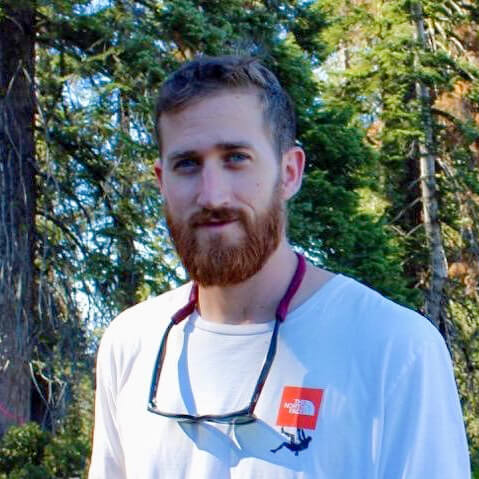
The Stanford lab’s record lists three fellowships beside his name: the National Defense Science and Engineering Graduate Fellowship, the NSF Graduate Research Fellowship, and a NASA Space Technology Research Fellowship. It also lists papers whose titles make the technical thread visible. One examined planning under collision uncertainty. Another made planning aware of what a robot could perceive along a route. In a third, learned sampling distributions guided the search. The robot was being asked to move, but the research was already about judgment: where to look, what to avoid, and how much confidence to place in a proposed next step.
“I’m interested in leveraging machine learning and large-scale models to enable robots to plan and perform general tasks in real-world environments.”Brian Ichter, personal website
Words meet the floor
At Google Brain and later Google DeepMind, Ichter’s work met a second kind of map: language. People do not normally hand a household robot a sequence of motor commands. They say what they want done. That request may be reasonable to a person and hopelessly vague to a machine. A language model can propose a plan, but eloquence cannot move a chair. The proposed step still has to be physically possible for the robot in front of the chair.
In 2022, Ichter and fellow researcher Karol Hausman wrote about PaLM-SayCan, a project that joined a language model’s sense of which action would help with a separate estimate of what the robot could actually do. Their explanation begins with the kind of mishap any home supplies: a spilled drink. A text model can answer with something that sounds serviceable on a screen but is unsuitable in a real room. PaLM-SayCan scored candidate robot skills for both usefulness and feasibility. In the team’s reported evaluation, the combined system selected the right sequence for 84 percent of 101 instructions and executed 74 percent successfully. Those were results in the project’s test setting, not a promise about every household.
The distinction sounds almost comic until one remembers how often humans make it without noticing. Asked to clear a table, a person knows that a glass can be lifted and a fixed countertop cannot. The person also knows when the glass is too full to tilt. A robot has to assemble such judgments from sensors, learned experience and the skills available to its body. Ichter’s earlier concern with feasible paths had become a concern with feasible actions. The vocabulary changed; the world remained stubborn.
He contributed to other Google robotics efforts that widened the frame. RT-1, published in 2022, learned to map images and instructions to actions from a large collection of robot episodes. Google reported training on 130,000 episodes covering more than 700 tasks. PaLM-E, described the following year, explored a model that could process visual, language and robotic information together. These were large collaborations, and Ichter was one of many authors. Their shared direction matters to his story: instead of programming a separate rule for each situation, researchers were trying to make experience carry over.
One policy, many bodies
In 2024, Ichter co-founded Physical Intelligence with a group that included Hausman, Sergey Levine, Chelsea Finn and other robotics researchers and builders. The company’s stated aim is to develop models that can control different robots across different tasks. Its first generalist policy, π0, appeared that October. The team trained it with open robot datasets, visual and language pretraining, and its own data from eight distinct robot types. The examples were deliberately mundane: fold clothing, bag groceries, clear a table, make coffee. Chores are a tougher syllabus than they look. They require a machine to see the object, interpret the request and deliver a sequence of accurate motions.
A robot’s body complicates the lesson. A single arm at a workbench can reach differently from two arms on a mobile base. Cameras look from different places. Grippers vary. A model that learns only the habits of one machine risks mistaking those habits for the structure of the task. Training across robot types is an attempt to separate the two. The aim is that “put the item away” retains something useful whether the hardware changes or the drawer is on another side of the room.
There is a pleasingly unglamorous reason to care about this. Most useful physical work consists of variations, not perfect repetitions. A plate on one table is not a plate on the next. A sleeve catches. A box bends. The engineer may wish for a clean benchmark; the room declines to provide one. Physical Intelligence’s first model was a research step toward that variability, with experiments on both direct prompting and further training for harder tasks.
The stranger’s kitchen
The company’s π0.5 work, published in April 2025, made the setting itself the challenge. Its demonstrations included cleaning kitchens and bedrooms in homes absent from the training data. The point was open-world generalization: whether the robot could recognize a task and act when the objects and arrangement were unfamiliar. Ichter appeared among the paper’s authors. On X, he drew attention to the model’s long-horizon work in unseen homes and to the part played by data from multiple environments and robot bodies. The first Stanford question, where can the machine move, had acquired a larger companion: what counts as a sensible thing to do in this particular place?
Subsequent work has picked apart the bottlenecks. Ichter co-authored FAST, a method for representing robot actions as tokens more efficiently. He also appeared on research about keeping a vision-language model’s knowledge intact while enabling fast robot control. In 2026 he co-authored work on short- and long-term memory for robot policies. A machine asked to clean a kitchen may need to remember which cupboard it opened and what remains undone. Physical Intelligence’s π0.7 work, which also lists him among its authors, explores a model that can be guided about how to perform a task, not only what task to perform.
No single result closes the gap between a controlled demonstration and a reliable general-purpose robot. The published projects describe experiments, models and evaluations at particular moments. Their sequence does show the questions becoming more exact. Can a robot find a path? Can it choose an action from a sentence? Can it reuse that skill with a different body? Can it keep the task in mind across a longer stretch of work? Each answer exposes the next difficulty.
The next move
Ichter’s personal site is spare. It lists his current role, previous research posts, degrees, publications and a concise statement of interest: general-purpose AI for robots in the physical world. That economy fits the work. There is no need to invent a grand conversion story to explain a career that has been so consistent. His path from aerospace mathematics to language-guided action is a widening of the same practical question. A robot needs a plan that survives contact with a real place.
The scene worth returning to is an ordinary room after someone asks for help. The request is brief. The objects are where people left them. The machine sees only what its cameras show. Before its hand moves, it has to decide what “next” means. That small word carries a great deal of research. Brian Ichter has spent years making it less mysterious, one route, one instruction and one unfamiliar kitchen at a time.