A copywriter applies for a job. The assignment is to write about artificial intelligence in marketing. Before the finished article comes the CEO, explaining the ideas behind his book. For Brian Fabiano, apparently, recruiting can include a little seminar. For Sabrina Trindade, the applicant who completed the assignment and joined FabCom, it was an introduction to a business where writing has to answer questions beyond whether a sentence sounds good.
The episode puts a person inside a subject usually crowded with diagrams. Fabiano’s professional vocabulary includes audience segmentation, cross-channel messaging and brand mapping. All useful terms; none likely to charm a dinner table. Yet here was the work at an ordinary human scale: someone knew something, someone else needed to understand it, and a conversation helped the next piece of writing happen.
That relationship between the machinery and the message runs through his career. The Scottsdale entrepreneur worked with desktop publishing before building a marketing agency with Jennifer Fabiano. He went on to write Neuromarketology, putting a name to his approach to matching a brand’s characteristics with the interests and motivations of particular audiences. The equipment has changed considerably. The recipient still needs a reason to care.
The machine was only the beginning
Fabiano’s route into this problem began in the graphic arts. His early work involved Macintosh publishing systems and the digital workflows that changed how printed material was made. He also worked on proprietary HD publishing processes. There is a pleasing physicality to that beginning: pages, proofs, production. A message had to become an object before anyone could read it.
Desktop publishing brought more of that process within reach of the people making the work. Fabiano later moved into developing online brands and helping established businesses use the Internet. Across those stages, the tools offered new possibilities for reaching people. They also required decisions about how an organization should work once the new equipment arrived.
His bachelor’s degree from the University of Phoenix is in psychology and organizational development. The pairing fits the later work: understanding people alongside the organizations trying to reach them. Both concerns have a place in the marketing method he eventually put into print.
He and Jennifer built their agency in the early 1990s. The name Fabiano Communications eventually gave way to FabCom in 2009. By then, the work extended across online and offline communication. Sales automation, databases, reporting and creative execution all belonged in the conversation. The agency’s operating interests make more sense when viewed through that publishing background: making something requires a process as well as an idea.
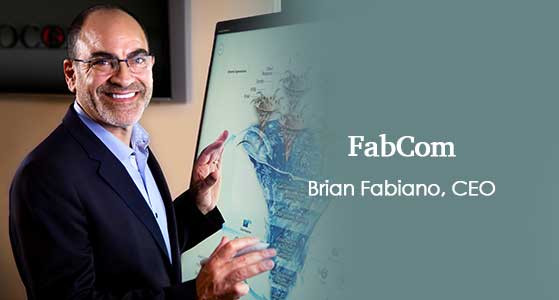
An audience of one is a lot of work
The title Neuromarketology arrived in 2010. A substantial word for a substantial ambition: bring audience understanding, creative production and delivery technology into a connected method. Underneath the terminology is a practical proposition. People can encounter the same product for different reasons. Their motivations should have some bearing on what an advertiser says to them.
The book connects research about audiences with the attributes a brand actually offers. Its approach then uses segmentation and automation to vary messages, imagery, timing and channels. Personal relevance becomes a production problem as well as a strategic one. A team needs a way to create and deliver the variations it has decided would be useful.
Consider the amount of work hidden inside the phrase “personalized marketing.” Someone has to decide which differences matter. Someone has to write the alternatives. Someone has to connect those choices to the delivery system. The greeting is the easy part. The reasoning that follows it is where Fabiano has concentrated his attention.
His 2014 explanation of the method described companies buying new capabilities while continuing to make content as they had for years. The mismatch concerned him. Faster distribution could simply accelerate a familiar disappointment. For him, the opportunity lay in changing how positioning, branding and messages were developed alongside the technology that would carry them.
- 01UnderstandAudience behavior, circumstances and motivations
- 02ConnectThose interests with actual brand attributes
- 03DeliverMessages shaped for the audience and channel
An explanatory diagram, not a performance comparison.
The trouble with a very good checklist
Fabiano’s impatience with routine surfaces in a 2019 essay written with Sarah Skidd. The target is the advertising industry’s fondness for best practices. He grants the usefulness of knowing what other people are doing. His objection begins when their choices become the boundaries of your own.
“Following best practices just gets you to average.”
Brian Fabiano, with Sarah Skidd, 2019
The essay uses a delivery company to make the point. A clear call to action and visible contact information can satisfy the checklist while leaving an advertisement thoroughly forgettable. FabCom’s alternative brought faces, wordplay and use cases into the creative work. The subject was still shipping. The invitation to pay attention had changed.
There is a useful tension here. Fabiano wants an organized system for producing messages, yet he also wants the messages to escape the sameness that systems can encourage. In that reading, the process must leave room for judgment. Efficiency can get a piece of work in front of someone. Creative thought still has to make the encounter worthwhile.
The CEO pulls up a chair
The same tension appears in the way people learn the work. Trindade came to her copywriting application with experience in technology and an interest in turning writing into her full-time occupation. The AI assignment asked her to work on unfamiliar subject matter. Fabiano’s explanation of Neuromarketology gave her a way into it.
Her account of joining the agency in February 2025 includes the next steps: she submitted the article, got the position and began learning how individual pieces of copy fit a wider marketing strategy. His part in that story is small enough to be revealing. The author of the method was also prepared to explain it to someone who would have to use it.
The teaching extends beyond the office. The Neuromarketology program offers twelve lessons, followed by a further level requiring three case studies applying the ideas to real situations. That second level includes a personal consultation and strategy review with Fabiano. A book can describe a framework at some distance from the reader’s daily decisions. Asking people to apply it creates a different conversation: what did they try, and how did the approach work in practice?
Colleagues have described him as a teacher and coach as well as a business leader. Earlier accounts of his work emphasize a strong appetite for results and a demanding work ethic. Those descriptions fit an agency concerned with implementation: the idea has to survive being handed from the strategist to the writer to the person building the campaign.
Basketball coaching is one of his listed interests. So are sailing and, with a candor that will surprise few agency employees, working. His favorite book is The 7 Habits of Highly Effective People. There is a certain consistency in choosing effective habits for the reading list and work for the hobbies. Leisure appears to have faced a competitive selection process.
His chosen favorite quote is an old sales line: “And if you act now, you get the Ginsu knives!”
Two founders, another kind of buyer
Jennifer Fabiano belongs near the center of this story. She co-founded FabCom and serves as its principal. Her agency work includes strategy, writing, editing and team leadership. Building a firm around several disciplines means someone must keep their work connected in practice. Her responsibilities reach into that daily business of making the organization function.
Their partnership also extends into real estate. Jennifer is principal and designated broker at Exclusive Arizona Buyers Agents; Brian is general manager, responsible for management, marketing and daily operations. They built the brokerage around representing home buyers. It is another setting in which understanding the person’s needs comes before deciding what to present.
Scottsdale is a personal base as well as a business address. Fabiano has spent most of his life in the area, raised a family there and built businesses there. That local experience gives the brokerage a different texture from the agency’s national marketing work. A buyer considering a place to live brings particular preferences and circumstances. Broad descriptions of an audience only get the conversation started.
Macintosh publishing systems and digital graphic-arts workflows.
Neuromarketology puts the marketing method into a book.
FabCom announces a new Scottsdale office and refreshed identity.
The next tool still needs a point
Artificial intelligence was already part of Fabiano’s writing in 2017. In an essay co-authored with Linda Tyler, he discussed the use of IBM Watson and Cognos alongside more detailed audience analysis. The question he returned to was who would teach the system to respond in ways that made sense for customers.
His argument placed responsibility with teams able to understand both the technology and the marketing task. Data processing could support more varied communication. People still had to decide how that communication should relate to a customer’s motivations and stage in a purchase. The essay treated technical capacity as something that needed direction from the people using it.
FabCom’s subsequent work has included HReality, an initiative bringing physical and digital environments together through augmented and virtual reality. The agency’s July 2024 announcement of its relocation and identity refresh also described work on experiences for Apple Vision Pro. Alongside the new office came a revised positioning statement: “Unrivaled Strategic Marketing.” Even an agency advising other businesses on their identities has to revisit its own.
Across these projects, Fabiano’s recurring interest is the connection between capability and usefulness. Publishing systems make pages possible. Automation makes variations possible. Immersive tools make different kinds of encounters possible. Each leaves a decision to the people making the work: what should the recipient experience, and why would that experience matter?
Return to the copywriter’s assignment. Before another marketing article entered the world, a conversation helped its writer understand what she was trying to explain. For a career spent working with the machinery of communication, that is a fitting detail. The next useful message began with someone taking the time to talk.
Follow the conversation
Explore Fabiano’s work and writing.
- Brian Fabiano at FabCom ↗
- Brian Fabiano on LinkedIn ↗
- Neuromarketology: the book and course ↗
- A conversation about Neuromarketology ↗
- Be Better Than Best Practices ↗
- Psychonomics: A Facet of Neuromarketology ↗
- Watch: company-linked Neuromarketology video on YouTube ↗
- Exclusive Arizona Buyers Agents ↗
- The FabCom interview in CIO Bulletin ↗