Brian Cotter acquired an unofficial title somewhere along the way: “the Mayor.” A colleague, Lisa Bromfield, used the nickname in a recommendation, describing someone who connected readily with the people around him. The title came without an election, a municipal budget or the particular joy of arguing about parking. It did, however, suggest a way to read a career otherwise recorded in chief executive appointments: pay attention to the people in the room.
There are quite a few rooms. In California, Cotter appeared at a public forum where neighbors asked questions about an institution’s finances. He taught international students. He stood alongside regional partners at a community event in Lone Pine. In Illinois, he joined another organization as its chief executive. In November 2025, a board in New Mexico voted unanimously to appoint him to his next post.
The institutions and the geography changed. The recurring task was to become useful among people who already had their own responsibilities, histories and expectations. An executive can arrive with experience. Familiarity with a place has to be acquired there.
A room full of questions in Independence
In March 2018, the Independence Civic Club hosted a forum about Southern Inyo Healthcare District’s proposed parcel tax. Cotter was the district’s CEO. The organization was working through bankruptcy, and the public discussion involved debts, revenue and whether a proposed levy could help establish a sustainable footing. The question facing residents was concrete: what would their money make possible?
Measure J proposed a $215 charge on parcels within the district, with a fifteen-year sunset. Those figures gave the discussion a scale and a duration. The participants included board members and a county supervisor. Cotter discussed billing efficiency as part of the organization’s financial work. This was leadership conducted within earshot of the people being asked to contribute.
A public forum makes an executive’s work unusually visible. An answer has to make sense outside the office where its vocabulary was developed. People bring their own concerns, and they get to ask the next question. For Cotter, the setting placed organizational management alongside the obligation to explain it.
The scene is an early, useful point on his career map. It puts him in a community conversation rather than alone at the center of a turnaround tale. The board, local government and residents were all part of the problem being worked through. The meeting belonged to them as well.
The proposed annual parcel levy discussed at the Southern Inyo forum, with a 15-year sunset.
The less glamorous side of taking charge
Cotter’s arrival at Southern Inyo had been reported in November 2017, when the district was moving away from an outside management arrangement. His role then was associate administrator and chief clinical officer, overseeing day-to-day operations. The organization intended to establish its own management and finance leadership. He entered during a change in how responsibility would be organized.
That setting matters because the phrase “taking charge” can hide an extraordinary amount of coordination. There are governing bodies, advisers, employees and contracts. Knowing who can decide what is part of the work. A new executive joins an existing arrangement, even when the arrangement itself is changing.
By 2019, Southern Inyo board records listed Cotter as CEO. The meeting record placed him alongside a financial consultant and attorneys. Such a list has none of the polish of an appointment biography. It has the advantage of showing the company a leader keeps while the administrative work proceeds.
The dates describe a progression in responsibility. They also keep the story at a sensible scale. An institution’s finances and governance involve many participants. Cotter’s place in those meetings is specific; it is a better starting point than assigning a complicated organization a single hero.
Third from the left
Another glimpse of Cotter’s Southern Inyo period comes from a 2018 photograph in Lone Pine. He is third from the left, wearing a light blue shirt, standing with colleagues from neighboring organizations and members of the district’s board. The group had come together for a public demonstration. For once, the executive’s position in the picture is easier to establish than his position on an organization chart.
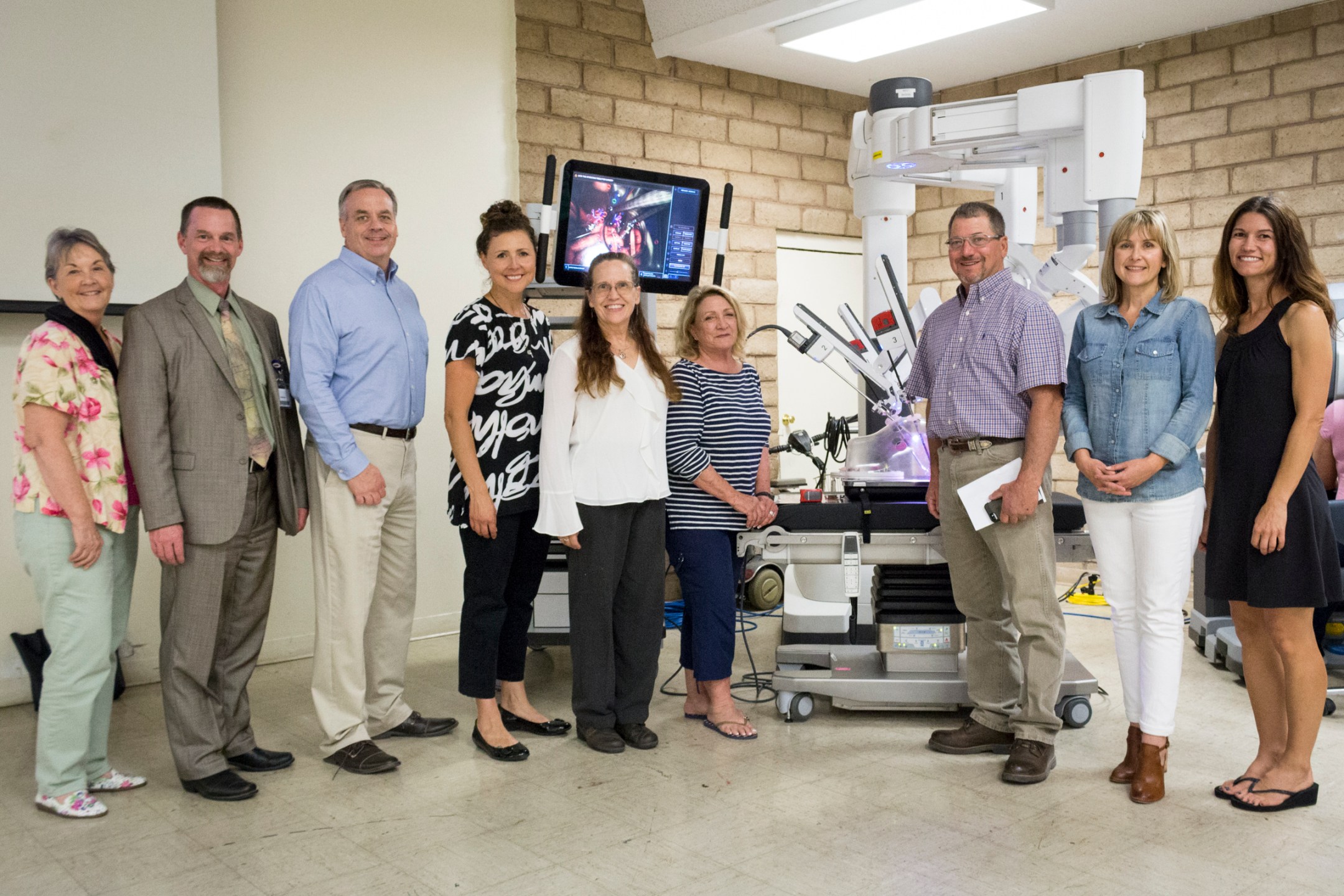
The photograph catches partnership in its ordinary form: people from different institutions assembling in the same place. Northern Inyo executive Kevin Flanigan thanked Cotter and Southern Inyo for their involvement in the event. The acknowledgment gives the image context. There was shared work behind the group photograph.
A partnership can sound rather grand when announced. In practice, it also requires introductions, arrangements and somebody agreeing to turn up. This small episode belongs in Cotter’s story because it shows him participating across organizational boundaries, a theme that would appear again in his later appointment biography.
The classroom belongs on the résumé
Cotter’s career also includes teaching leadership to international students at the California School of Health Sciences. His 2023 introduction to the Granite City community recorded both teaching work and board service at the school, along with previous service on the Hospital Association of Southern California’s board. The classroom adds another kind of audience to the public forum and the boardroom.
Teaching asks an experienced person to slow down an explanation. A process that feels obvious after years of work may be unfamiliar to the listener. The teacher has to separate the idea from the habits and shorthand that have grown around it. Authority gets a fairly practical examination: can somebody else understand what you mean?
Cotter holds an MBA from Columbus University. His background combines operating roles with finance leadership and consulting. Those are different vantage points on an organization, each with its own questions. Teaching adds the requirement to make professional knowledge legible to another person.
There is a personal detail in his Granite City introduction, too: Cotter and his wife have five children. It gives the biography a little scale beyond the succession of institutions. Five children is a substantial headcount before anyone begins discussing the office.
Barstow, then Granite City
Cotter became CEO of Barstow Community Hospital on June 21, 2021, succeeding interim chief executive Suzanne Richards. Barstow was a Quorum Health affiliate. His connection to Quorum ran through leadership of that local institution, a distinction that matters when following the route of his career.
He arrived after Quorum had undergone financial restructuring. The setting placed his appointment against a larger corporate transition, while the job itself remained rooted in Barstow. A parent company’s financial history and a local executive’s responsibilities occupy different scales. Both were part of the circumstances in which he took the role.
When his departure was announced in March 2023, Cotter spoke about belonging to the organization and being an active member of the community. His farewell put the local relationship into his own words.
“I very much enjoyed being a part of the Barstow Community Hospital family and serving as an active member of the community.”Brian Cotter · March 2023
Gateway Regional Medical Center in Granite City appointed him CEO effective April 1, 2023. Board chair Rosemarie Brown highlighted his interest in team building. The introduction paired that emphasis with his teaching background and leadership experience. Another appointment brought another set of colleagues to learn.
- 2018Southern Inyo
California - 2021Barstow
California - 2023Gateway Regional
Illinois - 2025Miners Colfax
New Mexico
Five votes, then a handover
On November 17, 2025, the Miners Colfax Medical Center board of trustees met in Raton, New Mexico. David Ortiz moved to appoint Cotter chief executive; Roy Fernandez seconded the motion. All five trustees voted yes. His appointment took effect a week later, on November 24.
The board also addressed the transition from interim co-leaders Lonny Medina and Rhonda Moniot. Its arrangements extended their additional compensation for forty-five business days to help Cotter during the handover. The appointment came with a practical acknowledgment that the people already doing the work held knowledge he would need.
A vote can confer authority in a moment. A handover takes longer. The forty-five-day provision gave that difference a place in the administrative record. It is a modest detail, and a revealing one: continuity needed time as well as a decision.
His new organization introduced him as a military veteran with more than thirty years of professional experience. It emphasized his advocacy for local and regional partnerships. In February 2026, the Rotary Club of Raton’s calendar listed him as a speaker. The new executive was appearing on the local calendar, too.
The Rotary listing gives the latest chapter a familiar setting: a local group making space to hear from the person leading a nearby institution. It is a smaller milestone than an appointment, but it places the executive within the everyday civic life around his organization.
Read together, these episodes make the nickname feel apt. The public forum, the classroom, the group photograph and the handover all place Cotter among other people with work to do. “The Mayor” is a colleague’s affectionate description. His career supplies several rooms in which to consider it.