Before Ed Pesicka was responsible for a company’s balance sheet, he was responsible for keeping his shoulders off a wrestling mat. At Muskingum College, the future executive competed as a heavyweight. In the 1986-87 season, he finished 24-7, with 12 falls. Those are pleasingly unambiguous numbers. A pin leaves rather less room for an adjusted explanation than a quarterly earnings presentation.
Nearly four decades later, Pesicka has completed another consequential change of position. On October 5, 2026, Kenneth Gardner-Smith succeeded him as president and chief executive officer of Accendra Health. Pesicka left the board, too. His next assignment is advisory: helping transfer knowledge, duties and ongoing projects to the incoming leader. After more than seven years in charge, the work includes letting someone else be in charge.
Between those two moments sits a career built in accounting departments, industrial businesses, distribution operations and executive offices. Its recurring questions are practical ones. Who understands the problem? Where should the money go? Which decisions need the boss? One practical answer Pesicka gave to the first question involved a factory worker and a box fan.
A heavyweight with a communications minor
Muskingum’s 1987 yearbook places Pesicka in a wrestling program coached by Andy Frye. He had finished fourth in the Ohio Athletic Conference the previous season. The photographs show the ordinary business of college wrestling: competitors getting into position, working for control, trying to put an opponent on the mat. Long before the executive biography, there was a student on a team.
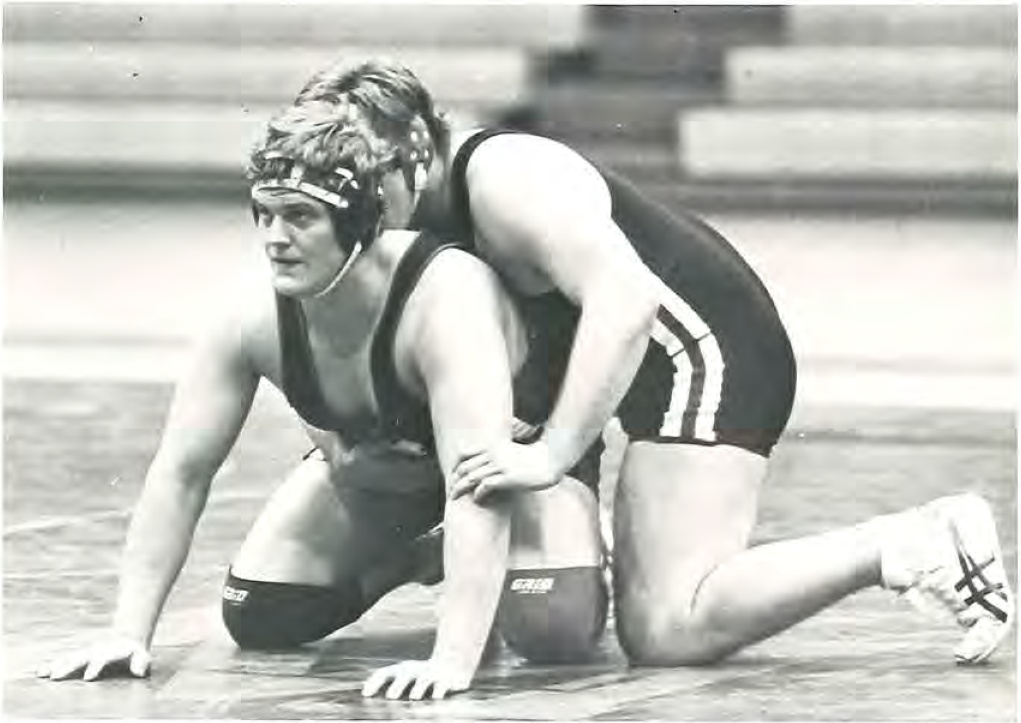
He also played football. Looking back in 2020, he credited the two sports with teaching him mental toughness and sustained intensity. His recollections reached well beyond athletics. Business professor Charles Drubel had been a mentor. Gene Alessandrini’s public-speaking class remained useful when television interviewers arrived. History classes with David Sturtevant and Robert Munkres gave context to a later visit to the Oval Office.
“My time at Muskingum still influences how I approach my work today,” he said. He graduated in 1989, studying accounting and business administration, with a minor in communications. The combination puts numbers and explanation on the same transcript. An executive eventually needs to do both: understand what has happened and make the next decision intelligible to other people.
The long route through the numbers
Pesicka began as an accountant at Coopers & Lybrand in Columbus, Ohio. Corporate biographies also describe that early chapter under the later PricewaterhouseCoopers name. He spent three years in auditing before moving into TRW, where his finance career lasted roughly eight years. This was a substantial apprenticeship before he ever appeared at the top of an organizational chart.
At TRW, his jobs included international internal auditor, supervisor of consolidation and reporting, and finance manager in the Occupant Restraint Systems Group. He became director of finance and information technology for the Nelson Stud Welding Division. Welding equipment and financial reporting are useful reminders of how far his working life extends beyond the company he later led.
He also earned an MBA in finance at Case Western Reserve University’s Weatherhead School of Management. His LinkedIn profile dates that education to 1994-97, overlapping his TRW years. The progression was accumulating range: auditing, divisional finance, information technology and graduate study. Each role added another view of the same enterprise, from the reported result back toward the machinery that produced it.
In January 2000, he joined Fisher Scientific as vice president and controller of its U.S. research business. He later became vice president of finance for U.S. distribution operations and vice president and general manager of the U.S. research business. The move from controller to general manager is a significant change in remit. Keeping score becomes only part of the job; running the operation becomes another.
Learning to run what he once counted
In November 2006, Pesicka became president of Thermo Fisher Scientific’s Research Market business. In July 2008, he took charge of Customer Channels and became a senior vice president. By January 2014, he was chief commercial officer and senior vice president, responsible for commercial strategy. He held that position until April 2015.
- 2000Controller
Fisher Scientific - 2006President
Research Market - 2008President
Customer Channels - 2014Chief commercial
officer - 2019President & CEO
Owens & Minor - 2026Advisor
Accendra Health
During his Thermo Fisher tenure, his responsibilities included a portfolio of distribution, manufacturing and service businesses worth up to $8 billion. He had also served as chief financial officer for multiple divisions. By the time he left, the former auditor’s experience covered both financial control and the commercial work of reaching customers.
From January 2016 until March 2019, he worked as an independent consultant and advisor. Then Owens & Minor called. The company announced his appointment on February 19, 2019, with a March 4 start date. He succeeded interim president and CEO Robert Sledd, who remained chairman. The selection brought an experienced outside operator into a company founded in 1882.
The boss, the bottleneck and the box fan
The assignment came with substantial repair work. Speaking to a VCU business audience in 2021, Pesicka described a company that had lost its focus on customers and lacked internal accountability. It had carried nearly $2 billion in debt. “We had to fix the culture,” he said. His response included a business system organized around continuous improvement and a renewed insistence on responsibility.
His story about an overheating machine makes the philosophy easier to picture. Engineers were considering a costly redesign that would require a lengthy shutdown. A line worker proposed putting a 20-inch box fan beside the machine. Pesicka recalled his father’s advice to “trust the person on the shop floor.” The fan solution, he said, increased productivity by almost 40%.
“Trust the person on the shop floor.”
The advice Pesicka recalled from his father
The anecdote contains a small comedy of scale: a large company, a substantial engineering problem, a trip to Walmart. It also gives listening an observable consequence. In Pesicka’s telling, a worker’s suggestion could change the operation. The useful question was whether the solution worked under the circumstances, with time and output both at a premium.
Progress, with the accounting left in
The first year’s results deserve more than a celebratory adjective. For 2019, Owens & Minor reported $166 million in operating cash flow and a $117 million reduction in total debt. Adjusted operating income and adjusted earnings per share improved sequentially in each quarter. Those measures supported Pesicka’s argument that the organization was establishing a firmer foundation.
The same results also showed a full-year net loss of $62.4 million. Revenue was $9.211 billion, compared with $9.418 billion in 2018. The financial picture contained progress and continuing difficulty at the same time. Keeping those figures together gives a more useful account of the job he had accepted than selecting only the number that makes the nicest poster.
Different measures, one reporting period. Company-wide results, not personal earnings.
His ambitions subsequently included expansion. On March 29, 2022, Owens & Minor completed its acquisition of Apria for approximately $1.6 billion in cash, funded through debt and cash on hand. Apria joined the existing Byram business. The transaction expanded the group’s delivery and distribution model and became an important part of the portfolio that would remain after the later separation.
A purchase abandoned, a name sold
Another proposed acquisition ended differently. On June 5, 2025, Owens & Minor announced the mutual termination of its agreement to buy Rotech. It paid an $80 million termination fee. Pesicka said the route to regulatory clearance had become unviable in time, expense and opportunity. The company also moved to redeem $1 billion of notes issued for the transaction and terminate related financing commitments.
The consequence was tangible: a planned addition to the company did not arrive, and ending the agreement cost money. Later that year, the direction of travel changed from adding a business to selling one. On December 31, the group completed the sale of its Products & Healthcare Services operation to Platinum Equity.
The terms included $375 million in cash, subject to customary adjustments, and a retained 5% equity interest. The Owens & Minor brand went with the sold business. The remaining public company became Accendra Health, keeping Apria and Byram. A company can change its portfolio without changing its name; this transaction did both, leaving familiar operations on opposite sides of a newly drawn boundary.
The final operating decision is a handover
In August 2026, Pesicka announced his intention to retire. He pointed to the completed divestiture, a balance-sheet transaction and changes to the management structure as reasons the timing made sense. In September, the board selected Gardner-Smith, who had been a director since 2022. The succession combined a change of executive leadership with a successor already familiar with the board’s strategic discussions.
Pesicka’s consulting agreement spells out what remains for him to do. He is to help transfer responsibilities and projects and make himself available for questions about operations, strategy and stakeholder relationships. The arrangement can continue through March 31, 2029, subject to its terms. It makes the transfer of accumulated knowledge an explicit assignment.
He also serves as a Fortrea director, a position he has held since June 2023, with responsibilities on its audit and management development and compensation committees. The former auditor still has work involving numbers and people. His new Accendra role adds a different discipline: being available with an answer while another executive holds the authority to decide.
At Muskingum, the young heavyweight had to learn how to establish control. His latest chapter gives him a precise date on which to relinquish it. There is a certain satisfaction in that symmetry. A long career ends its chief-executive phase with a practical task, a defined relationship and someone else’s name on the office door.
Follow the career
- CompanyAccendra Health ↗
- Personal profileEd Pesicka on LinkedIn ↗
- CareerExecutive biography at ITIF ↗
- ConversationPesicka’s VCU business talk ↗
- Video & alumni profileMuskingum’s Ed Pesicka alumni feature ↗
- ArchiveMuskingum’s 1987 yearbook · page 141 ↗
- Board serviceFortrea director biography ↗
- TransitionSeptember 2026 consulting agreement ↗