The farewell party was becoming an expensive education. At Government College of Technology in Coimbatore, the students had been told to hold their seniors' send-off outside campus. Other departments were collecting ₹250 to ₹300 per student. Karthik Chidambaram, the electrical engineering department secretary, wanted a smaller bill. He began looking for people who might find a roomful of engineering students commercially interesting.
A computer-training entrepreneur agreed to contribute ₹5,000. Another institute covered photography and video in exchange for banners. An internet café supplied free browsing vouchers. A gift shop offered coupons. The department brought its student fee down to ₹150. There was a party to pay for. Karthik had discovered the usefulness of asking.
Years later, his working life still turns on the question of who needs to be connected to whom. He founded DCKAP in 2005, beginning in a Chicago apartment. Today, the company builds integration software for distributors and manufacturers. Alongside that work, he hosts conversations with business leaders, publishes handwritten Tamil letters, and helps students at his old college try ideas of their own.
A business hiding between the systems
DCKAP's early equipment list was short: two desks, two computers, two people. The modest beginning is part of its identity, but the more interesting question is what the company learned to become. For years, customers knew it for Magento development. Building an online store placed DCKAP close to the less photogenic machinery behind the storefront.
That machinery matters. A distributor's enterprise resource planning system, or ERP, holds information the rest of the business needs: products, prices, inventory and orders. The online shop needs some of that information. So do sales tools and other applications. A handsome website has limited charm when the systems behind it disagree about what is available to sell.
In a September 2026 conversation at Shoptoberfest in Nashville, Karthik traced DCKAP's shift from agency work toward a software product through the difficulties of a Prophet 21 integration. A problem encountered while serving customers became the basis for a different business. The company now concentrates on connecting those systems, with the ERP at the centre.
His January 2026 review of the previous year put a plain lesson at the centre of the business: narrow the focus. DCKAP was describing itself more specifically as an ERP-first integration platform for distributors and manufacturers. The distinction gave customers a clearer account of what they were buying and gave the team a clearer account of what to build.
The scale was less modest than the original furniture budget. DCKAP reported 36 million synchronizations and 6.2 billion record transfers during 2025. These company-reported operating figures describe a business whose daily work is the repeated, mostly invisible movement of information. A record arriving correctly is unlikely to receive applause. Its absence may receive quite a lot.
The reading comes with homework
His account of building the company makes room for mistakes. After moving to California in 2006, he pursued growth, lost focus and eventually faced business and personal debt around 2013. He describes a recovery that took five years. Books became part of the repair: How Google Works prompted closer attention to company culture, while Andrew Tobias's writing pushed him to examine his own finances.
There is an appealingly unceremonious detail in his 2018 review of Tobias's The Only Investment Guide You'll Ever Need. After reading about asking for discounts, he called his car insurer and obtained a lower rate. He estimated the saving at roughly $100 over a year. An entrepreneur can talk about expanding a company and still have a useful afternoon negotiating an insurance bill.
He used that review to admit what he had previously overlooked, including the difference between seeing retirement contributions as deductions and understanding them as investments. The interest lies in the admission. Running a business had not automatically taught him how to manage his own money. He had to learn a subject he had once found difficult to read about.
His books also travel through conversations. When Border States CEO Jason Seger mentioned rereading Who Not How during their podcast discussion, Karthik picked it up. His July 2026 response dwelt on collaboration, delegation and defining what a successful project should accomplish. The interview had produced something beyond an episode: another book to read and another way to think about work.
He had already explored similar ideas in his 2023 review of 10X Is Easier Than 2X. What interested him was the argument for shedding activities, concentrating effort and allowing other people to take responsibility. These reading notes make a revealing companion to his business story. They show someone repeatedly returning to the awkward management question of what a founder should stop doing.
“If you don't agree with what I'm asking you to do, question me.”
Karthik Chidambaram · October 2026
A remote company needs a conversation
A distributed business changes the practical work of being available. In November 2025, Karthik described a rhythm of communication at DCKAP: a Monday note to the whole team, voice messages, informal fortnightly catch-ups and a monthly town hall. Some of the Monday notes find a second life in his public Wednesday Hustle newsletter. A thought gets tested inside the company before going outside it.
Team members can book time on his calendar. The annual gathering, Homecoming, adds in-person meetings and opportunities for anonymous questions. These are specific arrangements for a familiar problem: colleagues scattered across locations cannot rely on meeting by the coffee machine. Someone has to make a conversation possible, and then make it happen again next week.
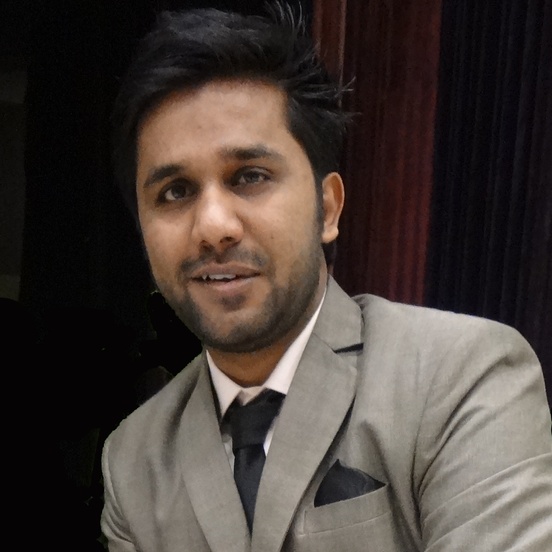
His October 21, 2026 essay, Don't Be an Order-Taker, makes his preference explicit. He wants colleagues to challenge requests and suggest better approaches. To explain it, he reaches for a restaurant server who knows when to recommend a dish or point out that the table has ordered too much food. Useful judgment can include telling the customer, or the boss, to reconsider.
He connects the idea to a recent prospect who had asked for recommendations rather than obedient execution. It is a small scene with consequences for how he wants to work. A customer and a colleague both need room to say that the first request may lead in the wrong direction. The founder's own instructions belong in that conversation too.
On Sundays, the software founder writes by hand
The Tamil letters offer another view of him. Karthik publishes them by hand because he had not learned Tamil typing at school and had not subsequently learned to use a Tamil keyboard. It is a wonderfully practical origin for a distinctive habit. A missing skill became a reason to pick up a pen.
He collected the letters published during 2023 into ஞாயிறு கடிதம், or Sunday Letters. The form gives his writing a physical presence that a newsletter rarely has. His week can include explaining how software should move data and making Tamil words one stroke at a time. Both activities end with something intended for another person to use or read.
His Chat with KC video channel extends that curiosity into businesses, places, people and language. More recently, an October 2026 outing supplied a new subject. His friend Thenappan Nachiappan offered him a ride in a Cessna from Georgetown, Texas. Karthik was nervous, accepted, and described a flight that included a landing at Taylor and a brief turn at the controls.
He noticed the practical details: pulling the aircraft out, fuelling it, returning and parking. The account is recognisably his, moving from a personal experience to questions about how a system works and who gets access to it. Even a leisure flight becomes an occasion to wonder about airports and the possibilities of smaller-scale aviation in India.
Back to the college, with a larger experiment
His return to GCT gives that interest in access a concrete setting. DCKAP signed a memorandum of understanding with the college on June 11, 2025. Karthik's stated ambition was to help make it a preferred choice for students and to build an environment for research and startups. He proposed an understandable test: whether more students would choose GCT after school.
By December, he was back on campus with colleagues working on the DCKAP Incubation Center. The team had visited departments and spoken with students before his arrival. Srija Santhanam was leading the community initiative. He met the principal, Dr. K. Manonmani, and faculty, addressed students, and found himself continuing conversations while walking through the campus. The auditorium was familiar from his own student activities.
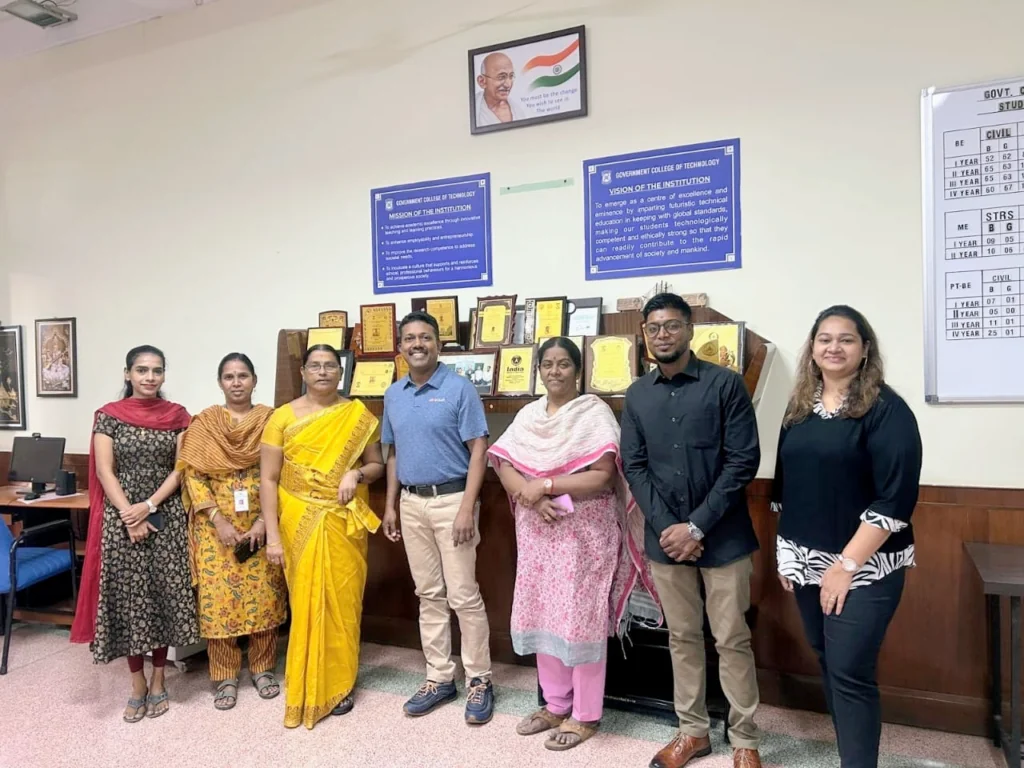
In September 2026, GCT and the incubation centre hosted Porikkalam, a two-day event bringing departments together. More than 600 students participated, with 17 technical and non-technical events and 19 student startup teams showing their work. Karthik emphasised that the students executed the event, with direction and support from faculty and the DCKAP team. The ownership was part of the point.
600+students
17events
19startup teams
The name combines the Tamil words for engineering and arena. It fits a college where Karthik once experimented with persuading local businesses to help pay for a farewell. His current involvement gives another generation a place to try things, find collaborators and see an idea through. The scale has changed. The useful pleasure of getting people to take part is still there.