Brian Boulanger returned to Calgary in 1997 with an Ivey degree and joined ARC Financial as an investment analyst. Twenty-three years later, he became chief executive. A résumé can dispatch that journey in two lines. The interesting part is what happened between them: learning an industry, taking responsibility for other people’s businesses, and discovering that a charitable board could teach an investor something useful about negotiation.
There is a particular kind of ambition in a career spent growing inside one institution. The business card changes more slowly than the questions. Boulanger’s questions now stretch across oil and gas, solar manufacturing and low-carbon fuels. He has stayed with ARC while the firm’s investment territory has widened. That combination of continuity and change gives his story its shape.
His public life also has a consistent geography. Calgary is where he grew up, where he returned after university, and where his investment career and United Way involvement developed. The homecoming was the beginning of a professional education that would continue well beyond his first job.
A return ticket to Calgary
At Ivey, Boulanger belonged to the HBA class of 1997. ARC hired him as an analyst when he came home. The timing placed him at the firm during a significant change of its own: that year, its advisory, research and equity investment activities evolved into an exclusive focus on private equity investing.
ARC had been founded in 1989. Boulanger arrived eight years later, so his is a story of joining and growing an existing business. There is a useful distinction in that. An analyst inherits a way of working, then has to learn enough to contribute to it. Becoming responsible for the institution comes later.
By 2010, he was a senior vice-president. His work had included a decade in exploration and production, followed by responsibilities in energy development and infrastructure. The brief covered finding investments, structuring and executing deals, monitoring companies and planning exits. Those are different stages of the same relationship. The decision to invest is only its opening chapter.
His credentials grew alongside the work: CFA Charterholder and, eventually, an Institute of Corporate Directors Certified Director. The progression carried him from examining investments to overseeing companies and the decisions made around their board tables. Finance provides a vocabulary; responsibility supplies the difficult sentences.
Joins ARC as an analyst
and Director
Officer
expands
A different classroom
Boulanger became involved with United Way of Calgary in 2005. By 2008, he was its chair. The organization brought him into contact with people he said he would otherwise never have met or worked with. His account of the experience is unusually direct about what he received from giving his time.
“It’s also taught me how to collaborate. It made me a better person, a better negotiator.”
Brian Boulanger, on his United Way involvement, 2010
The pairing is revealing. Collaboration and negotiation are often assigned separate personalities: one agreeable, the other armed with a spreadsheet. Boulanger put them together. Working with people outside his usual circle had changed how he worked with people inside it.
His involvement continued. In 2015, he co-chaired the Calgary and Area campaign with Lorraine Mitchelmore. United Way’s following annual meeting recognized both campaign co-chairs as their ex-officio board terms ended. This was recurring work with an organization, spread across years and different responsibilities.
Recognition followed his professional and community contributions. He was part of Calgary’s Top 40 Under 40 class of 2007 and was recognized nationally in 2009. Later, he appeared among the judges choosing Calgary’s 2014 class. An awards dinner can be a pleasant evening. Returning to help choose the next group gives the recognition a second job.
The charitable work belongs near the centre of his career story because he himself described it as an education. It offers a human explanation for a skill that investment biographies usually leave as an abstraction. Relationships take practice. Sometimes the practice happens in a room where nobody is discussing an oilfield.
The handover, with the mentors still in the room
Boulanger became ARC’s president and a director in September 2016. His appointment as CEO took effect on July 1, 2020. The handover came after years of involvement in major decisions. Predecessor Lauchlan Currie described him as energetic and creative, and emphasized the firm’s established succession planning.
Currie remained involved as a board co-chair alongside Kevin Brown, retaining places on the executive and investment committees. The arrangement kept experienced counsel close to the new chief executive. Boulanger publicly acknowledged Currie’s mentorship and looked forward to continuing to draw on it.
That matters to the texture of the appointment. A succession announcement can read like a relay race in which the previous runner immediately disappears. Here, the experience stayed available. The title changed hands within a team that already knew the incoming CEO.
The same announcement promoted Jackie Forrest, Kent Foster, Jeremy Gackle and Duane Schellenberg to managing director. Forrest took on an expanded role leading the ARC Energy Research Institute. Investment leadership responsibilities also moved to colleagues in oilfield services and exploration and production. Boulanger’s promotion arrived with a wider distribution of responsibility.
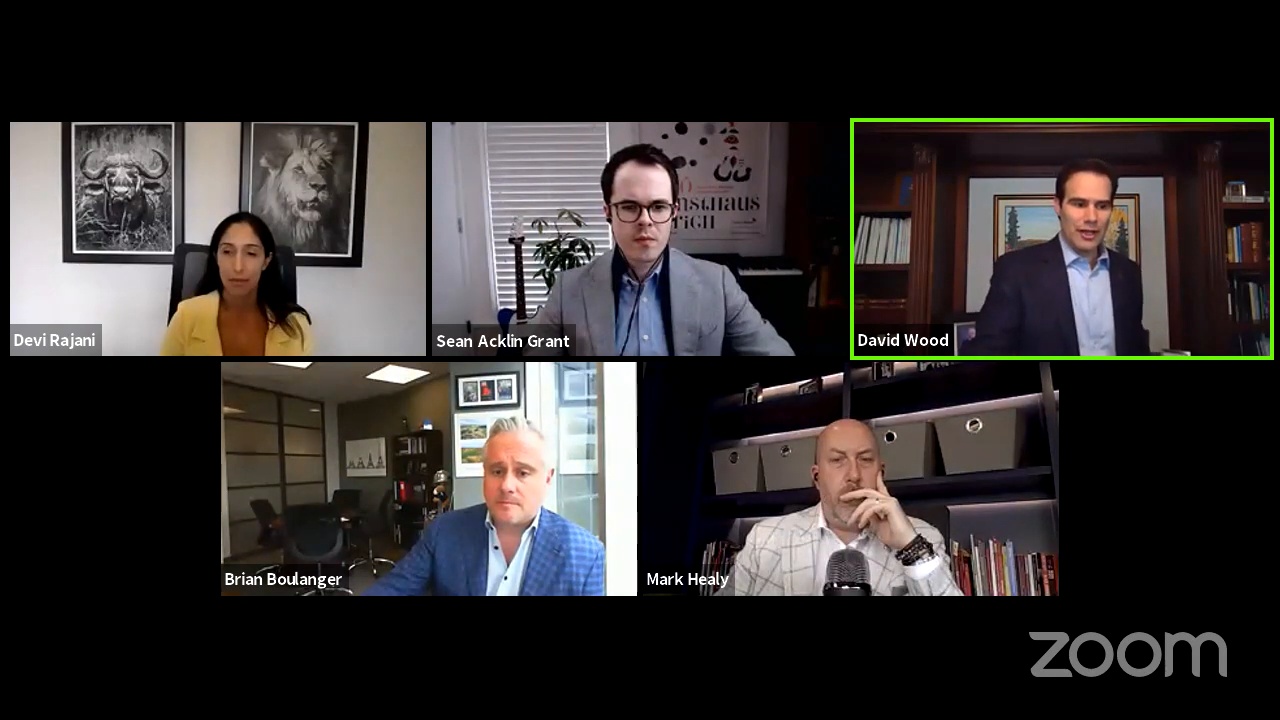
Earlier that spring, while still president, he had joined an Ivey discussion on operating a business in a crisis with professor David Wood and restructuring specialist Devi Rajani. The conversation covered execution during rapid change, communication and investing for growth. By July, those subjects formed a timely backdrop to his new assignment.
Two tracks, one investment discipline
In July 2019, while Boulanger was president, ARC closed Energy Fund 9 with $780 million from institutional investors in Canada, the United States and Europe. Its original strategy focused on private Canadian entrepreneurial exploration and production and oilfield service companies. Boulanger highlighted the value of supplying capital when access to it was difficult.
In June 2021, as CEO, he announced an expanded mandate for that fund. ARC would continue investing in oil and gas while adding companies pursuing energy transition. The areas under consideration included biofuels, renewable development, storage and carbon capture. Boulanger framed the move as widening familiar investment territory.
The practical question was which businesses could use ARC’s capital and company-building experience. A transition theme is broad enough to fit on a conference banner. A growing company has a more particular set of needs: management, facilities, financing and a plan that can be carried out.
Silfab Solar supplied an early example. In September 2021, it became Fund 9’s first energy transition investment. The financing supported expansion of its American solar production and supply chain footprint. Boulanger’s explanation emphasized its North American team, manufacturing knowledge, product development and customers. The vocabulary was that of an investor assessing a business.
Another milestone arrived in March 2024. StormFisher announced a $30 million investment from ARC to develop its pipeline of e-fuel projects in the United States and Canada. Boulanger identified it as the first investment from Energy Fund 10, which focused on energy transition. The funding announcement described a developer working on electricity-derived fuels.
Energy transition
Infrastructure development
Services and manufacturing
Oil and gas
Canadian opportunities
Production assets
Fund 11, meanwhile, focused on Canadian oil and gas opportunities. The two funds make ARC’s position legible: separate investment mandates for different parts of the energy business. Boulanger’s remit crosses both, requiring attention to existing production and businesses developing other ways to supply energy.
What the numbers actually measure
The environmental side of that approach comes with measurements. ARC’s 2025 oil and gas sustainability reporting sets a portfolio-wide goal of reducing scope 1 and 2 emissions intensity by 40 to 45 percent by 2030 against a 2018 baseline. Intensity is a measure relative to an economic denominator; it should be read with that qualification attached.
ARC’s stated portfolio emissions intensity reduction goal for 2030, relative to 2018.
Scope 1 and 2. A goal, not a completed reduction. ARC’s calculations are internal and unaudited; downstream use of sold fuels is excluded.The distinction keeps an attractive number from doing more work than it can support. Changes in a portfolio, company revenues and valuations can affect intensity measures. The target concerns a defined set of emissions and metrics. It does not establish that every environmental effect of every investment has been resolved.
For Boulanger, these commitments sit within the responsibilities of running an investment firm. The 2025 reporting separates the oil and gas and energy transition businesses, with a CEO message in each. That separation gives readers a clearer view of what the firm is financing and how it describes its expectations.
Staying, without standing still
Today, Boulanger oversees ARC’s strategy and fund performance as well as its relationships with investors and portfolio companies. He chairs the Executive Committee, serves on the Investment Committee, and represents ARC on the boards of Convergent Oil and Sirius Instrumentation and Controls. The analyst’s early brief has grown into responsibility for the whole organization.
His long tenure offers a way to connect those duties. He has worked through the stages of an investment relationship, held community leadership roles and taken over from a mentor who remained close to the business. The public milestones describe someone accumulating responsibility over time.
The most telling detail remains his account of United Way. A financial executive remembered becoming a better negotiator through learning to collaborate. It is a small observation with a practical consequence: the people encountered beyond a familiar professional circle can change the work done within it.
Boulanger’s career began with a return to Calgary. It continued through new roles, new colleagues’ responsibilities and a broader investment mandate. Staying gave him time to learn the institution. The work kept asking him to learn something else.