Before Brian Bloom had finished his university degree, he had already completed the Canadian Securities Course. A student could hardly give a clearer hint that the timetable contained more than one possible future. There was the degree he was working toward, and there was the business of money, waiting patiently in the wings. Eventually, the second interest would give the first a different use.
Bloom graduated from McMaster University in 1998. He went to New York for graduate study, then changed direction and began a career in investment banking. By 2008, he and Jolyon Burton had founded a firm in Toronto bearing both their names. The sequence looks tidy on a biography page. Living it required leaving an established academic route, learning another profession and, later, taking responsibility for a business of their own.
Today, Bloom is chairman and chief executive officer of Bloom Burton & Co. His working life involves capital, companies and the relationships that allow the two to meet. But the early securities course is a useful place to begin. It makes his eventual career less of a sudden conversion and more of an interest that survived a change of scenery.
The qualification before the degree
McMaster’s account of Bloom’s student years records that he took the securities course well before earning his undergraduate degree. He then continued his education as a PhD candidate in New York. These were substantial commitments in different directions. One prepared him for a scientific career; the other introduced a vocabulary of markets, investment and financial responsibility.
He did not complete the doctorate. His subsequent jobs in New York included investment banking and equity research, two occupations that ask different questions of the same business. Banking concerns itself with the transaction a company needs. Research examines the company an investor might own. Learning both gives a person a view from each side of the table.
His early firms were SCO Financial Group and Molecular Securities. He later worked in institutional sales and equity research at Dundee Securities. That combination matters to the shape of his career: analysis had to reach an audience, and an audience had to decide whether it was persuaded. A sound argument could still leave a transaction unfinished. Someone had to listen, assess it and commit.
Two surnames on the door
The firm Bloom established with Burton brought together complementary experience. Bloom had worked in research and institutional sales. Burton’s preceding role had been head of an investment banking group. Their partnership joined the work of understanding investors with the work of structuring transactions. The business name gives equal billing to the two people who decided to take that combination outside an existing institution.
The year was 2008. Rather than attaching a grand theory to the date, consider the decision itself: they were becoming founders, with the obligations that accompany putting your name on the door. A firm has to win assignments, deliver them and give clients a reason to return. A name becomes a promise whenever somebody else relies on it.
Bloom Burton’s activities grew to include raising capital, advising on mergers and acquisitions, producing equity research, strategic advisory and creating companies. Those are related services, but each asks something different of the team. An acquisition involves an existing business changing hands. Company creation starts much earlier. The founders built a practice with room for both ends of that journey.
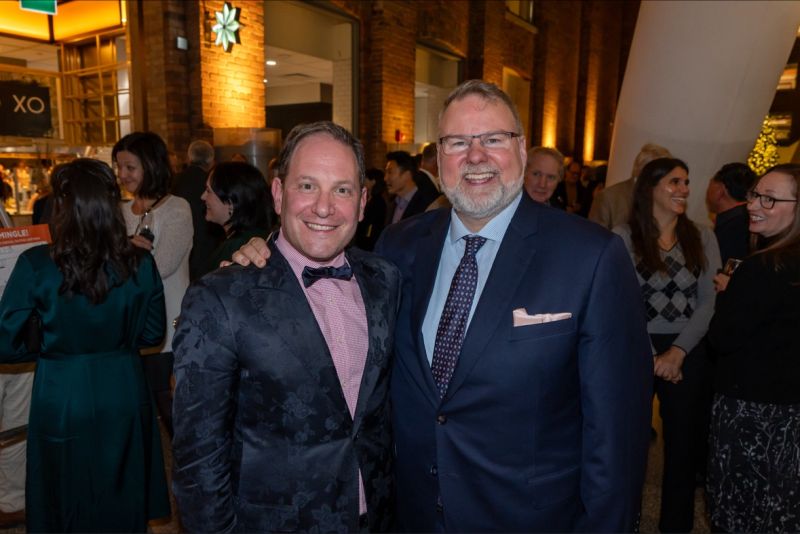
A Canadian address, a wider guest list
Bloom’s perspective on capital has long extended beyond Canada. In a 2014 interview, he described investors travelling to Toronto from New York, Boston, San Francisco and Europe. He also discussed the role of American specialist investors in transactions. His point was practical: a Canadian company’s potential audience could be considerably larger than the investors it already knew at home.
He resisted the easy explanation that promising companies simply had no capital available to them. His emphasis was on selecting businesses and bringing them to investors who could assess them. That distinction changes the assignment. Complaining about the size of the pool achieves little; helping a suitable investor understand a suitable company gives both parties something to work with.
There is a social dimension to this financial work. An introduction makes an opportunity visible. Research makes it legible. A meeting lets someone ask the awkward question that a presentation slides past. None of these steps guarantees an investment. Together, they explain why a banker might spend so much effort on the people in the room, as well as the figures on the page.
- IdentifyA company and its capital needs
- ExplainResearch, questions and diligence
- ConnectInvestors, management and advisers
A schematic of the firm's services, not a promise of investment outcomes.
The room is part of the business
In 2018, Bloom opened the seventh edition of the firm’s annual investor conference. His remarks stressed its focus on investors. The detail is worth lingering over. A conference can become a pageant of companies presenting themselves. An investor gathering has another obligation: it has to help the audience compare, question and decide what deserves further attention.
The annual event gives that process a physical setting. Executives arrive with their accounts of the businesses they run. Investors arrive with questions, constraints and competing possibilities. The host’s task is to arrange an encounter that each side finds useful. There is a certain elegance to such work when it succeeds. There is also, inevitably, a considerable amount of scheduling.
A recurring conference adds continuity to individual transactions. A financing has a closing date; a professional relationship can continue through several rounds of questions and several changes of circumstance. Bloom’s public career has included building a place where those relationships can begin and resume. The meeting matters before anyone knows whether it will lead to a deal.
Returning to the university, with another question
Bloom’s connection to McMaster continued after his graduation. In 2017, the university recognised him with its Distinguished Alumni Award in Science. By then, his career had taken him well beyond the academic path on which he began. The recognition brought that route back into the university’s own account of what its graduates might do.
His later work with McMaster concentrated on commercial potential. He described helping researchers draw on the firm’s network and experience, and considered several possible outcomes: a patent, a licence or a new company. These alternatives are consequential. A company is one possible destination for an idea; it requires a different commitment from licensing that idea to an existing business.
Bloom also distinguished the value of academic work from its commercial prospects. The distinction gives research room to matter without requiring every project to become a business. It gives commercial decisions their own discipline, too. An investor and an academic researcher may admire the same work while needing different evidence before making their next commitment.
“To be clear, all academic output has value to humanity or knowledge creation.”
Brian Bloom, 2019
A conversation that extends past the meeting
Bloom and Burton’s introduction to the firm’s blog described an unusually broad conversation. They wrote about engaging with universities, researchers, incubators, angel groups, policy makers and government organisations alongside companies and investors. The list makes clear how many people can be involved before a business reaches the point where it is ready for a transaction.
The proposed blog offered commentary, analysis, case studies and interviews. Its subjects included financing, commercialisation and entrepreneurship. These are useful matters to discuss in public because the participants often approach them from different starting points. A founder may know the product intimately while having much less experience of the process by which another person decides to fund it.
A firm that publishes its thinking lets a conversation begin before an appointment is booked. Readers can consider the argument, disagree with it or bring a better question to the next meeting. For Bloom and Burton, the invitation extended to contributions and feedback. It was another way to gather people around a shared problem without requiring them all to be in Toronto at once.
Recognition for the partnership
In 2023, Bloom and Burton were co-recipients of a Community Service Award from Life Sciences Ontario. The shared recognition suited a career story in which partnership keeps appearing: in the business name, in the firm's events and in its public invitations to a wider professional community. The award was presented at Toronto’s Liberty Grand that May.
The firm also received BIOTECanada’s Ecosystem Builder Award in its fifteenth anniversary year. The institutional language is formal, but the underlying idea is familiar. Businesses depend on other businesses, advisers, experienced people and places to meet. Recognition of that work acknowledges activities whose value extends beyond the completion of a single assignment.
Still opening the room
On April 21, 2026, Bloom and Burton joined their team and conference attendees to open the Toronto Stock Exchange market with Omar Khafagy, the exchange’s head of client success. Their annual conference brought together 66 public and private companies and attracted Canadian, American and international investors. Eighteen years after the firm’s founding, the gathering remained part of its work.
That September, the firm held its 2026 award gala at The Ritz-Carlton in Toronto. Ian Mortimer received the award, and each finalist received a $25,000 cash prize. These occasions place the founders in the role of hosts as well as bankers. They create time to meet, recognise a colleague’s work and return to a conversation that a busy calendar might otherwise postpone.
For the person who began considering securities while still at university, it is a fitting continuation. Bloom’s career has moved through study, research, sales, banking and founding a firm. Much of the work now brings other people’s decisions into the same room. The figures remain essential. So do the invitations.
One more invitation
Asked to choose three dinner guests, Bloom selected Ronald Reagan, Stephen Sondheim and his wife. He had once shaken Sondheim’s hand and had seen many of his shows. An imaginary guest list can be a small self-portrait: a political figure, an artist and the person with whom he would like to share the evening.
After a career spent making introductions, the final choice is pleasantly personal. Even a dinner with famous company needs somebody you are delighted to sit beside.