The revealing detail in Brex’s agency pitch was a pair of percentages. On its agency-focused LinkedIn page, the company said more than 40% of spending on its cards went toward advertising and marketing. More than 70% of customers had bought ads on Facebook, Google, LinkedIn or Snapchat. These were directory-era figures, attached to a proposed December 2019 launch. But they contained a useful observation: a company issuing cards could see where its customers needed help growing.
- Brex’s agency offering sits inside its broader finance platform.
- Cards and spending rules can separate client and campaign costs.
- Software starts at $0; Premium lists at $12 per user monthly.
- Eligibility and full repayment matter as much as rewards.
Brex for Digital Agencies advertised an Agency Directory to connect customers with marketing expertise. Today, Brex’s marketing and advertising page sells a different kind of assistance: the machinery for controlling spending while work is happening. The thread connecting the two is wonderfully unglamorous. Advertising needs money to move, and somebody has to know where it went.
A card with a job description
Imagine an agency running several client campaigns. A media buyer needs to pay an advertising platform. A producer has an invoice. A designer renews a software subscription. Put everything on one shared card and the accounting question arrives later: which client, which campaign, whose approval? This is an illustrative situation, but it explains the attraction of purpose-specific spending.
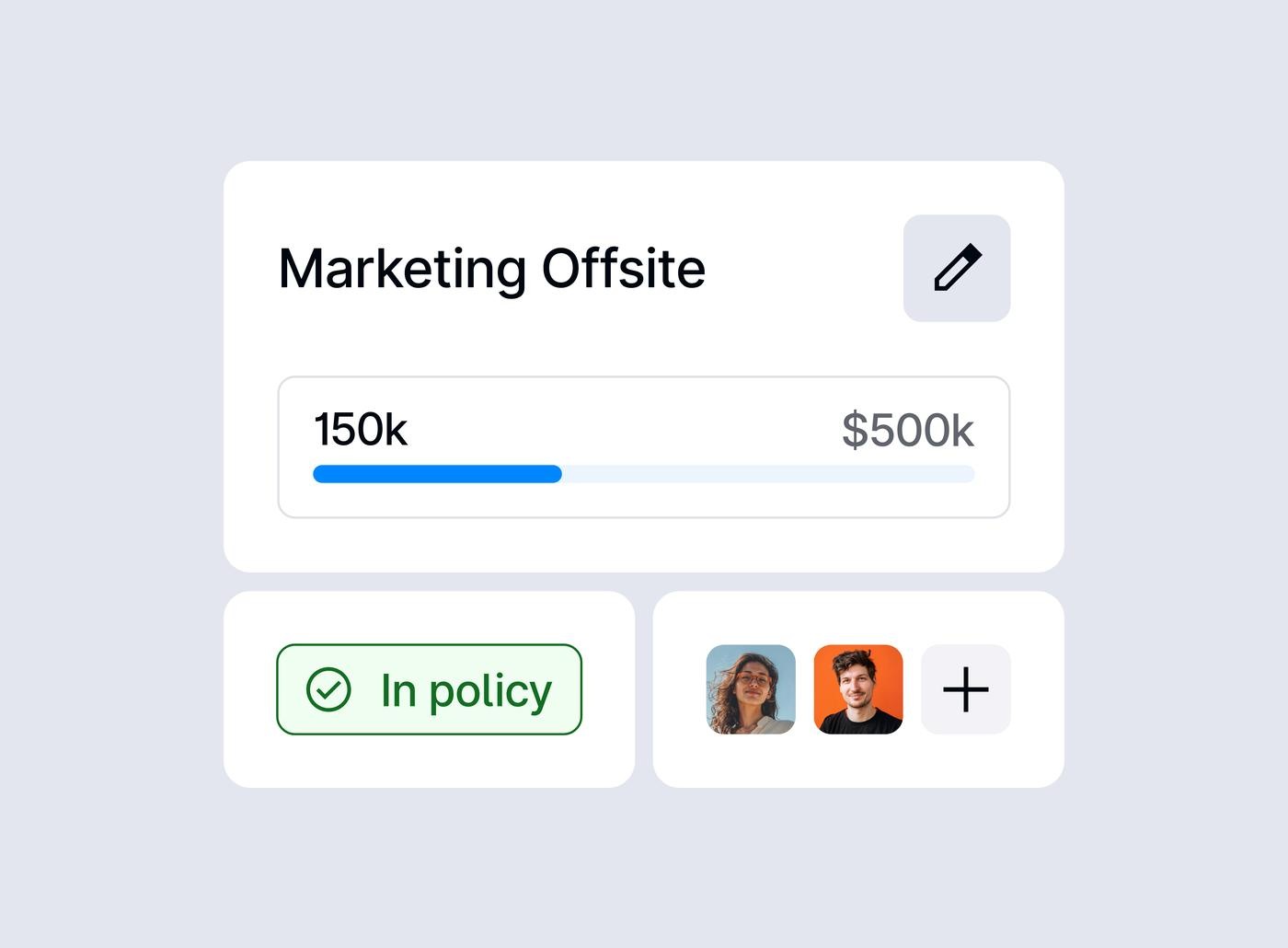
Brex offers physical and virtual corporate cards alongside expense management, bill pay, business accounts and travel. An agency can assign spending limits to particular purposes and use controls around merchants or categories. Its marketing page proposes separating budgets by client or campaign. The point is to bring a financial decision forward, closer to the moment someone buys something.
- 01Name the clientAssign an owner and spending purpose.
- 02Set the boundaryChoose limits and approval rules.
- 03Follow the moneyReview exceptions and reconcile.
That approach suits agency operations managers, finance teams and founders who need delegated purchasing without giving everyone unrestricted access. Brex’s industry page displays logos including R/GA, Canva and WebFX. Those references establish its reach into creative and marketing businesses; they do not tell us how much any particular agency saved.
The founders already knew payments
Pedro Franceschi and Henrique Dubugras founded Brex in 2017 after building Brazilian payments company Pagar.me. They had enrolled at Stanford after selling that business. Brex’s founding problem was access: early-stage companies struggled to obtain corporate cards. A startup could have investors, cash and ambition while fitting awkwardly into conventional lending categories.
The founders’ earlier payments experience matters here. Brex developed into a combination of financial products and software, with the transaction as the meeting point. Its expertise spans underwriting, card infrastructure and the work surrounding a purchase. For an agency, the appeal is connecting the person spending money with the policy and accounting record that follow.

There is a design decision behind that ambition, too. In January 2025, Chief Design Officer Matt Bango wrote that design had moved to report directly to the CEO. For agencies accustomed to selling the value of design, that is an interesting detail: the finance vendor put a designer in its leadership team. Whether the interface fits an agency’s daily work is something its staff can test in a demo.
The expensive lesson in saying yes
Expansion exposed a problem. In June 2022, Brex told some customers it would stop serving them, then published an explanation after its communication caused confusion. Franceschi said smaller businesses needed a more automated product experience, while startups and scaled companies needed tailored support. Trying to satisfy both had stretched the company’s focus.
“We overestimated our ability to serve multiple customers.”Pedro Franceschi, June 2022
The failure was a mismatch between customer needs and the service model, compounded by an unclear announcement. It changed whom Brex chose to serve. That history matters to an agency considering the product today: the word “agency” on a landing page cannot establish eligibility. The actual business, its finances and its operating footprint have to fit.
Do the arithmetic before the rewards
Brex publishes Essentials at $0 per user per month and Premium at $12. Enterprise pricing is negotiated. For a hypothetical 25-person team priced at the published Premium rate, the software arithmetic is $300 monthly, or $3,600 annually, before other applicable charges. That is a calculation, not a customer quote.
$300 / month$3,600 / year · software only
The platform earns interchange on card spending and charges for paid software. Its market includes alternatives such as Ramp and BILL Spend & Expense, as well as corporate cards paired with separate expense systems. Brex’s proposition combines cards and financial workflows. Buyers should compare the particular approval and accounting jobs they need completed, alongside the fee schedule.
There is another number to examine: the payment due. Brex describes its cards as business charge cards requiring full payment when the statement comes due. A spending dashboard cannot make a late-paying client settle an invoice. Agencies financing media buys ahead of collections must match their cash cycle to repayment terms.
Copy the sequence, then choose the tool
The practical lesson is portable. Assign a client and an owner before spending begins. Agree which costs are billable. Set limits and decide who can approve exceptions. Connect the resulting records to accounting. Brex offers accounting integrations and APIs for custom workflows, but software still needs the agency to make those decisions.
It is a weaker fit when a business cannot meet its US incorporation and operating requirements, lacks the financial profile needed for approval, or needs borrowing that can roll over month after month. A tiny operation with little delegated spending may also have less work to automate. Complexity creates the reason to consider the product.
Capital One completed its acquisition of Brex on April 7, 2026, with Franceschi continuing as CEO. Product development has continued: October’s Early Access release includes purchasing-card insights and limit notifications, subject to opt-in settings. The agency buyer’s test remains pleasingly specific. Can this system help the right person spend the right client’s budget, then explain the purchase without a scavenger hunt?