In April 2017, the University of Rhode Island invited two alumni back to campus to talk about artificial intelligence. One had graduated in 1968, the other in 1994. They shared a surname, a company and a professional interest in what happens when a customer needs an answer. Thomas J. Chisholm and his son, T. Brett Chisholm, had made customer service something of a family business.
The subject of their scheduled conversation was AI, machine learning, bots and the evolution of customer service. There is a pleasing domestic quality to that pairing: father and son discussing how to make businesses listen. The commercial stakes, however, were quite serious. Brett was CEO of NeuraFlash, a young Salesforce consulting partner. His father was chairman. They were bringing years of experience with customer interactions to a company founded less than a year earlier.
By September 2025, that company would become part of Accenture. The distance between a campus conversation and an acquisition announcement can look deceptively short on a timeline. Chisholm's route took in enterprise sales, prefabricated homes, business messaging and a patent about language. Follow those turns and a consistent concern emerges: the awkward gap between what a customer wants and what a company's systems can actually do.
A family resemblance, in the wiring
His father had founded Viecore, a consulting, software development and systems integration business serving call centers and customer interactions. Nuance Communications bought it in 2007. Tom stayed on as a senior vice president. Brett's own career also passed through Viecore and Nuance. The overlap gave NeuraFlash a history that preceded its incorporation.
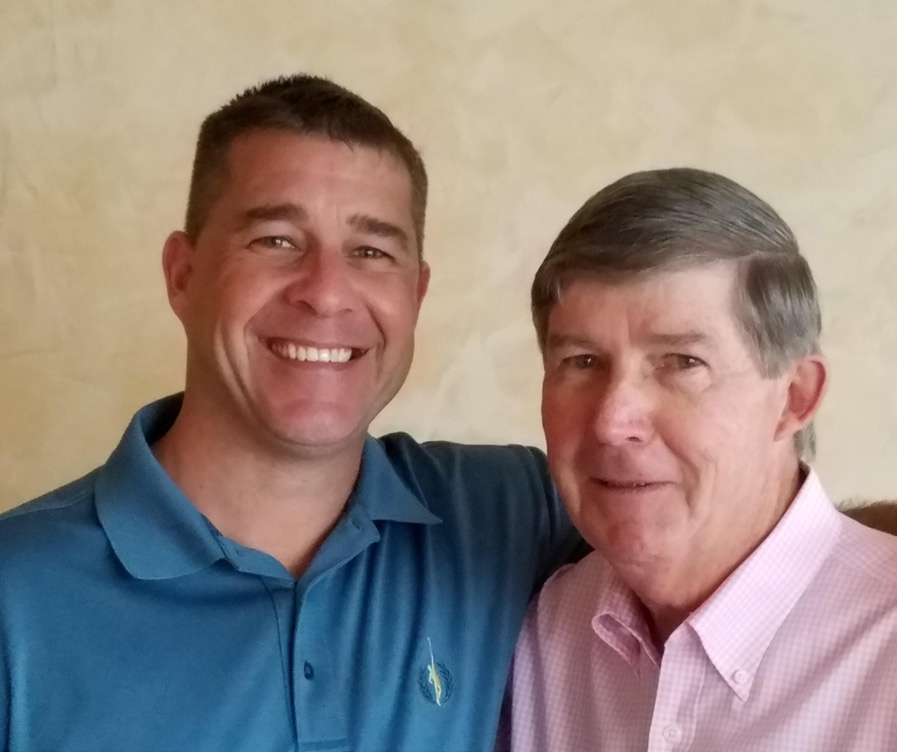
Brett graduated from URI's College of Business in 1994. His early professional record includes an account role at IKON Office Solutions, followed by sales work at Viecore. At Nuance he rose to vice president roles in the enterprise business. This was a career built around selling and delivering technology inside organizations, with all the practical negotiation that involves.
Then came a detour into the physical world. From 2012 to 2014, Chisholm was senior vice president of sales and customer experience at Blu Homes. A house is a considerably larger purchase than a software subscription. The job nevertheless joined two subjects that recur throughout his working life: the sale and the experience that surrounds it. He subsequently became vice president of sales at HeyWire, the business-messaging company.
That sequence matters because it gives his later AI work a commercial grounding. A customer has to understand an offer, decide to buy, arrange delivery and get help afterward. Software can appear at every step. Chisholm's career moved among the businesses providing it and the organizations using it. The continuity is easier to see in the customer journey than in the names on his business cards.
The message that needed a better address
A patent offers an unusually precise window into that work. Chisholm is named alongside James Hunt and Eugene Lee Lew on US patent 10,360,309, granted on July 23, 2019. Its title, “Call center SMS-MMS language router,” has the brisk charm of a filing cabinet. The problem inside is considerably more human.
A customer sends a text message in a language the receiving call center cannot readily handle. The described system identifies the language and routes the message toward a suitable destination, such as a representative with the appropriate language skills. Translation provides another possible route. The application dates to April 2015, before NeuraFlash launched.
sends a message↓System
identifies the language↓Route to
a suitable person or translator
The design treats understanding as an operational problem. Someone may be perfectly capable of helping, yet the message still has to reach them. A channel is only useful if the organization behind it can respond. That is a modest idea with a long working life, and a useful way to read the business Chisholm would build next.
June 2016: a small office, an established problem
NeuraFlash launched in June 2016 in a small Burlington, Massachusetts office. Brett, Tom, Jim Hunt and Dennis Thomas brought experience in messaging, natural-language processing and customer interactions. The opportunity they identified was specific: businesses using Salesforce needed help putting AI and digital channels to work.
Chisholm later described the original ambition as helping companies “get the most out of their Salesforce investment.” It is an unromantic sentence for an AI founder, which is part of its appeal. The customer had already bought the platform. The next task was making that purchase useful.
The partnership required more than familiarity with call centers. Kartik Viswanadha brought Salesforce expertise to the early team. NeuraFlash joined Salesforce's AI incubator and worked on Einstein Bot pilots, including a rollout with Pearson Education. The company was learning how to combine experience from one technology era with the tools of another.
“get the most out of their Salesforce investment”
T. Brett Chisholm, reflecting on NeuraFlash's original goal
The size of the organization changed. Its 2021 retrospective recorded more than 270 employees and more than 300 customers. Growth also crossed borders. In October 2019, NeuraFlash announced its India subsidiary and a New Delhi hub that already had more than 30 employees. An undertaking launched in a compact Massachusetts office was becoming an international delivery organization.
Those milestones describe a particular kind of entrepreneurship. Consulting grows through people who can understand a client's requirements and carry a project through. Hiring, training and coordination become part of the offering. A clever demonstration might win a meeting; the people doing the implementation have to make the meeting worth having.
The customer eventually leaves the chat window
Chisholm's interest extended beyond messages. In 2020, NeuraFlash was scheduling more than 200,000 deliveries and service appointments a day through Salesforce Field Service. He discussed how improved appointment information could help customers prepare for delivery and setup. There is an everyday satisfaction in knowing when somebody will actually arrive. The calendar can be as consequential as the conversation.
This wider view helps explain the company's combination of sales, service and field-service work. A customer interaction can begin on a screen and finish at a front door. The systems supporting it need to carry information along that route. Chisholm's public commentary kept returning to the experience the customer would have at the end.
By 2024, the product names included Salesforce Agentforce. NeuraFlash participated in its early implementations, while its leadership discussed the role of conversational design. As software gained more ability to act, the work still required deciding how an interaction should unfold. Someone had to think about the person asking the question.
In January 2025, Chisholm was named to Salesforce's Sales Cloud Partner Advisory Board. Four colleagues were selected for boards covering Agentforce, Service Cloud, Field Service and Manufacturing. Their remit included sharing feedback with Salesforce product teams. His sales background had found another expression: helping inform the tools other sales organizations would use.
A bigger company, with the same homework
Accenture announced its agreement to acquire NeuraFlash on August 27, 2025. At that point, the business had delivered more than 1,000 implementations for over 400 customers globally. Approximately 510 professionals, carrying more than 2,000 certifications, were to join Accenture's Salesforce Business Group. The acquisition closed on September 29.
A dated snapshot: August 27, 2025.
The announcement emphasized Salesforce and generative AI, alongside NeuraFlash's AWS experience in contact centers. Chisholm described the opportunity in terms of expanding the team's global impact and capabilities. The business he had helped start would have access to a much larger organization, with a correspondingly wider set of customers and delivery resources.
He remained publicly identified as NeuraFlash's CEO and co-founder. In December 2025, the company announced its recognition as AWS Global Customer Experience Partner of the Year. Chisholm connected the award to customer trust and the company's work on Amazon Connect. The setting had become larger; customer interactions remained the subject.
There is also a consistent public habit in how he talks about company-building. Sharing a film about NeuraFlash's history in February 2024, he credited the people doing the work and the relationships with Salesforce, AWS and DocuSign. That is his account of the enterprise: a company assembled through teams and partnerships, with a founder making introductions as well as decisions.
The road ahead has a toll booth
In June 2026, Accenture launched Accenture Edge for companies with annual revenue between $300 million and $3 billion. By September, NeuraFlash was part of that business. An AWS collaboration highlighted its work with 407 ETR, the electronic toll highway in the Greater Toronto Area. The assignment involved moving the customer-service operation onto Amazon Connect while keeping daily work running.
The results included 99.9 percent platform reliability, call and chat abandonment at five percent or less, and more than 250 employees on a unified system. These are service measures with recognizable consequences. Bills still arrive. Accounts still need updating. A new platform has to cope with the ordinary business of a busy road.
It is a fitting place to find Chisholm a decade after NeuraFlash began: behind a conversation between a customer and a company, where information must travel to the right place. His father's call-center business, his own sales jobs and that language-routing patent all belong to the same long story. The tools keep changing. A person still needs an answer.