Steve Wozniak had signed up to help promote a musician. Brandon Kessler, checking the volunteers on a record-label mailing list, saw the name and sent an email to establish whether this was the Apple co-founder. It was. A fan relationship became a conversation, and the conversation eventually helped Kessler recruit Wozniak as an adviser to his next company. Somewhere in the distance, a networking seminar was making the whole business sound considerably more complicated.
The episode belongs to Kessler’s record-label years, before ChallengePost became Devpost. It also offers a useful way into his career. He has repeatedly worked in the space between someone who can make something and the people who might care about it. First came records, concerts and fans. Then came software projects, hackathons and developers looking for a reason to build.
Viewed from a distance, running an indie label and running a software competition platform seem like different occupations. Kessler has offered a shorter job description: “I support makers and their creations.” The materials changed. The problem of finding an audience travelled with him.
A record label, with homework attached
Kessler grew up in San Diego and came to Columbia in New York. Music and business already interested him; reading about David Geffen as a teenager had suggested that the two might fit inside one career. College gave him proximity to the industry. He filled those years with jobs and internships, learning its workings while also completing his degree.
He spotted the Dave Matthews Band early, at a small show at Wetlands, and offered to help. Radio and campus promotion followed. The offer was practical: here was music he wanted other people to hear, and he could do something about that. An audience, in this version of the music business, was something you went out and found.
His studio work supplied less portable lessons. Kessler recalled searching for Christmas decorations at two in the morning on a June night because Mariah Carey wanted them for inspiration. Once the tree was decorated, she sang a couple of words and left. A young person contemplating an independent label could hardly ask for a more economical demonstration of the attractions of independence.
In 1996, during his senior year, he started Messenger Records in his dorm room. He would run it for 12 years. Its roster included Chris Whitley, Dan Bern, Anne McCue and Johnny Society. These were years spent working on the business around music: recording, distributing, promoting and persuading people to listen.
Messenger’s work on Whitley’s Dirt Floor shows what promotion meant at that scale. Fans helped spread the word, record stores received attention, and the web extended the label’s reach. In its 1999 promotion, roughly 200 grassroots marketers supported the album, alongside online performances and persistent contact with retailers. It was patient, specific work. The internet gave enthusiasm more places to go.
Kessler also went directly to the people who could play the records. He called stores and suggested songs suitable for their in-store sound systems. The apparently unglamorous detail matters. A label could believe fiercely in an artist and still have to explain, one conversation at a time, why a stranger should give the music a chance.
The question worth a hundred dollars
The idea that led to ChallengePost arrived through a different kind of audience participation. In 2006, Kessler encountered an online contest asking programmers to make Windows run on an Intel-based Mac. The initial prize was $100. Other people contributed money through PayPal, taking the pot to about $14,000. Within three weeks, someone had solved the problem.
He saw a business possibility in that sequence. A person had described something that did not yet exist. Others cared enough to contribute. Programmers cared enough to try. A small website had briefly brought the problem, the reward and the people who could tackle it into the same place. Kessler wanted a platform where that could happen repeatedly.
Business school at Columbia, attended on nights and weekends, helped bridge his two careers. His MBA came in 2007. But moving into technology meant rebuilding parts of his professional world. He had contacts in music; raising money for a web company required meeting a different set of people and explaining a different kind of ambition.
The financial crisis made that introduction harder. Kessler recalled investors withdrawing as their portfolios fell. The fundraising process dragged on. Wozniak’s support helped, but a recognisable name did not remove the work of finding investors, developing the idea and getting the company launched. ChallengePost went live in 2009.
“People are not just motivated by money”
Brandon Kessler, on why people enter challenges
A marketplace learns to choose
The early company had a broad brief. Organizations could publish challenges and invite the public to solve them. Software was part of that world, alongside other kinds of competition. New York City’s BigApps program gave developers a reason to work with city data. Federal government work brought another scale of customer and another set of demands.
When the government wanted its own challenge platform, Kessler’s team had to change the architecture. He recalled stopping other work and building the required system in 60 days. The business was learning how to serve organizations that wanted their own spaces while using the same underlying machinery. Customer demand could redraw a product plan rather abruptly.
Money helped the company grow into those demands. In August 2011, ChallengePost announced a $4.1 million Series A, led by Opus Capital. Other investors included Betaworks, Joshua Schachter, Jason Calacanis and Irwin Jacobs. The company had expanded from a two-person operation to 14 employees. Competitions hosted on the platform had offered more than $40 million in prizes by then.
Those figures describe an early stage, when the name still accommodated almost any challenge. The more consequential choice came later. In 2013, Kessler noticed that software and technology competitions were especially successful and inspiring. The company began concentrating on developers. Choosing an audience meant giving up some of the original breadth.
In summer 2015, ChallengePost became Devpost. The new name followed the work. Portfolios gave developers somewhere to keep their projects and explain what they had made. A feed helped them follow projects, competitions and other builders. The competition could finish while the record of the work remained available.
- Open challengesA platform for many kinds of contest
- Software firstA focus sharpened around developers
- Work that stays visibleProjects and portfolios beyond the deadline
ChallengePost’s broad launch in 2009 led to a software focus and the Devpost name in 2015.
The founder’s job is mostly conversation
Kessler is clear that Devpost has a sole founder. He is also clear about how much of a CEO’s day involves other people. Asked to describe the job, he put hiring, direction and employee freedom at its centre. Much of the work was communicating with employees, candidates, customers, board members and investors.
That account sits comfortably beside the younger label owner calling stores. The scale and subject had changed, but persuasion remained part of the job. He describes himself as an optimist and says he has long wanted responsibility for his own successes and failures. Independence, for him, carries an appetite for accountability.
He sounds less ceremonial when asked about the challenges of running the company. His response was to ask which time period the interviewer wanted. The joke makes room for a more practical answer: challenges are continuous, and the difficult skill is deciding which deserve attention. Experience arrives partly through mistakes. The calendar, regrettably, keeps supplying further opportunities.
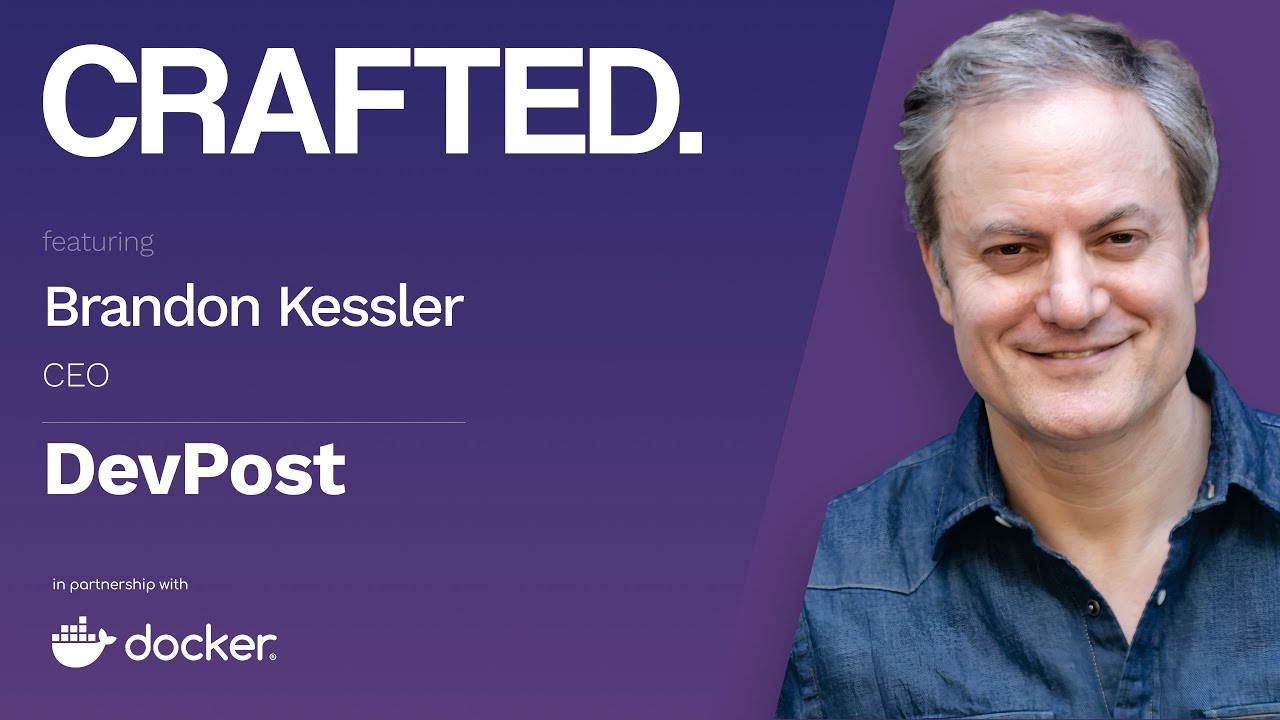
Giving the experiment a deadline
By July 2024, Kessler was describing another shift in the work passing through Devpost. He said the platform had powered 1,200 hackathons the previous year, and only about a dozen lacked an AI component. The figure captures a particular period in the company’s history: developers and organizations were trying to find useful things to do with a rapidly changing technology.
Public competitions offered sponsors a way to put tools into developers’ hands. Private hackathons offered companies a way to let employees experiment together. Devpost for Teams addressed that internal work. Kessler stressed that an executive’s AI strategy needed employees who could try things, learn and work out what was useful in practice.
He has also argued that access to engineering should extend to people from different backgrounds. AI tools, in his view, can widen participation in making software. The attraction is consistent with his earlier career: more people able to create, with a structure that helps them get their work into the world.
Hackathons powered in 2023, as Kessler reported in his July 2024 interview.
Still making room for the next attempt
The experiments now happen inside his company as well. Devpost’s engineering team ran a 48-hour learning hackathon around more reliable interactions with large language models. The team chose its focus together, worked beyond routine roadmap tasks and shared projects across the company. Kessler publicly highlighted the exercise and credited engineering leader Matthew Zheng.
A separate learning hackathon took the idea to a wider audience. Over 30 days, more than 1,200 people registered and 130 projects were submitted. A Claude Code plugin guided builders through scope, requirements, a technical specification and a build checklist. The work began with planning. Even in an age of rapid code generation, someone still had to decide what the project was supposed to do.
Devpost’s 2026 research also points toward repeated participation. Its platform data associates six or more hackathons with a higher rate of shipping AI projects to production than first-time participation. That is an association, rather than proof of what caused it. But it gives Kessler a concrete reason to keep thinking beyond a single prize ceremony.
His career has involved plenty of beginnings: a band heard by a small crowd, a label started between classes, a contest spotted during business school, a platform that learned to choose its audience. Running through them is the work that follows the first spark. Someone has to arrange the opportunity, invite people in and give what they make a chance to be heard.
Keep the conversation going
Projects, conversations and more from Kessler’s working life.