There is a peculiar kind of software that becomes interesting only when something goes wrong. A sample is mislabeled. A recipe changes. A supplier falls short. A batch carries the right result but the wrong paperwork. Suddenly the quiet systems beneath a laboratory or factory must answer a rude series of questions: what happened, who touched it, when did they touch it, and can any of this be proved?
Brandon Henning has spent nearly three decades in that quiet layer. His career has passed through jam factories, manufacturing execution systems, cloud quality platforms, telecom expense management, medical-device software, and laboratory informatics. The industries changed. The central problem did not. He kept working on ways to turn complicated operations into records that people can use and organizations can trust.
It is an unusually coherent career for one with so many corporate names on it: The J.M. Smucker Company, GE, Callisto Integration, Rockwell Automation, Sparta Systems, Tangoe, Greenlight Guru, and STARLIMS. Each stop added a different angle on the same stubborn object - regulated work in motion.
The factory was the first classroom
Henning studied management information systems and human resource management at Kent State University from 1991 to 1996. The pairing now reads like a preview. One discipline asks how information should move. The other asks how people do. His professional life has repeatedly sat between them.
He began at Smucker in 1996 and spent roughly eleven years there, eventually managing manufacturing and IT systems across 30 sites. This was not software observed from a conference room. Food manufacturing offers an impatient education in physical constraints. Ingredients arrive, lines run, inspections happen, and products leave. A database field is never merely a field when it represents a batch, a test, or a decision on the plant floor.
The experience carried into GE, where he worked as a global industry manager for food and beverage, and into Callisto Integration, where he managed cross-functional teams delivering product lifecycle and manufacturing execution projects. At Rockwell Automation, the work became part of the intellectual property record.
Patents for the plumbing
Henning is named with six other inventors on a family of Rockwell-assigned patents concerning manufacturing execution. One design routes messages from an enterprise resource planning system to the manufacturing application capable of carrying out a business objective. Another manages libraries of industry-specific workflows that can respond to those requests. In plain language, the inventions help the business system ask for something and the factory system understand what to do.
from ERP
context
workflow
Patent language is a desert where verbs go to wear neckties, but the product idea is lively: translate intent across layers without losing context. The same instinct appears later in Henning's work. A good system does not merely collect facts. It makes them travel to the place where a decision happens.
Quality moves to the cloud
At Sparta Systems, Henning first led industry solutions and then product management and strategy. His remit included food and beverage manufacturers confronting new supplier-quality requirements. In 2016, Food Logistics named him a Rock Star of the Supply Chain, citing his team's five-step approach to supplier quality management. The same year, Supply & Demand Chain Executive named him a Pro to Know.
The awards arrived during a practical period of rule changes, supplier scrutiny, and new software expectations. Henning was telling manufacturers to look beyond compliance as an annual ceremony. In a 2016 interview about food safety, he put the question more directly: how proactive were companies being in trying to mitigate risk?
“The real question for me is how proactive are companies being in trying to mitigate it.”Brandon Henning, speaking about food-manufacturing risk in 2016
He also helped lead the evolution of TrackWise Digital, Sparta's cloud quality-management offering. By 2018, Henning said its client base had grown from the twelve customers acquired with the original platform to more than fifty. The product expanded beyond core audit and corrective-action work into complaints, documents, training, and supplier quality. Cloud was not treated as a fashionable suffix. It was a way to connect more of the quality record.
The product leader keeps changing altitude
Henning's next roles widened the frame. At Tangoe, he led product, data-platform, and automation work before becoming chief product officer. The operating material was different - telecom, mobile, and cloud spending - but the shape was familiar: orders, invoices, inventory, exceptions, and savings had to become one comprehensible system.
At Greenlight Guru, he served as vice president and head of product. A 2022 launch connected bills of materials, product families, engineering changes, design-history records, and quality actions for medical-device teams. Once again, the product argument was about eliminating islands of information. Disconnected tools create extra work; connected records create traceability.
Then came STARLIMS in 2022, where public materials have described him across product, marketing, and strategy leadership titles. The job put him near the center of laboratory informatics: LIMS for managing samples and workflows, electronic lab notebooks for research, scientific data systems, mobile execution, analytics, and the dull but essential choreography of compliance.
One product becomes four hundred recipes
In a 2024 food and beverage discussion, Henning offered a number that explains why old systems begin to creak. He had seen customers move from managing 100 recipes for a product to 400. New ingredients, new additives, regional preferences, and quicker passages from pilot production to full manufacturing all pile variation onto the quality team.
A similar product may need to satisfy one expectation in the United States and another in Korea. Testing must move faster while the record remains intact. At the same time, Henning observed that laboratories and quality departments were struggling to find people for on-site roles. His response was not to lower the bar. It was to systematize more of the work and use data and analytics to help smaller teams maintain it.
“There's a real need for the ability to dynamically manage new formulations.”Brandon Henning on the multiplying complexity of food manufacturing
This is where his factory years and strategy title meet. Product strategy sounds grand until it encounters 400 recipes. Then it becomes a question of configuration, testing, instruments, permissions, signatures, and whether a technician can complete the task without opening a private detective agency inside the software.
The laboratory must remember
Henning has hosted conversations with teams operating laboratory systems at global scale. In a STARLIMS discussion with Bayer, the emphasis fell on process clarity before implementation, careful upgrades in a regulated environment, and the audit trail behind every interaction. In another conversation, a DuPont technical leader described consolidating laboratory systems to create a more coherent testing ecosystem.
These talks reveal the less photogenic side of digital transformation. An upgrade is not merely a new interface. It can mean harmonizing processes across countries, validating changes, connecting instruments, migrating customizations, training users, and preserving the evidence required to explain the result later. The cloud may be elsewhere. Responsibility remains stubbornly local.
Henning's 2024 comments around a public-health LIMS launch also focused on a multi-year roadmap and a browser-based interface. Public laboratories bring another set of stakes and workflows, yet the product challenge remains recognizable: modernize the experience without breaking the chain of proof.
AI arrives after the groundwork
By 2025, Henning was appearing publicly as both a STARLIMS marketing leader and Labstep general manager. On the Decoding the Digital Lab podcast, he discussed AI as a human assistant: a tool for accelerating analysis of large datasets, automating repetitive tasks, and making scientific work more efficient and enjoyable. The emphasis matters. It places AI beside the scientist rather than in the scientist's chair.
That view is consistent with the preceding decades. AI cannot make a scrambled process trustworthy by force of personality. It needs usable data, clear context, connected systems, and boundaries people understand. The glamorous layer depends on the plumbing Henning has been working around since the 1990s.
His professional reputation also reflects this combination. Public recommendations from former colleagues describe a collaborative product leader with deep industry knowledge, technical understanding, and an eye on the long-term consequences of customer decisions. The words fit a career spent switching altitude: plant-floor detail one moment, portfolio direction the next.
A systems thinker after hours
Charlottesville provides the gentler coda. Henning has chaired the city's Chocolate Festival and Chocolate Chase through First United Methodist Church, bringing together churches, nonprofits, vendors, runners, and outreach programs. Chocolate is a more forgiving medium than enterprise software, although an outdoor festival has its own dependencies, edge cases, and users who become impatient near dessert.
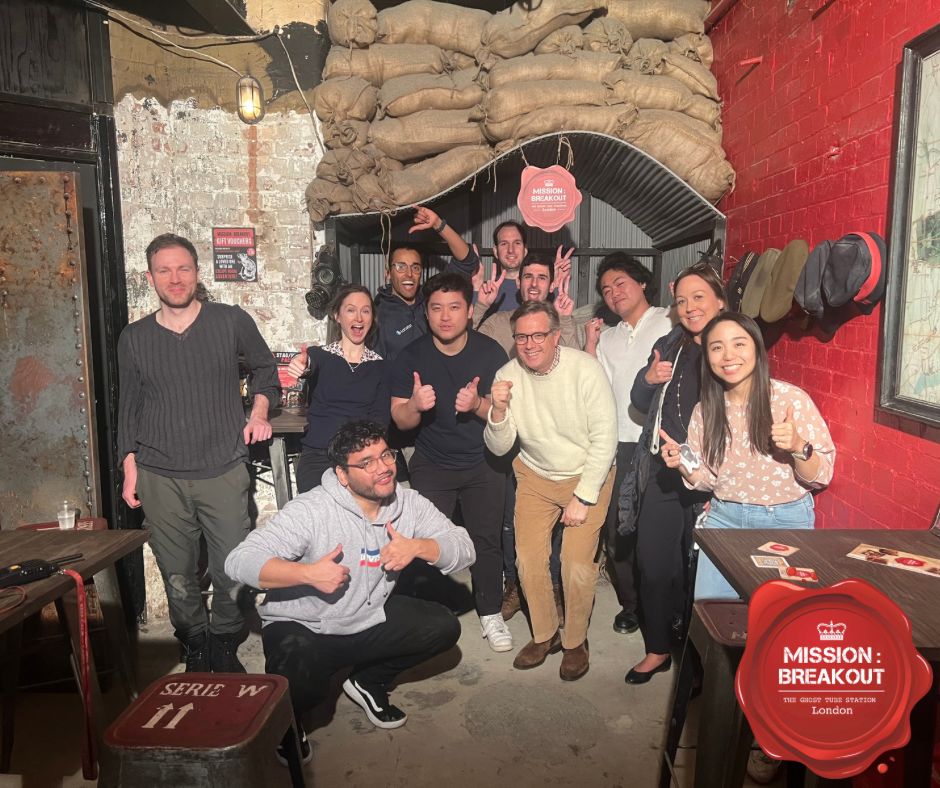
A company post from London showed another small scene: Henning joining the Labstep team for an escape room after a problem-solving visit. It is tempting to make too much of an executive voluntarily entering a room full of puzzles. Still, the image suits him. Find the clues. Connect the systems. Keep the team moving. Leave with a record of how it was done.
The products in Henning's career are rarely household names. Their work is more consequential than conspicuous. They remember the sample, route the request, document the change, and help a scientist find the result again. When everything works, the system disappears. When a question arrives, it answers. That may be the quietest ambition in software - and one of the hardest to fulfill.