Phillip Alvelda’s AI agent had a problem. It was waiting for Phillip Alvelda. In a public account of an OpenClaw experiment, the Brainworks founder described discovering that the slowest part of his new development system was the person supplying the instructions. So he asked the software to build a task queue. When that still left him struggling to keep up, he asked it to help manage the queue, too.
- Brainworks backs early-stage businesses built around AI.
- Its own investment operation uses AI for screening, research and monitoring.
- The affiliated Foundry builds products inside a separate operating company.
The experiment came with an unusually ordinary price tag. Alvelda said he began on a $100 monthly Anthropic plan and upgraded to $200 within two days. That was the subscription cost of his experiment, not the cost of running a venture firm. But it explains something about Brainworks: the investor is trying out its own argument at the keyboard.
The bottleneck moves
Brainworks sits where venture capital meets company building. Its proposition is that AI changes both the amount of work a small team can perform and the capital needed to build a business. If that is true, the investor supplying the capital ought to change its working habits as well.
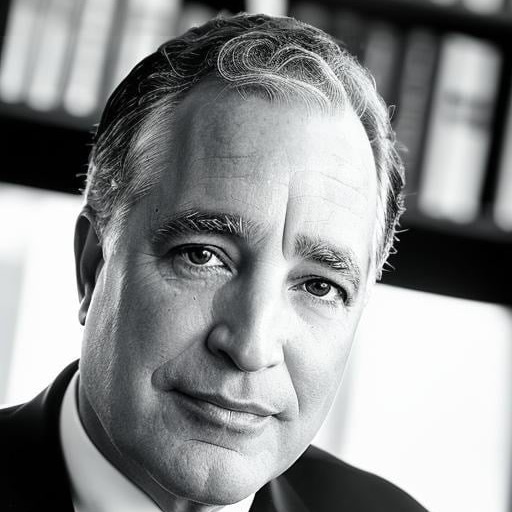
There is a longer history behind the experiment. Alvelda worked at NASA’s Jet Propulsion Laboratory, studied at MIT’s AI Laboratory and founded technology companies including MicroDisplay and MobiTV. At DARPA, he managed the Neural Engineering System Design program. Its ambition was specific: develop an implantable interface capable of communicating with up to a million neurons.
That background explains the firm’s taste for technical questions. A neural interface has to handle bandwidth, power and biological compatibility. An investment system has its own constraints: information arrives faster than people can evaluate it. The analogy is ours, but the recurring engineering question is useful. Where does the flow get stuck?
A fund for founders who know the machinery
The current venture firm lists 2024 as its founding year. Its December 2025 launch announcement set a $50 million fund target, with a $15 million first close planned for the first quarter of 2026. Those figures describe the fundraising plan. The distinction matters when assessing what the firm has set out to build.
For founders, the offer combines early-stage capital with technical and operating help. The current FAQ describes typical checks of $500,000 to $3 million at seed and Series A, with working prototypes or early traction preferred. The launch announcement included pre-seed and a broader investment range. The practical entry point is the website’s pitch form.
Typical seed and Series A checks.
Working prototype or early traction preferred.
Its interests span enterprise software, health and biotechnology, infrastructure, and creative and media tools. Prospective founders can be in North America, Europe or Asia-Pacific. Brainworks asks them to explain the AI technology, team, traction and amount being raised. Its stated preference is for people who understand why their system works.
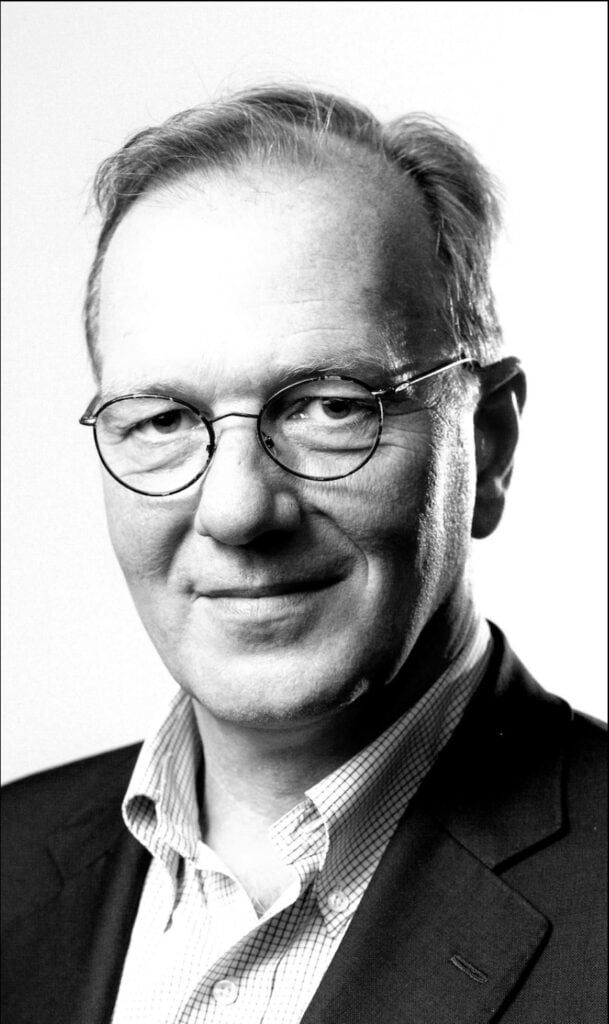
European partner Volker Hirsch brings company-building and venture experience, including work at Amadeus Capital Partners. Louis Rajczi, an adviser, brings experience at Forté Ventures and Siemens Venture Capital. The positioning rests on that combination: investors who can examine the machinery and help a founder build a business around it.
The investor becomes the experiment
In a January 2026 operating essay, Alvelda described automating roughly 90 percent of initial deal screening. Pitch materials enter the system; data is extracted and compared with investment criteria; relevant opportunities reach the partners. Portfolio monitoring, market research and investor reporting receive similar treatment, according to his account.
The business logic is straightforward. Investment operations consume money and partner time. Reducing repetitive work could leave more of both available for founders. Brainworks presents itself as an alternative to funds whose operating processes require larger analyst teams, and to company-building models that assume substantial staffing before a product can move.
“Our AI-native operating model means more of our LPs’ capital goes into companies, not overhead.”
Phillip Alvelda / fund launch announcement
The partners still assess founders, AI architectures, positioning and timing. That division of work is central to the proposition. Brainworks is selling access to capital and experienced judgment, with software accelerating the preparation. Its operating claims describe how it intends to deliver that service; investment outcomes remain the test of whether the approach pays.
Five products under another roof
Then there is the Foundry. Current materials identify Brainworks Ventures Foundry, Inc. as a separate operating company affiliated with Brainworks Ventures, LLC through common founder control. Its products are internal divisions. That makes its structure different from a fund owning minority stakes in outside startups.
The Foundry lists five live products: FlyOnTime for aviation operations and on-time tracking; StraightFacts for political and media discourse; VitalMe, a health web application in therapist testing; Catalyst Democracy Operations, a nonpartisan campaign system; and Cyrano for communication and relationship coaching.
Its AI operations associate is called Hallie 9000; its AI engineer is Montgomery Scott. The names supply the science fiction. The operating claim is more prosaic: agents prepare diligence packs, maintain systems and monitor divisions while people make strategic and capital decisions. The Foundry’s separate SAFE offering finances its own product development and operations.
The handoff you can steal
The useful lesson starts with Alvelda’s queue. Adding capacity exposed a coordination problem. His response was to change how work arrived, then change how it was assigned. A team can copy that sequence: identify repeated work, make the handoff explicit, inspect the results and keep responsibility for consequential decisions clear.
That approach depends on work being sufficiently specified and its output checkable. Brainworks’ own model reserves technical evaluation and founder assessment for experienced people. Faster preparation cannot settle those questions by itself. The company’s wager is that reducing the queue gives those people more room to answer them well.
Follow the experiment
Watch the people behind the thesis
▶Phillip Alvelda: More intelligent; less artificialApplySci at Stanford / YouTube↗▶Volker Hirsch: AI & The Future of WorkTEDxManchester / YouTube↗