The internet has no shortage of video. It has a shortage of video that can answer a precise question. Ask for a hundred thousand hours of cooking footage in which someone is holding a pan, with reasoning annotations layered on top, and abundance becomes a clerical nightmare. Somewhere inside billions of clips, the right moments exist. Finding them, cleaning them and making them legible to a model is the expensive part. Braiden Dishman has chosen that expensive part as a company.
Dishman is the co-founder and CEO of Shofo, a four-person San Francisco startup in Y Combinator’s Winter 2026 batch. Shofo’s pitch is deliberately vast: build a continuously updated index of video, then let AI teams search it and order exactly the data they need. The company says its index contains billions of videos. Its newer self-serve product, RecipeBook, opens a searchable catalog of more than 25 million clips and allows a customer to filter, upvote and downvote the results.
The distinction is easy to miss and central to the business. A heap of files is storage. An index that can find “the same action with two different outcomes” is infrastructure. Shofo is trying to make the second out of the first.
The useful remains of a first idea
Shofo did not begin with a clean whiteboard. Dishman and his co-founders met while building Correkt, an AI search engine for multimodal content. Correkt reached more than 40,000 users before the team pivoted. The public startup vocabulary can make a pivot sound like a pirouette: light, quick and performed to applause. In practice, it usually means admitting that one answer is wrong while deciding which parts of the work are still right.
The Shofo team kept two unusually valuable parts. It kept the people: Dishman, Andre Braga and Alexzendor Misra, with the company’s public materials identifying complementary responsibilities across business, AI and engineering. It also kept the difficult knowledge accumulated while working on multimodal search. The consumer-facing answer changed. The deeper problem - making sprawling visual media findable - became more specific.
That specificity matters. An AI lab does not merely need “cooking videos.” It may need first-person footage, a certain language, a particular hand-object interaction, stable scenes, failure examples or labels that explain why an action worked. Each additional condition turns a familiar search problem into something closer to industrial prospecting.
Shofo describes a process in which software agents search the index, extract a matching subset, route it through labeling and deliver the result in days. It is an ambition measured less by a glamorous interface than by how much waiting, bargaining and manual sorting disappears.
“The best way to close deals is to become friends with your customers.”Braiden Dishman, on X
An economics graduate learns the price of friction
Dishman studied economics at UC Santa Barbara before working at Amazon Web Services. His professional biography is young enough that college and company still overlap in revealing ways. In one post, he recalled sitting in UCSB’s Entrepreneurial Insights class and asking founders about their journeys. Roughly a year later, Professor Martin invited him back as the guest on the other side of the questions.
The students asked about differentiation, pricing and team building. Shofo offers tidy case studies in all three. Its differentiation rests on the index and labeling system. Its team stayed together through the closure of Correkt. Its pricing experiment is RecipeBook, launched after the founders asked data vendors at CVPR what an hour of footage cost. Dishman reported answers ranging from $15 to $480, usually hidden behind calls, samples and weeks of negotiation. RecipeBook advertised $3 an hour and no sales call.
Transparent pricing is a small rebellion in enterprise software, where the price page often behaves like a nightclub door. Here it is also a product argument: video data should be browsable and purchasable, not commissioned as a minor diplomatic mission.
Dishman’s own late-night observation captures the other side of removing friction for customers. “I never thought I would be discussing legal terms in contracts at 12:30AM on a Friday night,” he wrote. The grand theory of infrastructure eventually reaches a document with tracked changes.
Resourcefulness, without the sepia filter
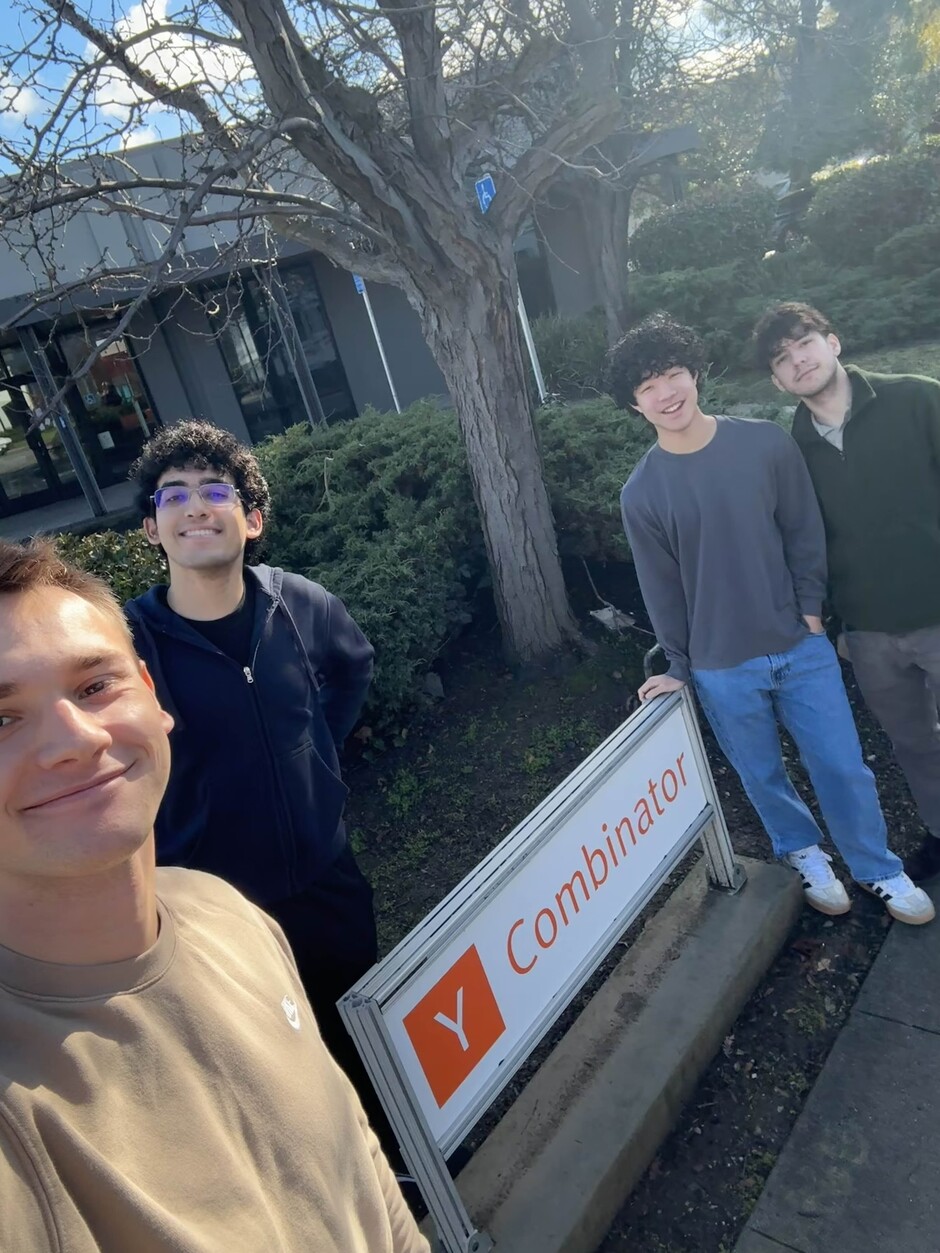
A story told by Dishman’s co-founder Bryan Hong gives the early operation a physical scale. After closing their previous company, the pair rented a $1,000 Chinatown room for the summer. It held one full-size bed. The bed and desk occupied about three quarters of the room. They ate $6 scallion pancakes downstairs, covered their feet with plastic bags before acquiring shower shoes for the communal bathroom, rode buses and BART to meetings, and coded at night.
There is a risk in polishing startup austerity until discomfort becomes a lifestyle advertisement. The useful detail is not the bed. It is the loop: spend little, talk to customers, return to build. An initial $30,000 from angel investors had to last the summer. The constraints were arithmetic, not theater.
That loop appears in Dishman’s compact sales philosophy. Friendship with customers is not a substitute for a product. It is a way of staying close enough to learn which inconvenience is painful, repeated and worth paying to remove. Shofo’s current shape - indexed supply, precise filtering and a self-serve front door - reads like the result of many such conversations.
Wins Colorado’s 5A boys shot put state title while competing for Fossil Ridge High School.
Works at AWS and earns the AWS Certified Cloud Practitioner credential.
Builds Correkt with the team that will go on to create Shofo.
Joins YC W26, launches Shofo publicly and later introduces RecipeBook.
Show the trigger, show the failure
Infrastructure founders face a peculiar communications problem. The product can be technically impressive and visually indistinguishable from a loading bar. Dishman’s answer at a recent showcase was to make the labels visible. In a demo assembled at 4 a.m., the team presented three short examples: reasoning labels that explain why an action occurs, contrastive cases in which the same action produces different outcomes, and segmentation that identifies objects and describes their interactions.
One example involved squeezing a trigger. Sometimes it worked; sometimes it did not. Those paired outcomes help a model distinguish successful action from failure. The example compresses Shofo’s value into something a person can see: the difference between recognizing objects in a frame and understanding what unfolds across time.
After attending CVPR, Dishman wrote that computer vision was increasingly concerned with “what happens next in the world.” He pointed to world models, autonomous vehicles, robotics and simulations as the conference’s recurring subjects. Each depends on sequences, consequences and physical relationships. A still image can show a pan. Video can show what the cook does with it, what changes and what goes wrong.
The scarce thing is not footage. It is footage with enough structure to answer a research question.
Shofo’s aspiration is therefore larger than selling clips by the hour. The company wants to become a research-facing layer through which smaller labs, not only the best-funded ones, can obtain highly specific data. Text researchers have long benefited from giant web corpora. Image researchers have canonical datasets. Video remains fragmented across platforms, formats and contexts, rich in content and poor in obedience.
The throw and the follow-through
Before economics, AWS and video indexes, Dishman was a thrower. At Fossil Ridge High School in Colorado, he competed in discus and shot put. In 2021, he won the state 5A boys shot put title with a mark of 52 feet, 3.25 inches. His earlier recruiting statement described years of football, basketball and track, along with a plain desire to keep improving.
The biographical bridge from shot put to startup is tempting because both reward explosive effort. The more accurate connection is repetition. A throw is rehearsed in pieces: footwork, balance, release. A dataset pipeline is also a sequence in which small errors compound. Neither becomes reliable through enthusiasm alone.
Shofo is still early. Its public story contains the familiar ingredients of a young company - a pivot, an accelerator, large numerical claims and a freshly opened product. The sober question is whether its index and labeling machinery can repeatedly satisfy exacting buyers while the universe of video keeps changing beneath it.
Dishman’s record so far suggests a preference for working through the awkward details. He has gone from asking founders questions to answering them, from a consumer search product to data infrastructure, from calling vendors to publishing a price. The company’s wager is that video can be made queryable enough to function like raw material. If it succeeds, the internet’s most unruly medium may finally learn to take a precise request.