Danny Sheridan’s customer database was stuck to a wall. During Y Combinator’s Winter 2023 batch, the Fern co-founders shared a San Francisco apartment for four months and moved sticky notes through their sales pipeline. The labels were brisk: Chase. Onboard. Grow. A company selling automation was running sales on stationery. There was a sensible explanation: at that size, the important thing was to see the work and do it.
They counted prospects with a public REST API, companies trying to integrate Fern, and customers using it in production. Revenue and customer count measured results; the notes measured the effort that might produce them. Sheridan later explained that it took more than six months to justify replacing the arrangement with HubSpot. Software earned its place when the wall could no longer hold the information. The apartment system had served its purpose.
That small episode is a useful entrance to Sheridan’s working life. He likes systems, but he also pays attention to when they become useful. Fern would eventually attract institutional funding and join Postman. First, somebody had to move the next customer’s sticky note.
Inputs on the wall. Revenue and customer count on the scoreboard.
A bedroom business, before the API business
Years before Fern, Sheridan was selling goods on eBay from his bedroom. Woodside Distributors grew from a high-school hobby into a college business. By 2017, it had 11 team members and $3 million in annual revenue. Its staff included data analysts, account managers and developers. The work had become too varied for one industrious student to do alone.
He graduated from the University of Michigan’s Ross School of Business in 2018 with a bachelor’s degree in business administration. Looking back that year, he singled out learning to build a team and arrange incentives as achievements he valued. His advice to students was characteristically practical: Start a project of your own.
His college reflections also included an enthusiasm for scuba-diving holidays and Ray Dalio’s Principles. Decisions, he thought, deserved to be examined in groups, rather than treated as isolated acts of genius.
The combination matters. Here was a business student interested in the machinery behind a business: information, incentives, people, repeated decisions. Selling another item was one kind of progress. Building an operation that could sell without his personal intervention was another.
The lunch queue had other plans
Sheridan’s campus life included a venture that began with a T-shirt. Waiting to buy lunch at Michigan, he noticed Rishi Prasad wearing a MoneyLion shirt. A conversation led to coffee, and coffee led to the idea of a student organization for learning about cryptocurrency and blockchain by doing something with them.
The pair co-founded Wolverine Crypto Trading. The 2018 account of its beginnings is an agreeable reminder that networking sometimes consists of noticing another person’s laundry. There was no elaborate introduction, just a shared interest and a follow-up meeting. Sheridan was already inclined to turn curiosity into an organized activity.
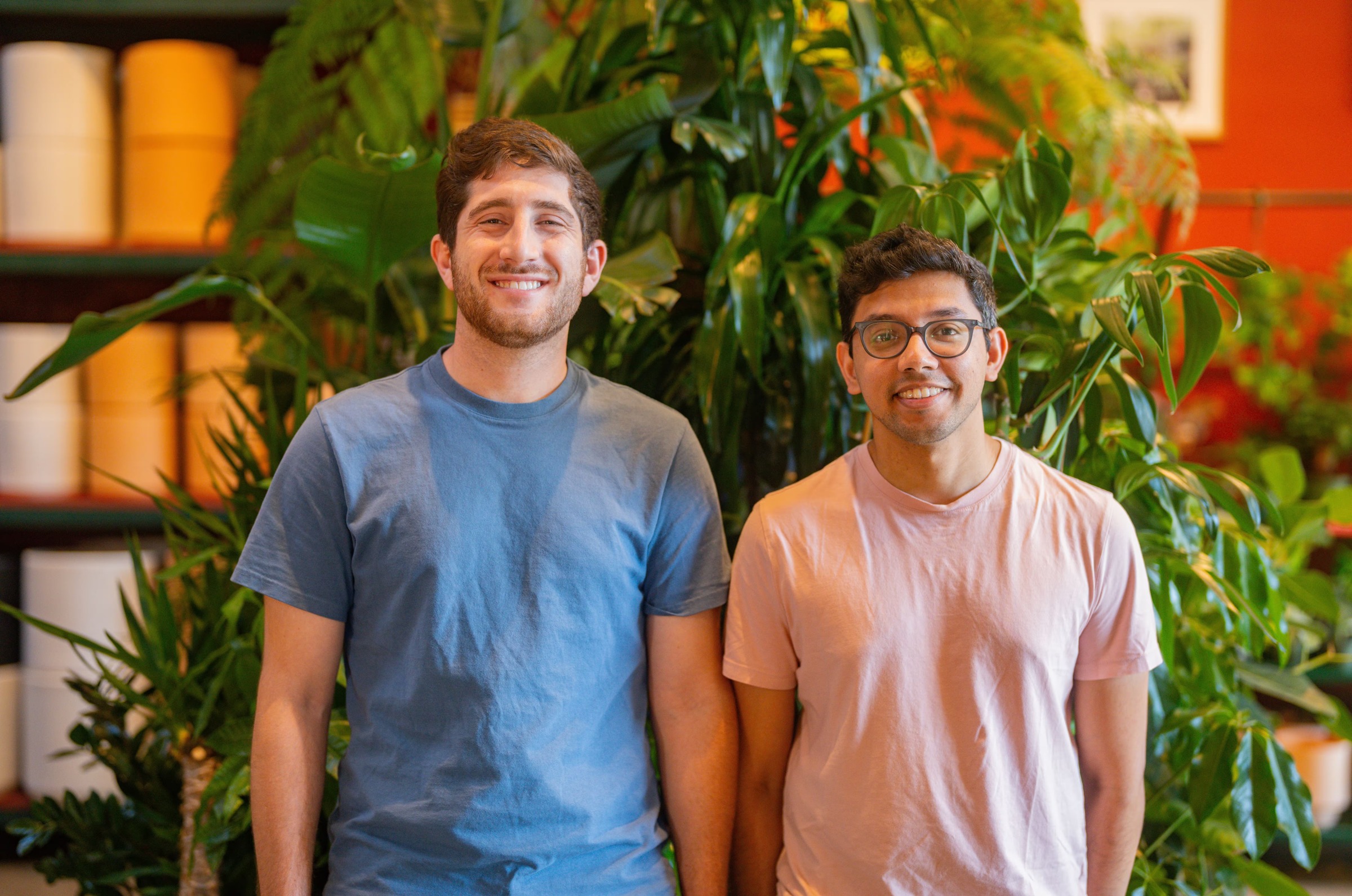
He also met Deep Singhvi at Michigan in 2015. Their later partnership would draw on experiences acquired elsewhere: Sheridan worked in product management at Amazon Web Services, while Singhvi worked as an engineer at Palantir. University provided the connection. Employment supplied a problem worth bringing back to it.
What the big companies had already solved
At Amazon and Palantir, the founders encountered tools called Smithy and Conjure. These systems began with a description of an API and generated software around it. Their importance was less theatrical than their names. A company could describe its interface once, then produce useful materials for developers without rebuilding everything by hand.
The founders’ explanation of Fern’s origins rested on an economic observation: large technology companies could devote engineering teams to such infrastructure. Most businesses could not. Smaller teams still needed client libraries and documentation that worked properly. They simply had fewer people available to maintain them.
An API lets software communicate with other software. An SDK gives a developer convenient tools for using it in a particular programming language. Documentation explains the rules. These pieces are closely related, yet each can require its own upkeep. Change the interface, and the supporting material needs to follow. Otherwise, the customer gets a lesson in archaeological interpretation.
Sheridan’s product interest settled on that maintenance burden. Fern began in 2022 and entered Y Combinator’s Winter 2023 batch. Its proposition was to make the infrastructure the founders had seen at large employers available to other teams.
“Small teams have an unfair advantage: focus.”
Danny Sheridan, writing for startup founders, 2022
Thirty-six days, then the daily work
Sheridan documented the accelerator application with a precision suited to somebody who likes useful facts. Fern applied on November 16, 2022. Thirty-six days later, the founders received a $500,000 wire transfer. His February 2023 account explained the investment terms and the approaching Demo Day. It also included the customary photograph beside the YC sign.
He had a ready-made place to tell that story. His newsletter, Fact of the Day 1, had been publishing compact pieces of information before Fern. In May 2022, he assembled a selection for startup founders and wrote the line about small teams and focus. The note urged readers to solve a problem that somebody else cared about. Later, the newsletter became a place for updates about his own attempts to do exactly that.
By October 2023, he was helping other founders consider YC. He explained that his own application had been late and invited early-stage female founders to get in touch, saying he wanted to help change the imbalance he had observed in the program. The invitation made the accelerator experience something to pass along, rather than merely a credential to display.
Good intentions have a maintenance problem
In a conversation with Mike Bifulco on APIs You Won’t Hate, Sheridan described a familiar promise: whenever the API changes, somebody will remember to update the documentation. His objection was wonderfully ordinary. People are busy. A dependable tool should help them keep the promise without requiring perpetual vigilance.
He also explained a technical distinction that mattered in 2023, as enthusiasm for generative AI spread. Fern’s SDK generation used a rule-based compiler. Customers could expect consistent output from the same input. The conversation reveals a founder spending time on the buyer’s objection: why trust software to produce something your own customers will depend on?
That is a commercial question with an engineering answer. A demonstration can make generated code look convenient. Convincing a team to distribute it under its own name demands a more exact discussion about behavior, reliability and maintenance.
Four former founders and a pie
Sheridan’s hiring pitch became unusually specific. In an October 2024 post, he said four of Fern’s ten employees had previously been founders. He wanted more. The team worked in its Brooklyn office five days a week and used whiteboards heavily. The appeal described a workplace for people comfortable with technically difficult work and the unfinished business of an early company.
By April 2025, Fern had raised a $9 million Series A led by Bessemer Venture Partners. The celebration came with a condition Singhvi had offered the team: reach 1,000 likes on the announcement, and they could pie him the following day. Sheridan reported more than 1,800 likes and named the colleagues who did the honors. The result was a useful warning about attaching pastry liabilities to social metrics.
There was another revealing number that spring. Sheridan said Fern spent three months and $100,000 on its website. He credited designer Kapil Gowru and explained the aims: establish trust with buyers, show existing customers, and make the two core offerings understandable. Even the marketing expense came with a description of the job it was supposed to do.
- $500k
- YC investment
December 2022 - $9m
- Series A
April 2025 - 200+
- Customers at acquisition
January 2026
Investment amounts and customer count describe separate milestones.
The investor who became the buyer
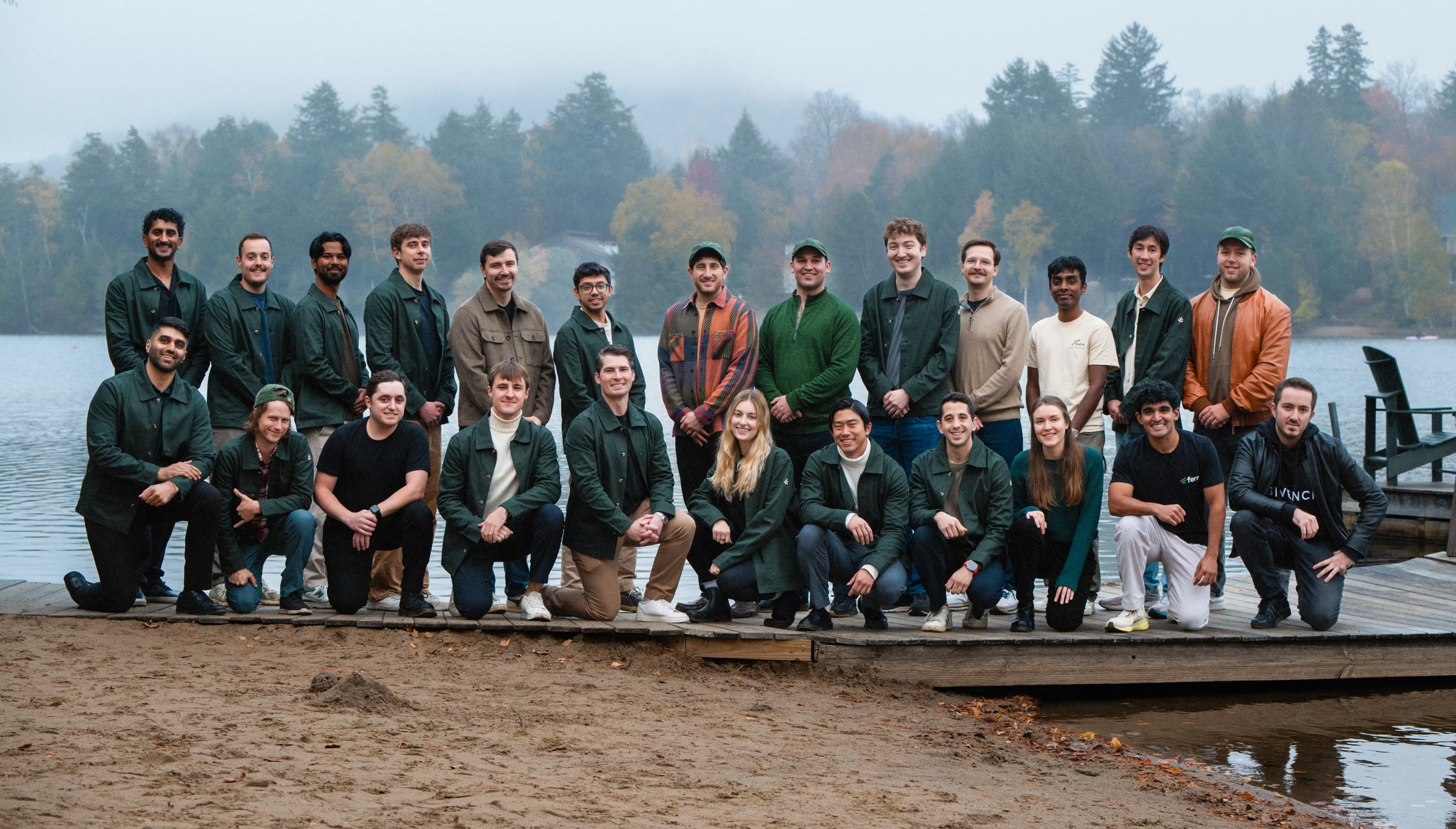
On January 8, 2026, Postman announced its acquisition of Fern. Postman co-founder and CEO Abhinav Asthana had been an early investor. By the acquisition, Fern had a team of 25 and more than 200 customers. Sheridan said the business generated millions in annual revenue.
The acquisition announcement placed Fern beside a much larger distribution network: more than 500,000 companies using Postman. The entire Fern team joined to continue building the product. Sheridan’s own announcement described the fit across designing, testing, documenting and distributing APIs. The relationship had developed from an early investment into a shared company.
Another reader has arrived
By May 2026, Sheridan was explaining another website redesign. This time the intended audience included AI agents alongside developers. He described customers wanting documentation, SDKs, a command-line interface and an MCP server to work together, with consistent information across them.
His account of the redesign emphasized showing the outcome: visitors could see their branding applied to a documentation site and watch a coding tool consume an SDK. Designers Kapil Gowru and Mathieu Legault implemented the site using Claude Code and Devin AI. Sheridan was also talking about enterprise teams seeking a single vendor accountable for these connected tools.
The audience had changed, but the practical concern remained recognizable. Someone arrives wanting to accomplish a task. How much explanation, repair and detective work must they perform before they can begin? Sheridan’s career keeps returning to that question, from organizing people around an e-commerce operation to helping software teams maintain the materials their customers use. The sticky notes are an apt opening because they make his priorities visible: find the person with the problem, help them get working, and pay attention to what happens next.