At thirteen, Bolun Li left his parents a letter. It contained a plan: leave Beijing for high school in America, graduate from MIT, start a company, and eventually take it public on the New York Stock Exchange. Teenagers are often accused of lacking direction. This one had included a stock exchange.
Years later, his parents showed him the letter again. By then, he had attended Duke instead of MIT, co-founded the financial education company Zogo, and sold it to PEAK6. The listing remained unfinished business. The document had held up reasonably well for something written before he could drive.
Li’s career has moved through a series of practical questions. How do you persuade an American school to accept you when your English is still developing? How do you get a bank to buy software from a student? How do you give someone a reason to learn about money today, when the reward for understanding it may arrive years later?
A plan written before the flight
Growing up in Beijing, Li found the academic routine constricting. He enjoyed the open world of Grand Theft Auto and wanted to explore a wider one himself. To make the move abroad, he recorded a video introducing himself and took it to exchange-student conventions. Two schools offered him places.
He arrived in the United States at thirteen. The transition involved learning English and navigating unfamiliar host families. An entrepreneurship program at Babson College later gave his ambition a more definite shape: he began working on an idea for a teen debit-card business.
There is something revealing about the order. The wish to build a company came before the eventual product. Li was searching for a way to become an entrepreneur, then looking for a problem close enough to understand. His own difficulties managing money supplied one.
The $30 smoothie problem
At Duke, Li and fellow student Simran Singh worked on Zogo while carrying full student schedules. Early versions dealt with allowances, purchases and reflection. Li had experienced disagreements with his family over spending. He wanted an app that helped young people notice what happened after the pleasure of buying something wore off.
His example was wonderfully unglamorous: a five-dollar smoothie bought against an empty account, followed by a twenty-five-dollar overdraft charge. A thirty-dollar smoothie is an efficient introduction to banking. It is also a fairly persuasive argument for reading the small print.
The proposed app could ask users how they felt about a purchase days later, then show what else the money could have bought. The point was to connect an abstract financial term with an expense someone could remember.
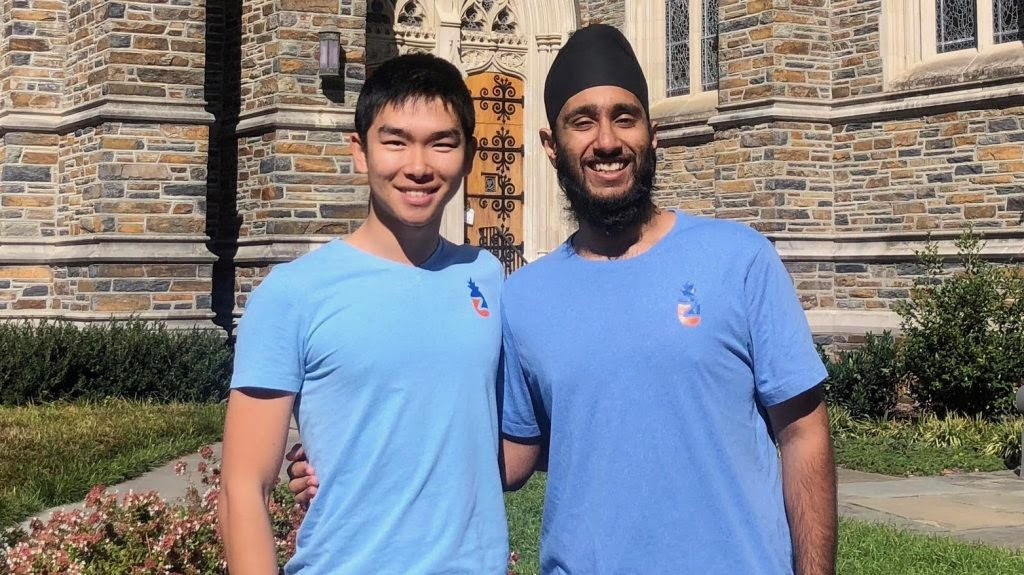
Support came through Duke’s Melissa & Doug Entrepreneurs program and a development partnership with Quantworks. Early backing mattered, but institutional interest still had to become a purchase. A bank liking an idea and a bank paying for it are separate events, with a substantial amount of paperwork between them.
In October 2018, Li pitched at a Startup Summit competition in North Carolina. He negotiated with investor David Gardner in front of an audience and walked away with a public investment commitment. The exercise put him face to face with experienced investors while his product and business model were still taking shape.
His later account gives another adviser an important role: Scott, an entrepreneur experienced in selling software to banks. Scott questioned the original product. Banks wanted something they could deploy easily. The conversations helped push Li toward a financial literacy app with rewards for learning.
A budget behind every pineapple
The eventual proposition was easy to explain. Read a short lesson. Answer questions. Earn points. Redeem enough points for a real reward. The points took the form of pineapples, giving a fairly serious subject an agreeably unserious mascot.
In its 2019 form, Zogo offered about 300 modules. A learner encountered five concepts and then a five-question quiz. Enough accumulated points could earn a five-dollar gift card. Institutions received access codes that turned the app into a co-branded experience for their customers.
That arrangement solved a distribution problem as well as a teaching problem. Financial institutions wanted relationships with younger people. Students wanted useful information in a form they would actually open. An institution could sponsor the platform and remain present on a phone after a classroom presentation ended.
By June 2020, Li was describing modules designed to take about two minutes. The upfront benefit could be small because it was immediate. Retirement might be decades away; the gift card was comprehensible this afternoon.
He also described an interesting change in motivation. Some people arrived for the reward, then discovered how much they wanted to understand. At that stage, Zogo reported roughly 50,000 users and a million completed modules. Credit unions and fintech partners paid licensing fees upfront and funded rewards for their communities.
Learning therefore had a payer, a route to the audience and a reason to begin. Those details explain more about the company than the cheerful fruit does. The fruit was doing useful work all the same.
Li resisted the idea that his generation simply lacked interest in money. He described young people who wanted control over their finances but wanted learning to be simple, fun and social. That distinction puts responsibility back on the person designing the lesson. It also makes his dorm-room beginnings relevant: he was trying to reach people living much the same life as he was.
His advice to a young person starting out was to invest in their own education. He treated knowledge as something worth accumulating even before there was much cash to manage. The product’s little rewards gave that patient ambition a place to start.
The room got bigger
In 2019, twenty-year-old Li presented Zogo at FinovateFall and the company won Best of Show. Its demonstration reached an audience of banking executives, investors and other industry participants. Zogo also won NACUSO’s Next Big Idea competition that year, giving a student-led company another introduction to potential customers.
By July, the team was participating in the MetLife Digital Accelerator powered by Techstars. Li and his colleagues were working with behavioral scientists on how to make the product fit teenage habits. The audience was young; much of the selling happened in rooms occupied by people responsible for institutional budgets.
That distinction matters to his story. Being close in age to users helped him describe the classroom problem. Selling the solution required understanding a buyer’s priorities, getting the product implemented and giving the institution a reason to renew.
Reported user bases: nearly 80,000 in November 2020; more than 500,000 in April 2022.
The company’s first-anniversary announcement in November 2020 counted partners in 33 states. By April 2022, an Apex partnership announcement described more than sixteen million completed lessons. The product had become something larger financial platforms could distribute to their own audiences.
Li’s language about its future also widened. He discussed education inside mobile banking apps and the possibility of a banking loyalty program. He even described a tire company asking about teaching customers automotive care. Cars were already a personal interest. His idea of practical education could travel beyond a bank account.
“I want to give our generation a better financial future,” he said in a 2021 interview. The ambition was expansive, but his working method was specific: shorten the lesson, make it accessible, and give someone a reason to take the next one.
The return ticket
PEAK6 acquired Zogo in 2021. Li has described a conversation lasting more than eight hours with its founder before they reached an agreement. He stayed with the company afterward. His own career timeline dates his final day at Zogo to August 2023.
The company had occupied years that might otherwise have contained a more ordinary college experience. He completed Duke in three years. Forbes recognition followed alongside co-founders Simran Singh and Simon Komlos. Then came a different sort of appointment: going home.
After five years without visiting his parents, Li returned to Beijing. He wrote about revisiting familiar places and hearing his father talk about business mistakes. His own experience had given those stories new meaning. The family that had trusted a thirteen-year-old with an improbable plan was still there to receive the adult.
“Constraints are what make life an interesting puzzle.”
Bolun Li, reflecting on his return to building
In another public reflection, Li described traveling through 32 countries across all seven continents in twelve months. He enjoyed the freedom, then found himself missing the demands of running a business. At his last stop, Amsterdam, his passport was stolen. It was an unusually literal complication for someone reconsidering a life without constraints.
By 2026, he was leading Vamo Talent, a platform for discovering engineers through GitHub. The company searches the work people have made and the activity around it. Its premise connects with a difficulty he had repeatedly encountered as a founder: identifying someone who could turn an idea into working software.
Vamo’s current product lets hiring teams search for developers through their projects and contact them about relevant work. Li’s next company begins with another familiar frustration, then asks whether a different system can make the useful thing easier to find.
The letter at thirteen set out destinations. His career has depended on conversations, refusals and revisions between them. He reached America. He built the company. He went home. Now there is another business to work on, and still an unfinished item involving the New York Stock Exchange.
Follow the next revision
Explore Vamo Talent and Zogo. Find Li on LinkedIn, X and Instagram, or read his personal account.
▶ Watch: Speaking Of - Founder’s Mission, Zogo Finance▶ Watch: Li’s FOX 7 Austin interview↗ Read: Zogo’s early Duke days↗ Read: The Vamo chapter, March 2026