Bobby Samuels sells something that sounds abundant until somebody needs the right version of it. The world makes data constantly - pictures, voices, movement, records, archives, sensor readings - yet an AI team searching for a precise, legally usable dataset can discover that abundance is a mirage. The valuable material is often private, oddly formatted, scattered among institutions, and guarded for good reason. Compute arrives by the hour. Permission does not.
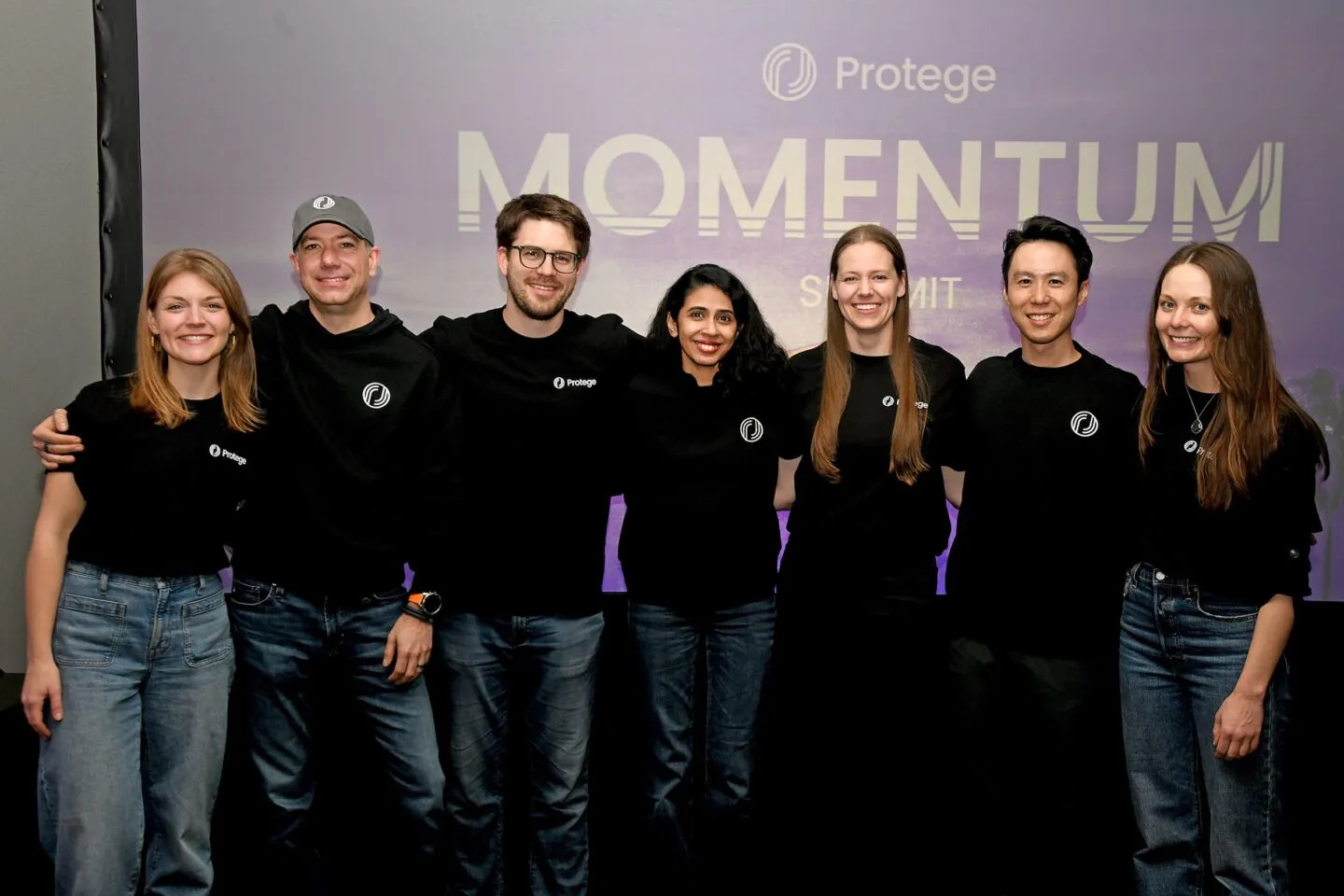
That inconvenient gap is the premise of Protege, the New York company Samuels co-founded in 2024 and now leads as chief executive. It connects holders of proprietary, real-world data with companies developing AI systems. The useful nouns are “platform” and “marketplace.” The more revealing verbs are negotiate, curate, govern, and deliver. Protege is trying to make a repeatable system out of transactions that have historically looked like bespoke diplomacy.
Samuels has spent much of his career around such connective tissue. Before Protege came LiveRamp, Bolt, and Datavant. Before those came a student newspaper, an economics degree, and the unglamorous mechanics of making a website behave on a phone. His résumé reads less like a series of sector jumps than a recurring fascination: how do you persuade separate parties to participate in the same system?
The newsroom before the network
At Harvard, Samuels served as sports chair and then president of The Harvard Crimson in 2013. The paper was negotiating the shift from a print-centered institution to a publication that readers increasingly encountered on desktops, tablets, and phones. During a redesign begun under his older brother Benjamin’s preceding presidency, Bobby helped focus the site on responsive behavior. The same story had to fit several screens without becoming several products.
It is a charmingly literal prelude to his later work. A newspaper gathers messy inputs, verifies where they came from, packages them for a particular use, and depends on distribution. It also learns quickly that a system designed around yesterday’s habits becomes awkward today. Samuels described an iterative process of narrowing broad ideas into templates that worked across devices. Infrastructure usually enters the world this way: first as many small arguments about edge cases, later as the thing everybody assumes has always existed.
After Harvard, he joined LiveRamp, working in special operations and technical partnerships. LiveRamp’s business centered on data connectivity, which gave Samuels an early view of neutral networks - systems useful precisely because different organizations can meet inside them. An MBA at Stanford followed. He later worked in business operations at Bolt and then spent several years at Datavant, eventually serving as general manager of its Privacy Hub. The companies and titles changed. The underlying apprenticeship did not: make difficult exchanges understandable, governable, and worth joining.
systems
networks
market
A market hiding inside a bottleneck
By early 2024, AI conversation had settled on three raw ingredients: algorithms, computing power, and data. Markets around the first two were visible and mature enough to buy from a dashboard. Access to specialized data still resembled the old bazaar. A startup could spend years locating an owner, establishing rights, negotiating terms, and preparing the material. Data owners, meanwhile, had sensible questions about control, compensation, and where their assets might end up.
Samuels and his co-founders - chairman Travis May, chief scientific officer Engy Ziedan, and chief technology officer Richard Ho - built Protege for that mismatch. The company launched publicly in 2024 and announced a $10 million seed round. A $25 million Series A led by Footwork followed in August 2025. In January 2026, Protege announced a further $30 million round led by Andreessen Horowitz, bringing reported funding to $65 million.
Funding is only the obvious part of the story. In a 2026 founder interview, Samuels described Protege moving from roughly $1 million in gross merchandise value in its first year to $30 million in the next. Product-market fit did not arrive as a trumpet blast. He remembered a trickle becoming a flood: multiple deals, different sizes, separate customers, all repeating the same underlying need. The pattern became persuasive before any single contract could claim the credit.
That distinction is useful. Founders are encouraged to wait for a cinematic moment when the market announces itself. Markets are ruder and more interesting. They mumble. One customer asks for a variation. Another accepts a manual process. A third deal moves faster than the first two. Eventually the requests stop looking coincidental.
The texting-terms test
Samuels credits one growth lever above the rest: getting in the room. He has described flying from New York almost every week to meet enterprise buyers. For a company building AI infrastructure, the method is wonderfully analog. It is also logical. The more consequential and unfamiliar a purchase, the less a customer wants to be treated as a row in a funnel.
His private metric for relationship depth is almost comically simple: are you on texting terms? Email can remain ceremonial for months. Text implies enough trust to cross into the ordinary rhythm of a person’s day. It does not guarantee a deal, but it reveals that the conversation has become direct. In Samuels’s account, proximity also creates the unexpected encounters in which actual objections surface - after the agenda, between meetings, or over a meal.
He tells one story about refusing to treat an initial “no” from a prospective lab as the end. The useful part is not macho persistence. It is that he stayed close enough to understand what the rejection meant, continued building the relationship, and eventually found a shape that worked. A no can be final. It can also be information about timing, product, or trust. The operator’s task is to know the difference without becoming a nuisance, a distinction no sales-automation sequence has yet mastered with much grace.
Permission is product design
Samuels talks about the next generation of training data through three words: provenance, precision, and purpose. Provenance means knowing a dataset’s origin and terms. Precision means assembling material for a defined modality or use rather than offering a shapeless heap. Purpose means choosing data against a concrete outcome. It is a compact framework for treating context as part of the asset.
His formulation also punctures a common bit of AI shorthand. People speak of a “data moat,” as though information were rainwater collected around a castle. Much of the data that matters belongs to somebody. It reflects somebody’s work, catalog, environment, or behavior. It arrives with limits. A durable market must preserve those limits while making transactions easier. Permission is not a decorative legal ribbon tied around the product after launch. It is part of the product design.
Protege’s own values make this unusually explicit. One asks employees to apply a “loved ones’ test” to decisions: would a person you love and respect be proud? Another pairs kindness with candor. The language is homely for a technical company, and that is its advantage. Rules are memorable when they can survive contact with an actual Tuesday afternoon.
What he is really building
Samuels’s ambition is to make Protege a trusted data layer across the AI development lifecycle, from training and fine-tuning to evaluation. In 2026 the company expanded further into data for spatial and physical intelligence, aimed at systems that must interpret movement and the untidy geometry of the real world. The company’s scope now stretches across text, audio, video, motion, and other proprietary sources.
He also announced DataLab, a Protege research institution dedicated to the science of dataset design, curation, and evaluation. Its premise extends the company’s original complaint: model research and chip research have institutions, budgets, and prestige, while data work is too often treated as procurement. Samuels wants data to receive the same deliberate experimentation. It is a bid to move Protege beyond brokering what already exists and toward helping define what ought to be collected next.
Yet the central problem remains stubbornly consistent. AI builders need authentic signals of how people and systems behave. Data holders need a controlled way to say yes. Protege sits between them, attempting to transform two anxieties into one market.
The job has an amusing contradiction at its center. Samuels wants to standardize transactions that currently require enormous human effort. To do so, he performs enormous human effort: planes, conversations, follow-ups, careful definitions, and texts. This is often how infrastructure gets built. The founder carries the awkward process personally until the company understands it well enough to turn judgment into a system.
His old newsroom offers the neatest metaphor. The Crimson’s redesign did not ask readers to choose one screen. It made the publication responsive to whichever screen they brought. Protege is attempting something similar for a fragmented data world: preserve the differences, define the interfaces, and make the exchange adapt. The models may supply the spectacle. Samuels is busy with the permissions underneath.
Follow the thread
- Protege and its people and principles
- Bobby Samuels on LinkedIn
- Bobby Samuels on X
- Building the Marketplace for AI’s Most Valuable Asset - podcast conversation
- The Product Market Fit Show interview - founder-led sales and early growth