On a cold morning near the end of 2019, Tony Ren put his name on a stack of acquisition papers. The pile was thick enough to give bureaucracy the appearance of architecture. Four years earlier, he had imagined a different ceremonial ending for Yimian Data: a stock-market bell, a public listing, the founder’s familiar photograph in mid-applause. Instead, he was selling the company to Ascential and agreeing to remain for a four-year earnout. The bell would have to wait. The clock, he had decided, mattered more.
The decision had been reduced, as grave decisions often are, to a whiteboard. Ren and his two co-founders listed the pleasures of independence and the comforts of scale. They could preserve control and perhaps spend a decade taking their data products beyond Asia. Or they could join a public company that already knew how to sell around the world. The founders traded equity, autonomy and some future upside for a card Ren considered more valuable: time.
It was not a neat exit, because useful choices seldom are. Ren stayed as chief executive. He watched the startup become part of a larger machine, lost authority over HR and finance earlier than he expected, learned how acquisitions look from the buyer’s desk, and eventually led product for Flywheel across Asia-Pacific. When the earnout ended, he left to build again. Several members of the old crew went with him.
Chapter 01
Eleven years before one bad month
Ren arrived at the Hong Kong University of Science and Technology in 2003 and stayed through a bachelor’s degree, an MPhil and a PhD in computer science. His work lived in the plumbing of the internet: live streaming, multimedia networks, overlays and peer-to-peer systems. A paper he co-authored studied whether high-resolution video could travel through a global peer-assisted network at one megabit per second. The question sounds quaint now, which is the fate of many good engineering problems once they have been solved often enough.
The university years also gave him industry internships at Tencent, Huawei’s Noah’s Ark Lab and other research teams. His adviser, Gary Chan, supplied introductions. Ren supplied a later joke: within two years of graduating, he was quietly dropping the word “intern” and telling people he had ten years of experience. His more enduring campus memory is less strategic. Most afternoons, he went for the chicken drumsticks at LG7.
After eleven years of study, Ren joined Kuaibo, then a widely used Chinese video platform. One month later, the company was shut down. He had completed a doctorate and secured a job only to become unemployed before the office coffee could acquire sentimental value. The collapse delivered the sort of opportunity that never introduces itself politely. Ren liked his colleagues. They were all available. Rather than scatter into safer jobs, they decided to build something together.
Chapter 02
The beautiful product nobody bought
Yimian Data began in 2014 without the luxury of a crisp founding thesis. Ren knew he wanted to use technology on concrete problems. The concrete, however, had not yet been poured. The team first sold data to hedge funds and private-equity firms. One customer was worth several hundred thousand dollars a year, but Ren counted fewer than twenty plausible customers of that scale around the world. It could become a handsome small business. It did not look like the broad market he wanted.
Then came the expensive lesson. The team spent nine months behind closed doors building analytics software it believed could transform an old industry. More than a million in funding went into the product. When they took it outside, nobody bought it. Not a disappointing pipeline. Not a weak conversion rate. Nobody.
Ren’s diagnosis was admirably unromantic: they had been naive enough to think code alone could rearrange an industry built over a century. Yimian moved from selling financial data to helping enterprises understand their own operations. More important, the team learned to build with customers. Ren noticed that polite prospects praised the vision and then vanished. Better partners found faults. They explained what was missing, what would fail, and what did not solve the actual problem. Complaint, properly detailed, was a form of commitment.
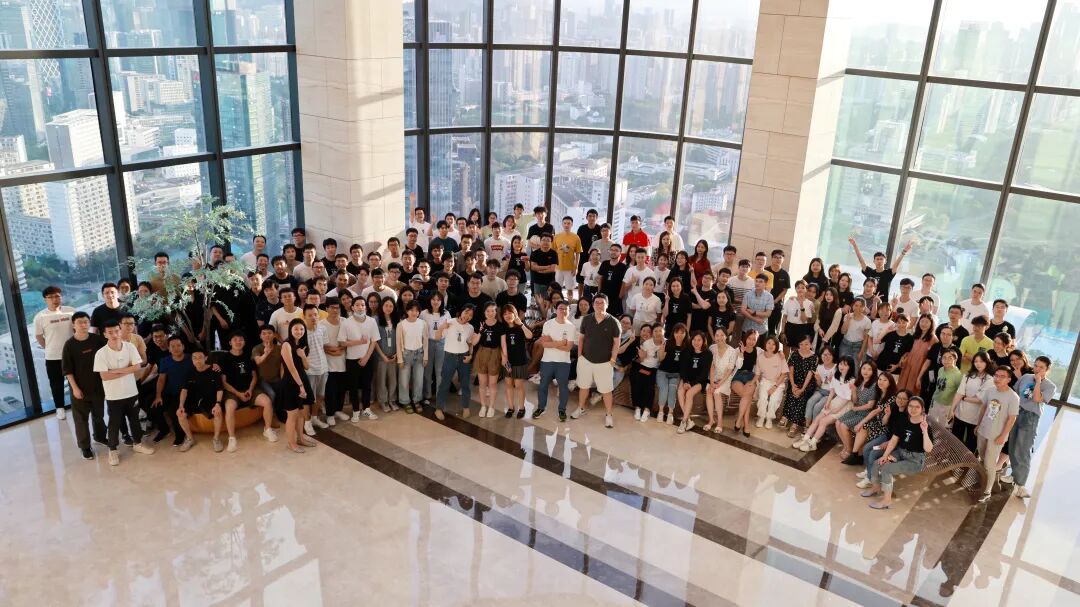
By 2018, Yimian and Ascential’s Edge business were working together on clients in Asia-Pacific. The startup had found commercial shape, built expertise in China’s digital-commerce market, and grown toward a hundred employees across Shenzhen, Shanghai and Beijing. Then a financial adviser sent Ren a message on LinkedIn. He thought the company behind it might want to invest. Ascential’s representatives flew from Britain to Shenzhen. After several rounds of discussion, investment turned into acquisition.
“I was going to ring the bell; how could I have sold the company after just four years?”Tony Ren, recalling the acquisition decision
Chapter 03
The whiteboard chooses a clock
Ren’s resistance was not theatrical. He had built the company to continue. Yet the three founders were engineers with a taste for arithmetic, so they covered a whiteboard with a SWOT analysis. Independence offered autonomy and a greater eventual upside. It also exposed the ceiling of the Chinese online data-measurement market, which they estimated at roughly 5 billion renminbi. Global expansion would be slow because data businesses are slow: integrations, trust, and enterprise procurement do not accelerate merely because a founder would like them to.
The founders also studied the buyer. Ascential behaved more like a collection of specialist businesses than a parent eager to swallow and dismantle its purchase. Founders of two companies it had already acquired described life after their deals. Their brands remained; the parent supplied capital and customers. Ren preferred that “non-intrusive” model to a defensive acquisition or a corporate transformation project dense with internal politics.
The deal was signed near the end of 2019 and announced in March 2020. Ren chose an earnout over a clean buyout because the founding team wanted to keep running the business and share in its growth. The structure tied later payments to performance over four years. It also ensured that selling the company did not relieve him of the duty to operate it. Exits are often narrated as doors. This one was a corridor with quarterly targets.
Chapter 04
Four years aboard the larger ship
Corporate life corrected several founder assumptions. Ren had expected greater resources and international reach, and got both. He had not expected to lose direct control over finance and human resources within six months. The sting was softened by a careful compromise: those functions reported to Britain, but Ren still helped choose the people leading them. The arrangement respected the deal while acknowledging that two executives forced together by headquarters would eventually find inventive ways to disagree.
He also discovered how difficult obvious decisions become inside a large organization. Teams may agree on the right long-term move and still be constrained by current incentives, shareholder expectations and the rights of existing units. Ren later admitted he had guarded Yimian’s independence too closely. The executives who sponsored the acquisition wanted its success to validate their judgment. Integration, approached earlier and more boldly, might have unlocked more support.
The view from inside taught him another lesson about the sale price. Yimian’s founders had anchored on their previous funding valuation, then added a premium large enough for investors to profit. The negotiation went smoothly. Too smoothly, Ren came to think. While helping Ascential evaluate later acquisitions, he saw that a sale is the final valuation round. There is no next chance to correct excessive caution. His advice to his earlier self is wonderfully free of consultancy fog: ask for more.
Still, the bargain produced the time it promised. Ren remained CEO through the earnout and became chief product officer for Flywheel in Asia-Pacific, overseeing a regional research and development organization of about 400 people. He saw a founder’s creation from the parent company’s altitude: budgets, portfolios, technical diligence, and the uneasy conversion of conviction into a financial model. The education was not free. It was, however, comprehensive.
Chapter 05
The same crew returns to zero
When the earnout ended in 2023, Ren had already told Ascential’s leadership that he would build again. He reunited Yimian’s original team and founded Recurve, later known as Reorc, to work on data and AI infrastructure. The name came from the recurve bow, whose small reverse bends store disproportionate energy. Ren joked that it sounded like the entrepreneurial road bending backward, and possibly like a spinal complaint. The latter interpretation has less venture appeal.
The returning team is the more revealing asset. They had survived failed products, funding, growth, equity changes, acquisition and four years of corporate ownership. Arguments could become fierce, but someone would eventually suggest stopping for midnight snacks. By morning, Ren said, they often discovered that the conflict concerned words rather than goals. One co-founder had once redistributed shares to the remaining founders without compensation when family circumstances forced him to step away. Trust here was not a slogan laminated for the break room. It had a cap table.
By 2026, the product had taken a new public form: Syfo, a workspace where people and AI agents share channels, tasks and durable artifacts. Its premise is modest enough to sound obvious. Work is more than a chat. It moves between people, depends on decisions made weeks earlier, accumulates evidence, and requires someone to own the result. An agent that forgets all this when a window closes is less a colleague than an unusually articulate visitor.
Work that survives the chat
Syfo gives a task an owner, keeps evidence and decisions attached, shows permission boundaries, and returns an artifact for human review. Ren’s current vocabulary is less about magical autonomy than traceability: who decided, what the agent saw, what it may do, and what can be rolled back.
Ren has been writing in public about the unglamorous architecture around enterprise AI. A buyer needs predictable costs. A manager still has to decide which objective wins. Two models agreeing may share the same blind spot. Human review means little if the person merely rubber-stamps every tool call. The useful record is not an avalanche of internal chatter but a selective account of objectives, permissions, evidence, decisions and outcomes.
There is a pleasing symmetry to the journey. The doctoral researcher studied how video survives movement across a distributed network. The first-time founder learned that products survive by moving through customers’ criticism. The acquired executive learned what context disappears between a startup and its parent. Now the repeat founder is designing a place where work can pass between humans and agents without shedding memory or responsibility.
Ren’s story resists the usual founder punctuation. The acquisition was neither a full stop nor an exclamation mark. It was a semicolon followed by four years of operating detail. He got no clean ending, which may explain his interest in continuity. The first company began when a job vanished. The next began when an earnout ended. Syfo begins with a complaint about what chat forgets.
The old crew is together again. The whiteboard has been wiped clean. Somewhere, one suspects, there are midnight snacks within reach. Tony Ren has returned to zero, except this time he knows exactly how expensive zero can be, how long it takes to become one, and why the record of that journey should survive the handoff.