When Bob Willans announced his retirement from XTM in January 2023, he reached back to a small flat in Poznań. The company he had started with Andrzej Zydroń in 2002 had become an international software business. His farewell thanked colleagues for their work and their good humour. After twenty years of building translation technology, he still remembered the people who made the working day bearable.
That flat is a useful place to begin. Software companies tend to acquire a tidier origin story as they grow: a market opportunity, a founding team, a product. A small flat restores the scale of the original undertaking. Before there were enterprise customers and an investor, there were two partners deciding that an awkward business process could work better.
Willans brought experience in IT and general management. Zydroń brought years of technical work on translation tools. Their division of experience mattered. A good engine still needs customers, support and a company capable of delivering it. Their partnership would have to join those worlds.
A factory before the software
Willans’s route to that partnership passed through rather more physical workplaces. A Cambridge graduate, he worked in South America as a textile factory manager in his late twenties. His career took him to Chile and Brazil. He later described that period as an education in leadership and working across cultures. International business had arrived in his life well before translation software.
Back in Britain, he established an Apple dealership and then an internet service provider. He sold the internet business in 2000, at the height of the dot-com boom. Work at SDL followed, including an early translation management project called Webflow. Then a conversation with Zydroń became the start of XTM.
The sequence is unusually varied: factory operations, computer retail, internet access, enterprise software. Each business put a different sort of distance between a product and its user. By the time Willans entered localization, he had already spent years dealing with the practical business of getting technology into somebody else’s working day.
- South AmericaTextile factory management
- United KingdomApple dealership and internet business
- SDLEarly translation management software
- 2002 · XTMA partnership with Andrzej Zydroń
The assets should travel
In 2012, ten years into XTM, Willans described recruiting computer science graduates in Poznań and building a Polish development, testing and support team. Sales and marketing were growing in Britain and the United States. The company’s working geography already crossed borders, much like the content its customers needed to move.
He also emphasized open standards. Customers needed to import and export their translation assets. That sounds like a technical detail until you consider what those assets contain: previously translated material and agreed terminology, built up through repeated work. A business choosing new software should be able to carry its accumulated knowledge with it.
This gives XTM’s early story a practical character. Translation involves words, but running translation involves ownership, access, deadlines and handovers. A useful system has to respect all of them. The glamour available in a well-managed handover is limited. Its absence, however, can become everybody’s problem.
Willans was taking that conversation into industry meetings. At LocWorld in Silicon Valley in October 2015, his scheduled presentation demonstrated quality assessment in XTM and the benefits of analyzing the resulting data through the TAUS Dynamic Quality Framework. His fellow presenters included people from Cisco and Intuit. The agenda concerned how to measure the work, compare results and make quality visible.
The thirty percent that keeps things working
By May 2019, Willans was discussing a less photogenic part of software development at the TAUS Global Content Summit in London. XTM reserved thirty percent of developers’ time for maintenance and bug fixes. The remaining seventy percent could go toward features, partnerships, updates and other development. Even innovation needs a maintenance budget.
and bug fixesFeatures, partnerships,
updates and more
His account of product planning was equally concrete. Requests entered a Jira system from customers and internal teams, including security. They received a priority. Work requested and funded by a customer went to the top. As the product matured, he explained, the implications of changing it became more complex. More software meant more consequences to consider.
He treated artificial intelligence as an evolving part of this work. Machine translation had already moved through successive approaches, from rules to statistical methods to neural systems. His emphasis was on automating manual processes and making a web-based workflow easier to configure. The attraction lay in what people could get done with the machinery.
An October 2019 release shows what that work looked like in the product. XTM added ways to restore earlier translations, update batches of text and report on projects. New connectors linked it with Salesforce Commerce Cloud and Oracle Eloqua. These are the kinds of improvements that matter to someone trying to finish a job on time: recover a mistake, avoid repeating an edit, move the content into the next system. They also give substance to Willans’s emphasis on productivity. A product strategy becomes easier to understand when it includes an undo button.
Another detail brings his approach down to desk level. A colleague featured in a March 2017 industry magazine recalled Willans handing over a stack of back issues as part of their training. The colleague read old editions cover to cover. It is a pleasantly substantial onboarding package: before selling the software, spend time learning the industry around it. Someone had to carry the reading material.
Growth required its own education
In early 2021, XTM reached a different kind of turning point. K1 Investment Management bought a majority stake in a transaction completed on January 22 and announced in February. The deal terms were undisclosed. Management retained a significant minority holding. Willans and his colleagues had spent nearly nineteen years reaching this point.
Company figures reported in February 2021.
The business then reported a revenue run rate of £8.3 million and annual recurring revenue of £7 million. Those are different measures, and neither is the price paid for the company. They describe the operating business at that moment. Its customer list included Expedia, Sony and Volvo. This was already a company with obligations to substantial organizations.
The preparation had taken time. XTM worked intensively with EY for more than two years before the deal. Willans described a steep learning curve in managing rapid growth and understanding the metrics of a subscription software company. His advice compressed the experience into four words: “preparation was vital!”
“preparation was vital!”
Bob Willans · on the work before the K1 investment, 2021
The attraction of K1 included its experience with enterprise software businesses and the operational help it could provide. Willans set out plans to expand senior management, strengthen sales and marketing, improve internal systems and extend support across customers’ time zones. Growth was going to require work inside XTM as well as more customers outside it.
The product plans were specific, too: additional AI features for translators and project managers, more connections to content management systems, and broader file support for translation in visual context. Behind the investment announcement sat a familiar collection of jobs waiting to be done. A new shareholder did not make the development queue disappear.
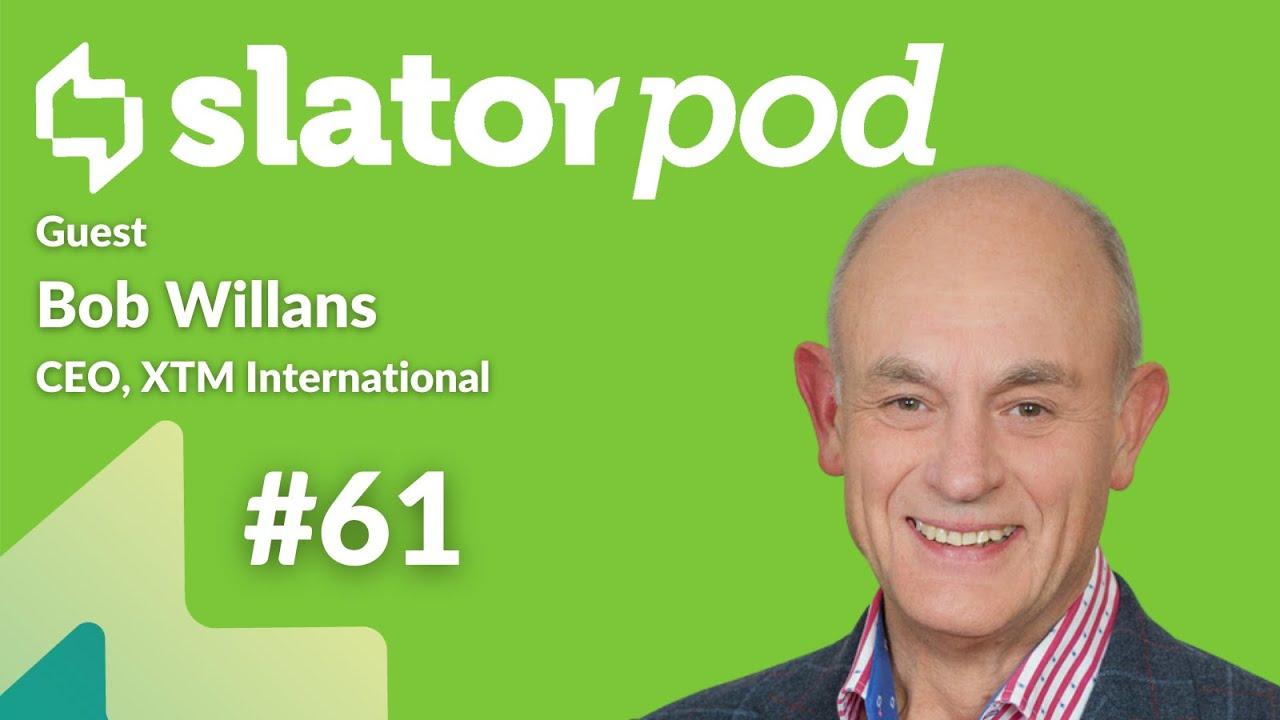
A larger company needs more people to lead it
The management changes soon became visible. Alastair Jamieson joined as XTM’s first chief financial officer in 2021, after advising the company on the K1 investment as an EY partner. The adviser had seen enough of the business to want a job inside it. His responsibilities included financial operations and potential investment opportunities.
In October 2022, Jennifer Ley joined as chief revenue officer, reporting to Willans. She brought experience from marketing software company Syndigo. Her remit covered sales, with an emphasis on customer relationships and reducing difficulties in the buying and working experience. The company was adding people with their own responsibilities for its next stage.
Those appointments give the period between investment and retirement some definition. Building a senior team was part of the plan Willans had described in 2021. By the end of 2022, finance and revenue had dedicated executives. A founder’s job includes creating an organization in which more decisions can belong to other people.
Leaving the chair, keeping the conversation
On January 10, 2023, XTM announced Ian Evans as its new chief executive. Willans retired from the CEO role after more than twenty years. The announcement said he would remain involved as a board member. Evans arrived with more than thirty years of software leadership experience, most recently at OneTrust.
The handover had a personal scale as well as a corporate one. Willans had recently turned sixty-five. His farewell looked toward retirement and expressed confidence in his successor. It also returned to colleagues, customers and partners. The tone fits the stack of magazines: the company had been built through shared work and a willingness to learn from other people.
He remained part of the industry conversation after stepping down. XTM listed him among the speakers for its April 2023 event in London, where Evans would introduce himself to a wider audience. A change of CEO could coexist with a familiar face on the programme.
Willans’s public LinkedIn profile now lists VerseIQ and includes reposts about software intended to help sales teams during live calls. His public interests still reach into the details of how people work with technology. From a factory in South America to a small flat in Poznań, those details have supplied a career’s worth of problems to solve. The software changes. There is usually another handover to improve.
Keep the conversation going
Explore the work and the conversations around it.