A telephone directory is an unpromising place to look for a technology fortune. It has no personality, an indifferent plot and a cast arranged alphabetically. Yet the machinery behind those pages helped give Boaz Dotan his opening. Businesses needed to be listed, advertisements sold, accounts kept and bills sent. Each dull little obligation was a software problem waiting for somebody to take it seriously.
Dotan did. In 1982, he became the first president and CEO of the business that became Amdocs. He stayed in that operating role until 1995. The company grew out of the world of Golden Pages, Israel's telephone directories, and developed software for communications companies. Behind the familiar act of making a phone call stood a less visible task: keeping the customer's account straight.
That is a useful place to begin with Dotan. His career rewards attention to what happens after the exciting announcement. A system has to run. A customer has to stay. Years later, a youth organization has to balance its budget. The settings change; the practical obligations keep arriving.
A directory, a database, a business
Dotan studied mathematics and statistics at Tel Aviv University. Before Amdocs, he managed the information systems division at Bezeq, Israel's telecommunications company. His working background was in the systems underneath a public service, where a computer's usefulness depended on what it could reliably help people do.
His earlier work included the computerized database for Israel's telephone inquiry service. He subsequently worked at Tadiran, where he recruited Avinoam Naor. The pair worked on selling the system abroad. Their association would continue into Amdocs, giving the later company a relationship that preceded its founding date.
The directory operation brought them into the orbit of Morris Kahn and Golden Pages. Dotan and Naor worked on directory software before moving into billing and customer management. The computing activity eventually became a separate business. A printed book could be delivered to a household; the knowledge used to produce and administer it could travel much further.
There is something pleasingly practical about that origin. The opportunity was embedded in work already being done. A business accustomed to organizing information discovered that the organization itself had value. Dotan's part was to help turn that work into software other companies would pay to use.
1982: a directory software business becomes the foundation for Amdocs.
Keeping the customer after the sale
The early Amdocs approach combined a basic software product with substantial adaptation for each client. Customers brought their requirements; the company supplied the work needed to make its software fit. Delivery and continuing service were central to the arrangement. The sale opened a relationship with plenty of work still ahead.
It is easy to see the attraction for a telephone company. A customer's account contains the consequences of numerous commercial decisions: what was bought, what it cost, which conditions applied and what happens when something changes. A service can be advertised in a sentence. Making its bill come out correctly may occupy rather more people.
In 1985, Southwestern Bell took a 50 percent interest in the business. An Israeli software operation now had a substantial American telecommunications connection. During Dotan's years as CEO, Amdocs moved beyond its directory roots into software for telephone operators, expanding into the wireline and mobile markets between 1990 and 1995.
Those markets asked the company to keep learning. The customer buying software also needed a supplier able to understand its operations. Dotan's experience in telecommunications information systems belonged directly in that conversation. The work demanded familiarity with a particular industry, alongside the ability to write and deliver software.
- 01Start with softwareA reusable product supplies the foundation.
- 02Fit the customerTeams adapt it to the operator's requirements.
- 03Keep workingImplementation and ongoing service sustain the relationship.
A simplified illustration of the early Amdocs approach.
The CEO leaves the chair
Thirteen years is a substantial opening act. Dotan handed over the operating leadership in 1995, when Naor succeeded him. Dotan became chairman, then vice chairman in September 1997. These changes spread the end of his Amdocs career over several years; the founder's departure was a sequence of responsibilities being relinquished.
Amdocs went public on the New York Stock Exchange in June 1998. Dotan was still vice chairman during that period. The IPO made a previously private enterprise available for public scrutiny and introduced a wider audience to the people who had built it. A company selling software behind the scenes had acquired a very visible share price.
His two British Amdocs directorships ended on January 25, 1999. By May, he had moved into private business and was looking at internet investments. The chronology matters: Dotan's role in the company's beginnings, his thirteen years running it and its later stock-market life are related chapters with different people holding the operating responsibility.
He had also kept a relatively low public profile. Even as the IPO drew attention to the financial rewards of Amdocs management, Dotan was little known beyond business circles. A fortune can acquire publicity faster than its owner acquires an appetite for it.
- 1982Co-founds Amdocs; becomes its first president and CEO.
- 1995Moves from chief executive to chairman.
- 1997Becomes vice chairman.
- 1998Amdocs lists in New York.
- 1999Leaves company roles for private business.
- 2009Joins former Amdocs colleagues in investing in Retalix.
Old colleagues, another set of accounts
By 2000, the next stage already had a name: Aria Ventures. The investment company had raised $30 million, with Dotan and his family holding 70 percent. Led by founder and CEO Ron Tzor, it targeted seed investments in telecommunications, networks, software and banking applications. Dotan was helping finance the early work of other entrepreneurs, in fields close to the systems business he knew.
Leaving Amdocs did not end the usefulness of the relationships formed there. In 2009, Dotan joined Eli Gelman, Nehemia Lemelbaum, Avinoam Naor and Mario Segal in an investment in Retalix. The group brought together executives whose experience of building and managing enterprise software companies was already well established.
Retalix supplied software to retailers and distributors. Its customers' work involved stores, headquarters and warehouses. The setting had changed from telecommunications, but the proposition still concerned software embedded in the everyday running of large businesses. Dotan became a Retalix director in November 2009.
The connection continued into the next corporate transaction. In November 2012, the Alpha Group, which included Dotan and his former colleagues, agreed to support NCR's acquisition of Retalix. NCR completed the purchase in 2013 for approximately $800 million. That figure belongs to the whole transaction; the more personal detail is the reunion of people who had already worked together.
Dotan is also listed among the partners at AfterDox, the angel investment group associated with former Amdocs executives. Its stated approach asks partners to contribute knowledge, time and connections as well as money. For an experienced operator, the part of an investment that cannot be transferred through a bank may be the part another founder most wants.
The family takes a seat at the table
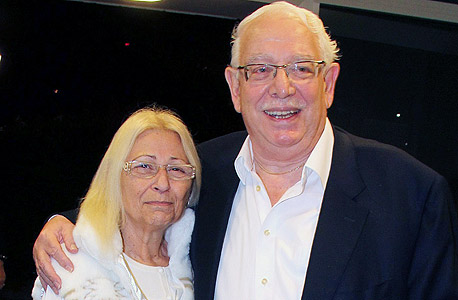
One later investment moved into a more literal form of service. In 2013, Boaz and Varda Dotan and their son Nadav acquired about half of Mazal Taleh, an Israeli catering business. The family invested through Shiraz Dash, and Nadav represented them as the active partner in the company.
The change of scenery is worth enjoying. After years spent around software that helped companies calculate bills, the family had a stake in a business where somebody eventually had to bring dinner. Nadav's operating role also gives the investment a specific family shape: the younger generation was doing the day-to-day work of the new venture.
What a chairman does when donations fall
Another of Dotan's responsibilities involved ELEM, the Israeli organization supporting young people in difficult circumstances. He served as its chairman, including in 2009 and 2011. The title put him in a setting where the consequences of an annual budget extended well beyond the balance sheet.
In 2009, the financial crisis made the organization expect a substantial decline in donations. Its preparations included a moderate spending reduction and a more severe contingency plan. It found other income and developed new partnerships. The account is revealing in its attention to preparation: assume conditions may worsen, work through the options, then keep looking for support.
His responsibilities also included a leadership handover. When executive director Zion Gabay completed six years, the board appointed Efrat Shaprut, who had worked at ELEM for nine years in field and headquarters roles. The transition gave an established member of the organization the chance to lead it.
“When people donate they return their debt to society.”
Boaz Dotan, 2014
Dotan has expressed giving as an obligation for those able to do it. The wording is unusually businesslike: a debt to be returned. In 2014, ELEM listed Varda and Boaz among donors contributing more than 500,000 shekels. The conviction had an entry in the accounts.
His institutional connections extend to the Institute for National Security Studies, whose Israeli board of trustees included him in its 2016 and 2018 publications. Tel Aviv University awarded him an honorary doctorate in 2016 and currently lists him as a vice chair of its board of governors. The mathematics and statistics graduate has returned to his university in a different capacity.
Across these chapters, Dotan's working life keeps coming back to organizations that have to function after the meeting ends. The directory becomes a software company. Colleagues become fellow investors. A chairman helps a youth organization prepare for a difficult year. For someone whose early business dealt in accounts, he has left several different kinds of account open.
Follow the connections
Explore Amdocs today, its company profile, the AfterDox partner network and Tel Aviv University's board of governors.