Somewhere in a recruiting firm’s research, a useful person was hiding. The assignment was a board search for a global investment firm. The candidates mattered, of course. But so did the question that makes every ambitious search slightly uncomfortable: who could actually get them to take the call?
In an April 2026 account published by Altrata, an unnamed executive search firm found its answer through BoardEx. A senior executive at a healthcare technology company also served on the board of a target organization. That affiliation had escaped the team’s usual research routes. The recruiter contacted the executive, asked for an introduction and gained a warmer route to a board member. Altrata says the discovery contributed to a successful placement.
- BoardEx researches executives and maps their professional connections.
- Its buyers include bankers, lawyers, recruiters and private equity teams.
- The same intelligence arrives through a website, Salesforce, APIs or data feeds.
- A connection on a screen is a lead to investigate, not a promise of access.
The pleasing detail is how ordinary the raw material was. A board appointment. A professional affiliation. Information that becomes useful when someone puts the pieces together. BoardEx’s business rests on this small distinction: finding a person and finding a way to approach that person are different research jobs.
A biography with the joins left in
A conventional executive biography is a performance of tidiness. A few successful jobs, a degree, perhaps a charitable board. Everything points neatly toward the present. BoardEx keeps more of the joins visible: previous appointments, committee experience, education and the organizations through which a career has passed.
Those details serve two purposes. They help a recruiter assess whether someone has the right experience. They also reveal overlaps that may suggest an introduction. A former employer or shared board can supply a better opening than another beautifully polished message addressed to a stranger.
Altrata advertises BoardEx profiles of more than 1.8 million executives across 2.2 million organizations. The point of that scale is the possibility of discovering a useful connection beyond the small set of relationships one person can remember. Its algorithms also display relative relationship strengths, helping users choose where to investigate first.
There is a sensible restraint to apply here. Two people appearing in the same institution’s history need not be friends. An overlap is evidence of a possible route. Whether it is a good route remains a human question, usually answered by asking the colleague whose name appeared on the screen.
The research desk behind the map
BoardEx dates its relationship mapping business to 1999. Its advertised research process is unusually central to its identity: public information is gathered, checked and maintained by analysts. The company describes sources including company disclosures, regulatory documents and published reporting. Quality assurance staff check new entries before they become part of the database.
That is the unglamorous expertise buyers are paying for. A career history needs names matched correctly and appointments kept current. A beautifully drawn relationship chart built from the wrong person’s biography is merely an expensive misunderstanding.
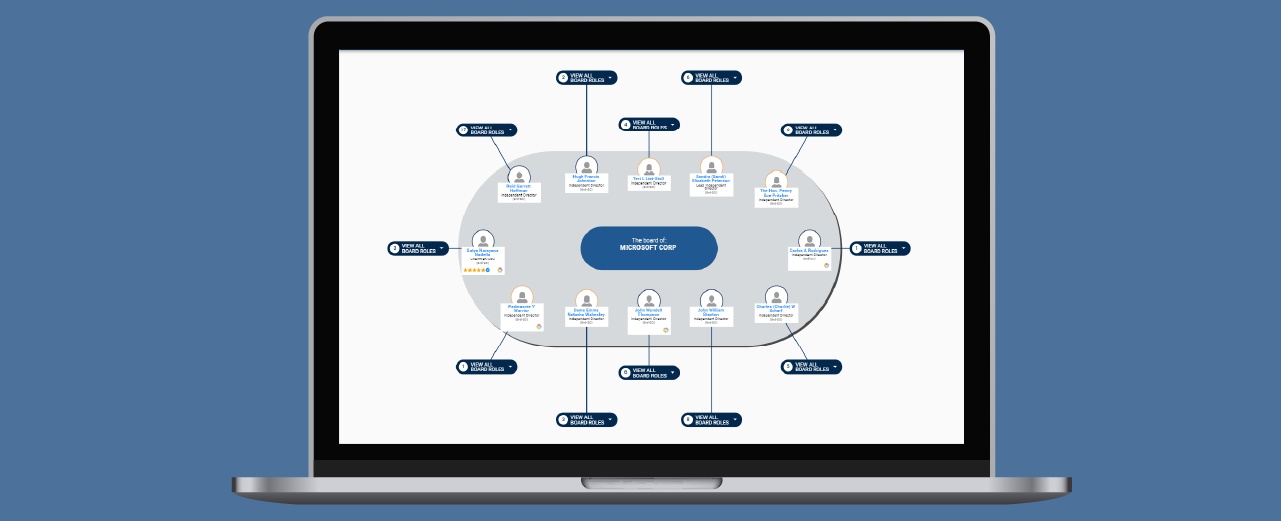
The maintenance work matters because leadership moves. BoardEx’s Data Feeds page says analysts update information within 24 hours of disclosure. That is a company service claim, and the distinction between an event and its disclosure matters: the database cannot record an announcement before there is an announcement to record.
BoardEx also describes a culture of transparency, collaboration and inclusion, with opportunities for staff learning. For a business whose product depends on research judgment, investing in people is more than a pleasant recruitment sentence. The accuracy of the next profile depends on the person checking the last one.
The product goes where the work lives
The web platform provides executive discovery, saved searches, alerts and relationship visualization. Search filters cover matters such as role, education, tenure and committee experience. These are useful distinctions when a board brief calls for something more precise than “a successful executive.”
In September 2026, Altrata described how DSG Global used BoardEx to support its Board Practice. DSG needed fuller career and governance histories, together with networks that could support introductions. BoardEx was the first platform it adopted for that practice and remains part of its process. This is a named customer’s account of routine use, a useful companion to the dramatic single-introduction story.
“Without BoardEx, this connection would have remained invisible.”
Managing Director, unnamed executive search firm
Altrata customer case, April 2026
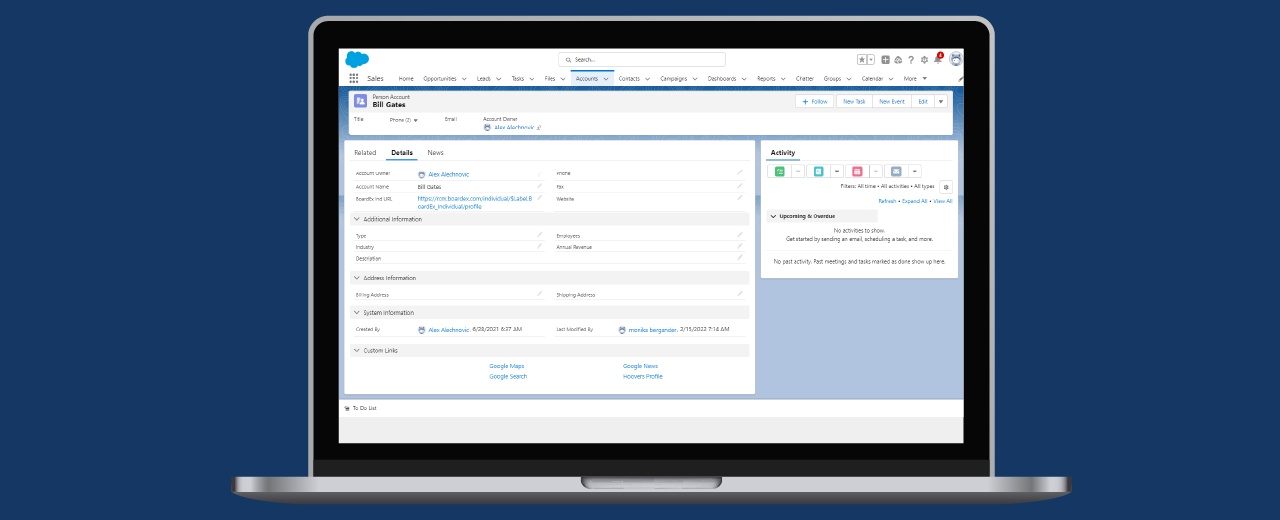
Other buyers want that context inside the software they already use. The Salesforce app matches existing contacts to BoardEx profiles and puts executive details into the CRM workflow. The Developer API offers Biography, Search and Daily Changes services. Data feeds support organizations that want the information delivered into their own systems.
The Private Equity Network adds a particular lens: PE firms, their portfolio companies, leadership teams and advisors. In a February 2024 Altrata case, an unnamed Big Four accountancy team used that information alongside relationship paths and role-change alerts to understand investments and pursue post-deal services. The practical aim was to turn colleagues’ combined connections into something the whole team could use.
BoardEx therefore sits in the executive intelligence and relationship mapping market. Equilar ExecAtlas is a direct alternative, also offering executive relationship data and CRM integration. LinkedIn and manual research are other routes to an answer. BoardEx’s case is built around maintained career histories and organizational connections; buyers should compare coverage and workflow fit using their own targets.
Two price tags, two different questions
BoardEx sells enterprise subscriptions and data access. Its quoted cost depends on the products chosen, organization size, delivery method and license term. A team purchasing access for occasional board research and a firm integrating data into internal applications are buying different arrangements.
The acquisition history supplies firmer numbers. In 2014, TheStreet acquired the business behind BoardEx for approximately $21 million in cash, against an agreed purchase price of $22.5 million, with a possible earn-out. Its strategy was to combine executive data with The Deal’s reporting and transaction information. Subscribers could research the people appearing in the news and explore ways to reach them.
Approximate cash paid for the BoardEx business in 2014
Combined BoardEx + The Deal sale price in 2019, subject to adjustment
The history contains a less cheerful accounting detail. TheStreet’s 2016 reporting reduced its estimated acquisition earn-out liability after revising expected 2017 BoardEx revenue, producing a roughly $1.8 million credit. That records an expectation moving downward. It deserves room beside the acquisition announcements.
TheStreet later chose to sell its institutional businesses as part of a shareholder-value strategy. The combined BoardEx and The Deal sale to Euromoney closed in February 2019 for $87.3 million, subject to adjustments. BoardEx subsequently joined the five businesses brought under the Altrata name in May 2022. Altrata is within Delinian, an Epiris portfolio company.
Borrow the habit before buying the database
The useful habit is portable. Start with a specific person or candidate brief. Look at past employers, boards and other professional affiliations. Check the dates. Ask whether somebody in your organization knows the person well enough to help. Then request a particular introduction with a clear reason for the conversation.
A buyer can bring that same exercise to a demonstration: a real account, a real candidate requirement, a real contact list. Does the service find relevant people? Does its mapping suggest a route the team had missed? Does the information arrive where the team will actually use it?
The approach has limits. Senior executive coverage may offer little to a business selling to a different audience. A team unwilling to share its relationships may struggle to exploit a collective network. A stale acquaintance may decline an introduction. A polished graph does not repeal social discretion.
Altrata now publishes guidance for migrating legacy BoardEx data feeds and APIs into its unified platform, another reminder that the delivery machinery changes. The enduring task is simpler: preserve the context around a name, then decide whether that context gives you a good reason to speak.
The recruiter’s overlooked board affiliation is a useful place to finish. The next person you need may already be within reach. It helps to know whose reach.
Follow the connections
Explore BoardEx, its products and customized demo. Follow BoardEx on LinkedIn, X or Facebook; current company updates also appear through Altrata.
For more: DSG Global’s Board Practice, BoardEx articles and Altrata migration guidance. Watch the Salesforce app video or executive data demonstration.