In Queens, Eric Alarcon and Niurka Maldonado had two bathrooms they wanted to change and a perfectly sensible reason to do nothing: renovation. The cost, the disruption, the uncertainty. Their prewar apartment had aging fixtures and tile they disliked. For more than a year, the project waited. Then Block Renovation narrowed the choices enough to make a decision possible.
- Block connects property owners with vetted independent contractors.
- Homeowner matching is free; contractors pay when hired.
- AI tools help plan. People review bids. Local crews build.
- Its 2025 BuildZoom Marketplace deal took the offer nationwide.
Forty-five square feet of uncertainty
Houzz’s 2019 account supplies something renovation marketing often neglects: an actual result. The couple’s 45-square-foot bathroom cost $16,500, including parts and labor, and took three to four weeks. That is a historical project, not today’s price list. It is useful because it shows what Block originally tried to control.
Designer Saoli Chu offered a short menu of materials. Ordinary subway tile acquired personality through a herringbone layout. The family also reconsidered replacing a sound cast-iron bathtub and had it reglazed instead. A new room did not require everything in it to be new.
“We were able to be savvy with simple materials.”Saoli Chu, Block designer · Houzz, 2019
First, put the bathroom in a box
Founded in 2017 by Koda Wang and Luke Sherwin, Block borrowed from consumer businesses that had made awkward purchases feel manageable. Sherwin had co-founded Casper. Wang had worked at Rent the Runway and HuffPost. Their chosen difficulty was considerably less portable than a mattress.
At its 2018 public launch, Block offered bathroom packages in New York and New Jersey. Coverage described a starting price of $15,000 and construction of roughly three weeks. Design, permitting and hiring were gathered into one process. These were the terms of an early offer, not a universal construction timetable.
The attraction was fewer decisions with more information behind them. Familiar materials were easier to price, deliver and install. Yet the founders’ test in Sherwin’s own Brooklyn bathroom exposed unexpected design problems. Even a carefully simplified room retained the inconvenient habit of being attached to a real building.

Then, take the company out of the box
Block expanded into kitchens and Los Angeles in 2021. It announced a $40 million round in July and a $50 million Series C in November, led by SoftBank Vision Fund 2. The November announcement put total funding at $104 million. Investor money bought room to extend the model; it did not make a permit arrive sooner.
The more consequential change was in the offer itself. When Julie Kheyfets was appointed CEO in January 2025, Block explicitly described its evolution from a one-stop renovation shop to an AI-first marketplace. The company was standardizing how people planned and hired across a broader set of projects.
In November 2025, it acquired BuildZoom Marketplace, combining a contractor network and demand engine with its own planning tools. Block announced availability in all 50 states, plus residential new builds and small commercial work. It reported over $100 million in annual project volume. That figure measures construction passing through the platform, not Block’s revenue.
The unglamorous part is the product
Today’s customer starts with a space, a budget and a project description. Block offers contractor matches and proposal comparison. Its New York service also describes a Project Planner who helps review scope details. This is particularly useful to someone who can recognize a lovely kitchen but cannot tell whether a quote includes all the work needed to produce it.
Renovation Studio adds free AI visualization and location-aware estimates. It lets homeowners explore before committing. Optional professional design services offer a designer, material guidance, visualizations and documentation. The useful distinction is between exploring a possibility and agreeing on the work: a rendering can begin the conversation, but a detailed proposal must finish it.
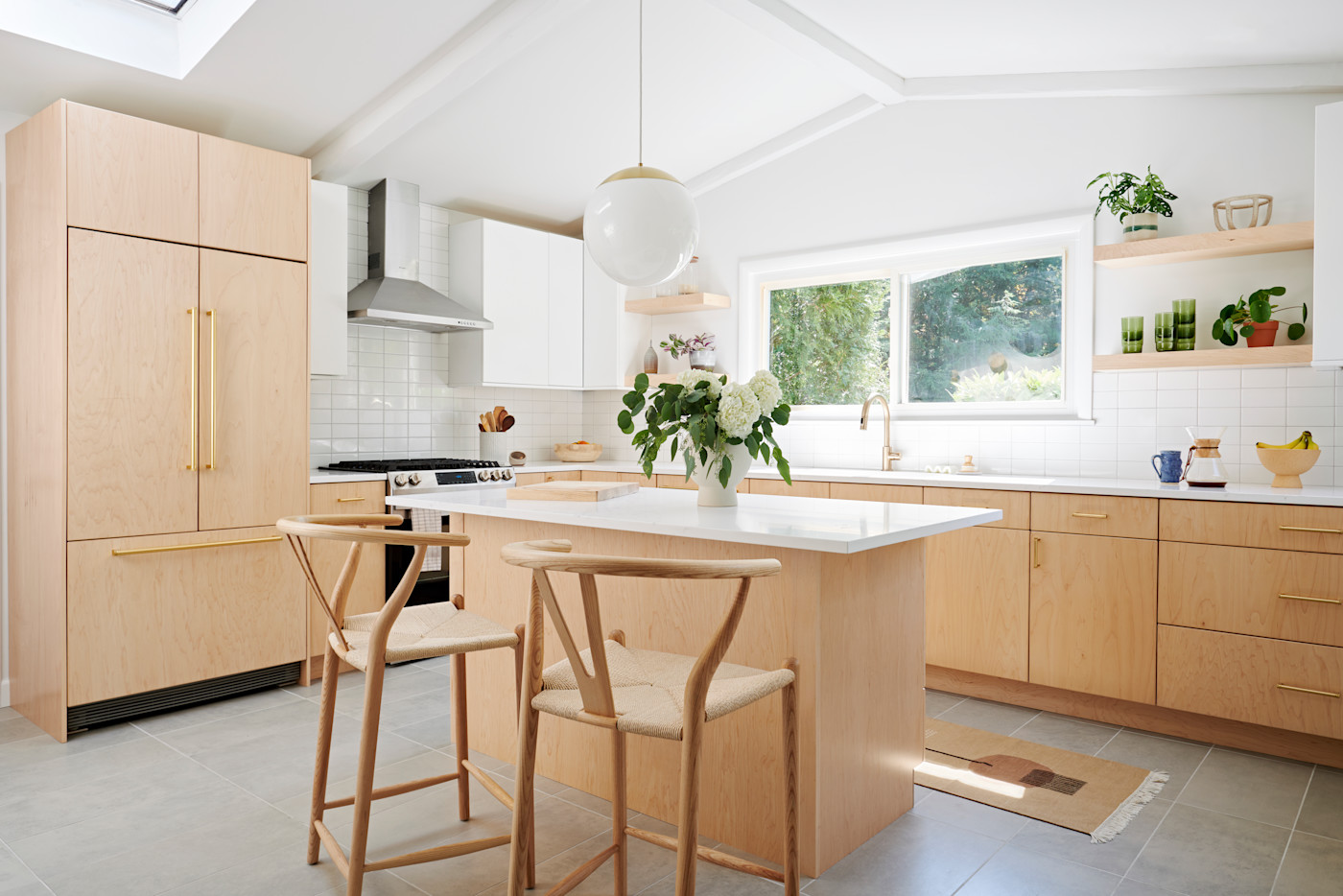
Consider a hypothetical pair of kitchen bids. One includes demolition and disposal; the other leaves them unstated. Comparing their totals alone tells you very little. Block’s proposition is useful at precisely this point: turning an attractive number into a set of understood obligations. The administrative detail is part of what the customer is buying.
Follow the money, then the work
Core homeowner planning and matching cost nothing. Contractors pay Block a commission when they win a project. Its contractor page says there are no joining, listing or lead fees. For builders, the proposition is a serious prospect and less administrative chasing. For homeowners, it is help evaluating the people who might soon dismantle their kitchen.
Block’s protections include scope review, change-order review, escalation support and progress-based payments. Its FAQ describes four payment stages: proposal acceptance, groundbreaking, progress and substantial completion. Every network contractor provides a one-year workmanship warranty. The homeowner still needs to understand the agreement and what each stage means.
The terms identify contractors as independent businesses. Block does not perform construction. Its AI estimates also acknowledge that final costs depend on contractors, materials and unexpected needs. Structural changes may require an architect. A hidden problem, a necessary permit or an unsuitable local match remains a real constraint.
The commission model rewards Block when a contractor gets hired. That explains the attention paid to making a project ready for a bid. It also gives the homeowner a reason to ask careful questions: helpful matching and an informed hiring decision must travel together.
A contractor you trust beats a tile you adore
Block’s 2026 survey of 1,059 qualified US homeowners found that 30% cited finding a trustworthy contractor as a renovation barrier, compared with 24% citing total cost. This is company-sponsored research about homeowners, not a satisfaction score for Block. Still, it explains why bid review belongs beside design software.
Compared with hiring a contractor directly, Block adds an organized intermediary. Angi and Houzz are other routes to professionals; a local design-build firm offers another arrangement. The sensible comparison asks who reviews the scope, who receives payments and who handles problems. A recognizable brand is only the beginning of that inquiry.
There is a lesson here even for someone who never uses Block: compare the same scope, record changes, understand payment milestones and keep what still works. The Queens family’s cast-iron tub makes the point nicely. Sometimes progress looks less like buying something new than finally knowing what you already have.