Alec Hartman wanted a new house. He and his wife were living in Manhattan, had a baby to accommodate, and were looking toward the Hamptons. The houses they visited offered a dispiriting choice: renovation, remoteness, compromise. In his account to Built In, the search became an exercise in disappointment. A purchase that ought to have been pleasurable had acquired the atmosphere of homework.
Welcome Homes emerged from that frustration. Its proposition was wonderfully legible: choose land, configure a house online, get it built. The interesting question was what happened after the screen. By September 2025, the company was publicly explaining a change in that answer.
- Choose a prepared model, then customize finishes and upgrades online.
- Turn choices into specifications that a local builder can price and construct.
- Separate the estimate from the commitment. The builder supplies the final proposal.
- Read the change in responsibility. Welcome says it moved away from managing construction directly.
The useful part is the specification
Consider the humble baseboard. A buyer sees a decorative detail; a builder needs dimensions, material, quantity and a price. Welcome’s process tries to make those two descriptions agree. Its design package records architectural features and selected products, including brands, models and SKUs. The attractive room becomes an instruction someone else can follow.
That is a useful way to understand the company. Welcome combines home designs, land evaluation, regional pricing and builder connections. Customers can bring their own land or seek a suitable lot. They begin with a prepared model rather than commissioning every line from scratch. Kitchens, bathrooms and exteriors offer curated choices, with optional additions such as saunas and cinemas.
The catalog now covers traditional, farmhouse and contemporary styles. Welcome describes the resulting homes as conventionally built on site. A digital purchase journey does not imply a house arriving on a truck. The repeatable component is the design and the information around it.
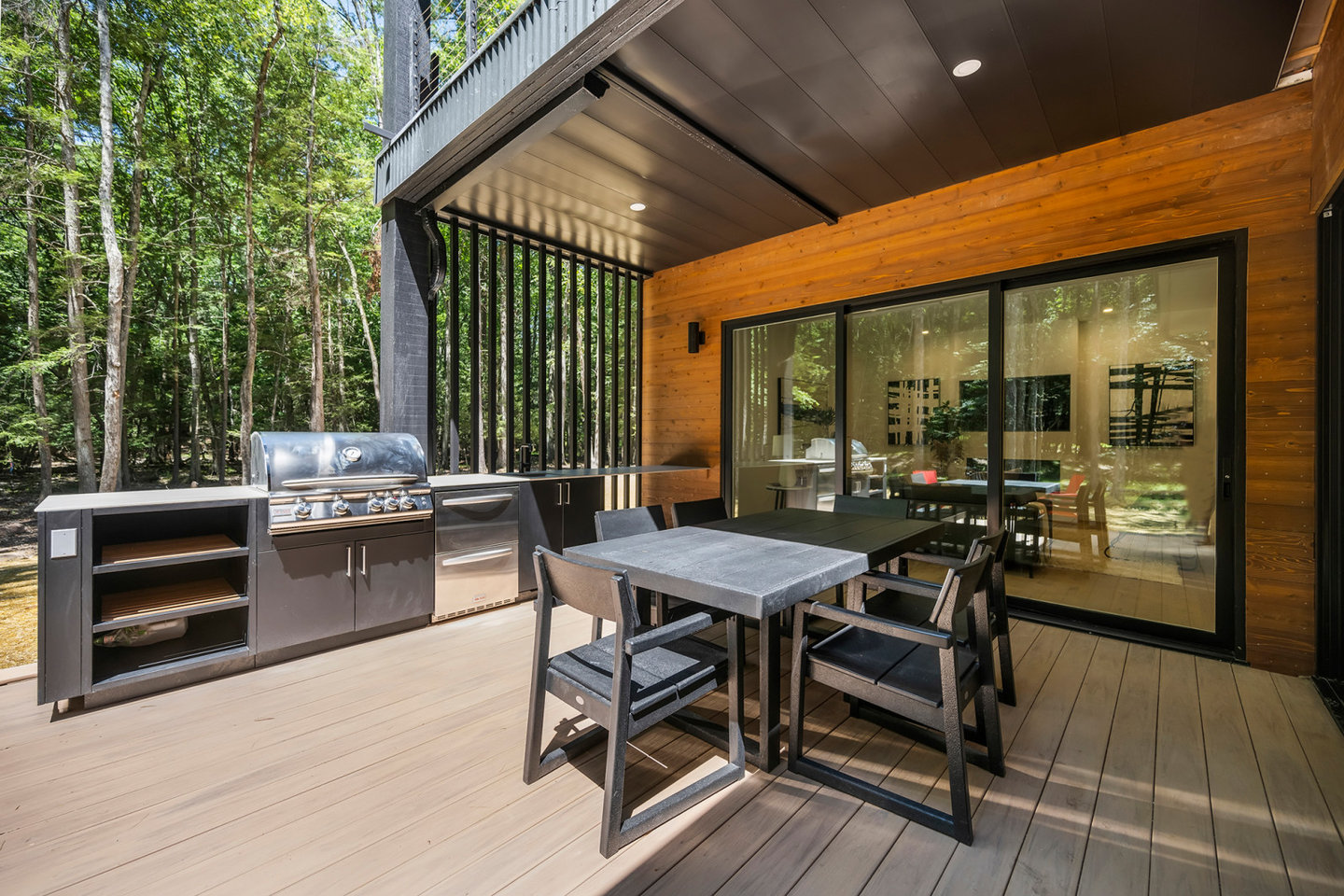
Its place in the market follows from that compromise. A bespoke architect offers more freedom; a production builder offers homes within its own developments. Welcome packages configurable designs for individual sites and regional crews. The natural customer wants a newly built house with personal choices, but would prefer not to become the project’s unpaid coordinator.
There is an operational argument here as well as a design argument. A builder quoting a house from a drawing and a conversation has to resolve ambiguities. A package containing agreed selections gives that discussion a firmer starting point. It also gives the buyer something specific to check when comparing the proposal with the home they thought they had chosen.
The browser price meets the building site
A catalog makes comparison easier. Welcome’s indexed listing for a Roswell, Georgia, property illustrates the range: roughly $712,000 for a Juno construction estimate and $1.23 million for an Addison. Those are examples for one site and particular models, not a national price list or a final quote.
Roswell, Georgia listing · Construction estimates · Indexed snapshot, not a live quote
The current process gives local partners a role in setting regional prices. The selected home becomes a detailed package; the builder reviews it and produces a project proposal. That sequence matters. A price displayed while choosing a kitchen is useful information, but the construction commitment comes later.
Land and site preparation belong in the budget too. Welcome’s cost guidance tells readers to consider grading, utilities and soil conditions. A lot’s asking price cannot tell you everything required to build on it. The prudent buyer asks what the proposal includes, what remains an allowance, and how changes will be approved.
Then the builder moved closer to the customer
The company’s September 24, 2025, complaints post describes a consequential shift: local builders take the construction role that Welcome previously managed directly. Welcome says the change improves accountability, quality control and transparency. It also says complaints made it examine its process.
“We shifted from managing construction directly to empowering local builders”
Welcome Homes · September 2025
This is the clearest documented correction in the story. It would be careless to assign every complaint a common cause. What the company acknowledges is a change in operating responsibility. Under its described process, the customer and builder establish timing, budget and milestones together, while Welcome supplies plans, specifications and support.
- 01BuyerSelects model and finishes
- 02WelcomePrepares plans and specifications
- 03Local builderProposes price, contracts, builds
The change makes the builder’s proposal more central to the buying decision. Buyers should know the contracting party, the payment schedule and who handles warranty work. A convenient interface can organize a complicated relationship. It cannot, by itself, settle every obligation within it.
For anyone comparing Welcome with a local design-build firm, the useful comparison is the entire sequence: design preparation, site assessment, pricing, construction and support afterward. The amount of work removed from the buyer depends on how reliably those stages connect. A polished design studio earns attention; a clear handoff earns a place in the decision.
A catalog needs a neighborhood
Welcome launched publicly in October 2020 with $5.35 million in seed financing led by Global Founders Capital. In January 2023 it announced more than $29 million in Series A funding led by Era Ventures, earmarked for land technology, additional models, hiring and expansion. That April, it announced entry into Georgia and North Carolina.
Distribution had another route. A June 2022 relationship with Compass let Tri-State agents introduce Welcome to their customers, backed by training, co-branded advertising and compensation. New construction could become an option inside an existing home search.
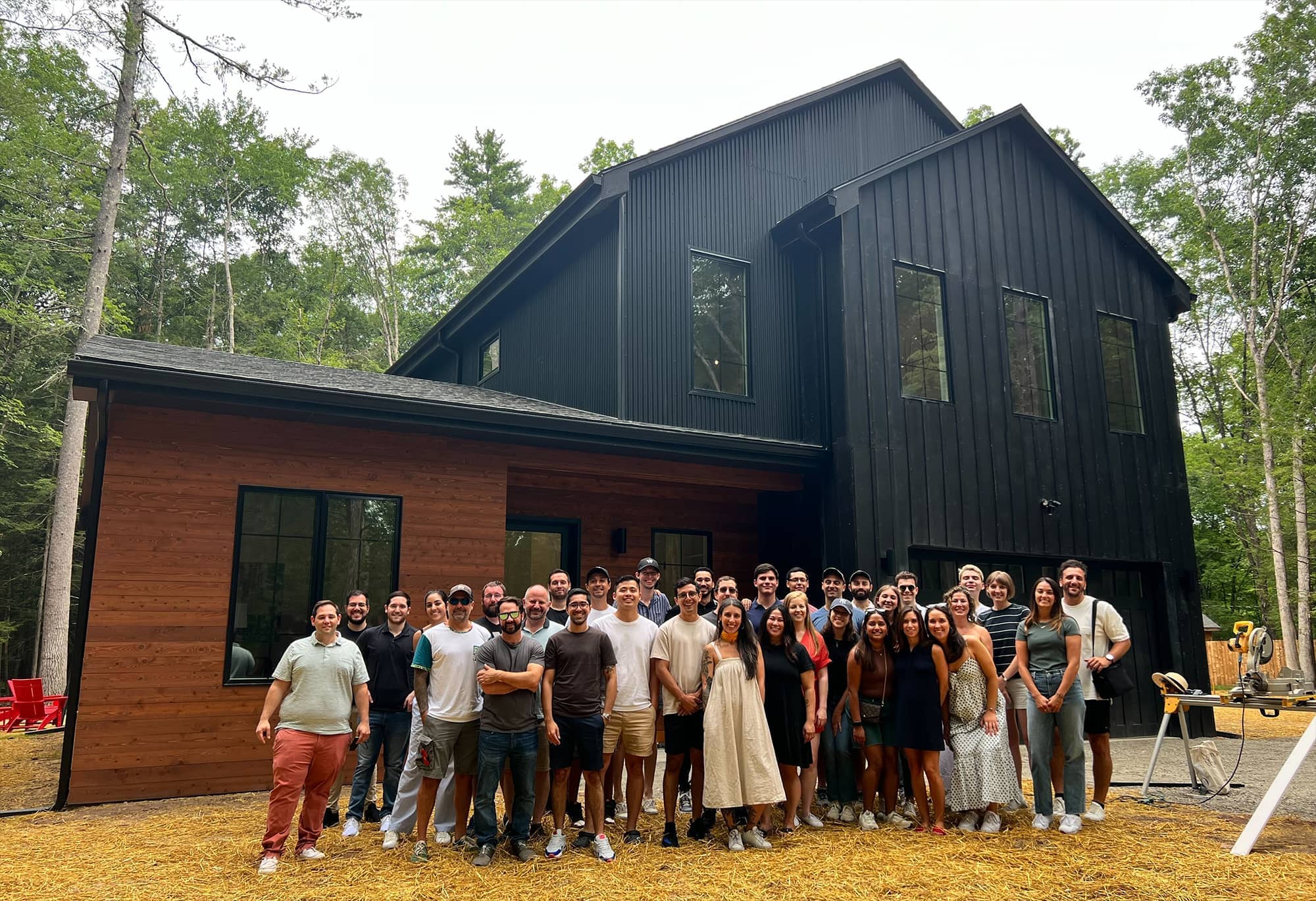
Builders are another customer group. Welcome’s regional partner program offers territorial leads, prepared designs, back-office support, technology and material discounts. Partners add prices for models in their regions and contract with buyers. The business therefore depends on both sides finding the package useful: a manageable selection for the homeowner and a buildable, priced job for the contractor.
The company describes a team where architects and civil engineers work alongside software engineers. That mix suits the problem it has chosen. Software can record a selection consistently; construction expertise determines what must be recorded. The value comes from joining those kinds of knowledge before a crew reaches the site.
Copy the handoff, read the contract
The transferable lesson is concrete. Capture the customer’s choices in enough detail that the next person can act without guessing. Welcome’s specifications deserve attention from anyone selling a service that passes through several hands.
The arrangement fits buyers willing to start from a catalog, with a suitable site and an available local partner. An unusual design brief, difficult land or an inflexible move-in deadline calls for closer scrutiny. Welcome itself acknowledges that construction delays remain possible. The sensible attraction is less coordination for the buyer, supported by explicit plans and a builder agreement that everyone understands.