A computer can retire without forgetting a thing. Its casing may be scratched, its battery tired, its owner delighted to see it go. Yet the drive inside can remain an unusually diligent archivist. The person who buys the machine wants a bargain. The person who sold it needs something rather more difficult: confidence that the bargain does not include somebody else’s secrets.
- Erase the data, retain the value. Blancco helps suitable hardware move into another life.
- Check the device, keep the evidence. Diagnostics and reports support resale and accountability.
- Sell a repeatable process. Its buyers include enterprises, IT asset disposition firms and mobile processors.
The computer that remembered too much
In Blancco’s telling, the unsettling object was a used computer carrying 3,000 people’s patient records. A company anniversary account says Kim Väisänen and Janne Tervo heard about it in 1997. The attraction of an erasure business was immediately legible: remove the information without breaking the machine that held it. A perfectly serviceable computer ought not to require a funeral because its previous owner had poor exit procedures.
The founders were studying at the University of Joensuu. Their company, initially called Carelian Innovation, pursued electronics research and computer peripherals. A software-business handbook describes two early products as financial “flops.” The third found commercial success. Blancco Data Cleaner launched in July 1999, and the company sold its other product lines and research projects to concentrate on erasure. Customers helped choose the business.
The subsequent corporate history is less tidy than the origin story. Regenersis bought the Finnish company for €60 million in 2014, according to Väisänen’s professional biography. The UK parent adopted the Blancco name in 2016. It later absorbed the US erasure vendor WipeDrive, with $10 million in headline consideration in 2022. In December 2023, Francisco Partners announced its completed acquisition at approximately £175 million in equity value. That announcement counted more than 2,500 customers across 70 countries.
Approximate equity value in the Francisco Partners acquisition. A transaction price, not today’s valuation.
The receipt for an empty drive
Blancco occupies a particular corner of cybersecurity: the point at which information should cease to exist on an asset. Much security software guards data while people use it. Blancco addresses the awkward departure. It sells software to erase drives, selected files, removable media and virtual machines, alongside diagnostics and tools for managing the resulting work. Its product range stretches from a laptop awaiting reassignment to storage inside a data center.
Drive Eraser handles drive sanitization on supported computers, servers and loose drives. Its practical appeal includes identifying media, applying an erasure method and recording the result. A technician can do a job; an organization needs to show which job happened to which asset. The report is therefore part of what the customer buys. Without that connection, “we wiped everything” becomes a rather cheerful expression of faith.
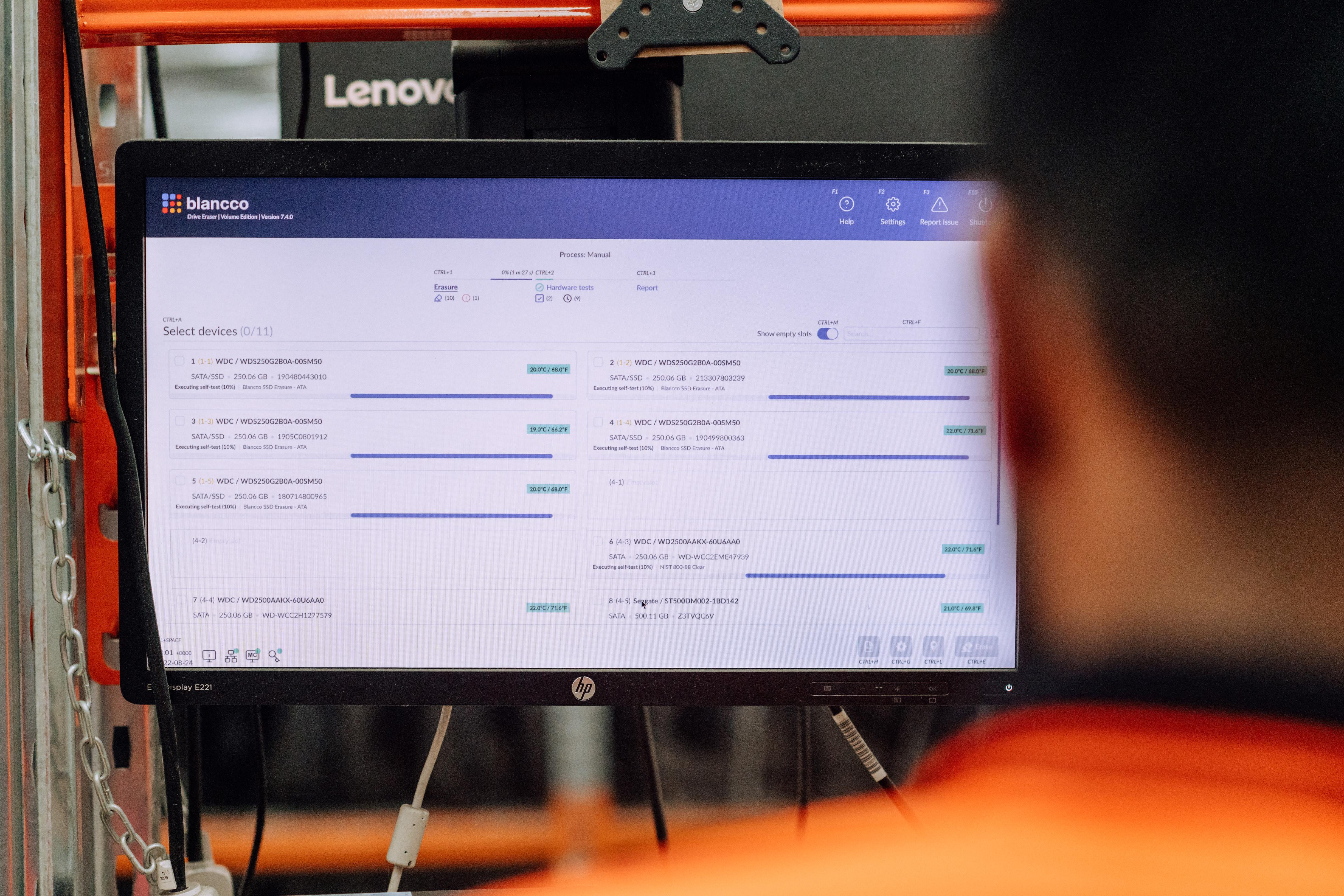
Management Portal brings activity and reporting into a central system. Other products address narrower problems. File Eraser targets files, folders and free disk space. LUN Eraser works on logical storage units in active environments. Virtual Machine Eraser tackles virtual machines. The distinction matters: removing a retired laptop and sanitizing a storage allocation while other systems continue operating are different jobs.
Its competitive case rests on that breadth, automation and externally tested implementations. Blancco’s certification list names specific products, versions and media. Buyers should read those details. A standard, a product certificate and an organization’s compliance obligations are different things. Competing vendors also offer evidence: BitRaser sells certified erasure software, while Active@ KillDisk supports erasure certificates and reports. Paperwork alone cannot settle a purchasing decision.
A phone’s second life starts in the shop
The mobile business adds another uncertainty. Before a processor resells a phone, it needs to know whether the phone works. The previous owner’s photographs must disappear, but a failing component cannot be wished away. Blancco combines mobile diagnostics with erasure so retailers and refurbishers can assess condition and prepare devices for sale. These are adjacent questions with the same commercial deadline: when can this item safely become inventory?
The GEO Mobile customer account offers a useful example. The Japanese reseller initially centralized processing in dedicated centers. That increased the interval between buying a handset and making it available for sale. Introducing Blancco’s mobile diagnostics and erasure into stores let staff complete processing locally, reducing lead time. The important change was where the work happened. Better software helped shorten a physical journey.
“Blancco’s operation is so simple that it is easy to understand and learn.”
Ryo Fujimaki, GEO Corporation · published customer account
Fujimaki also described the desire to spend less staff time processing devices and more time explaining services to customers. This is a modest, persuasive account of value. An erasure tool earns its place when the people using it can complete an ordinary transaction with fewer delays. Every additional hand-off asks another person to remember what happened before.
The queue is part of the product
Recent launches extend that logic. In January 2026, Blancco launched Asset Reimaging, linking Windows reinstallation to Drive Eraser. An erased computer still needs an operating system before many buyers can use it. Putting erasure, diagnostics, grading and Windows reinstallation into one workflow addresses the work after the wipe, when another manual step can become another queue.
In April, a Cambrionix partnership connected Blancco’s Apple processing software with industrial USB hubs. The partners reported simultaneous erasure of 16 Macs in under 20 minutes and capacity of up to 48 an hour. Those are their reported figures, dependent on the setup. The interesting detail is the combination of software and physical connections. A processing line can be limited by how devices are attached and managed as much as by the erasure itself.
- 01IdentifyMatch the asset
- 02SanitizeUse the right method
- 03VerifyKeep the result
- 04PrepareTest and reimage
Distribution also matters. Dell’s Data Erase guide describes Blancco-powered remote and self-service erasure through TechDirect. One erase credit applies to one drive. That arrangement puts sanitization inside a service relationship an IT team already has. The company’s H1 FY2023 results also reported an Erasure as a Service partnership with Tata Consultancy Services. Blancco fits into the infrastructure around asset management rather than asking every buyer to begin again.
What forgetting costs
The current bundle structure combines a fixed platform fee with a shared pool of events. Erasing, verifying or diagnosing assets consumes events according to the activity. Corporate tiers run from Starter to Enterprise; higher tiers add automation, integrations, services and support. Buyers can test selected products for 14 days at no charge. A useful budget therefore begins with the device mix, event volume and operational features required.
The economic question is wider than the license. How much staff time does the process consume? What can a successfully sanitized device recover through resale or redeployment? What must happen to exceptions? A cheap wipe that creates an expensive manual queue may be poor value. Equally, a sophisticated platform can be excessive for occasional jobs. These are purchasing judgments, not a promise that every customer will save money.
The useful lesson is the hand-off
There are limits to the bargain. A failed drive may not allow successful software sanitization. An organization’s policy may require destruction. A certificate for one asset says nothing about copies of the same data held elsewhere. NIST’s media sanitization guidance distinguishes clear, purge and destroy, and frames sanitization as a program requiring appropriate methods and trust in their implementation. The intended destination of the hardware belongs in that decision.
The lesson a reader can copy is procedural: identify the asset, choose a suitable method, verify the outcome, retain the evidence and give failed jobs a defined destination. Blancco packages tools around that sequence. Its 2026 ITAD Summit award recognized its role in asset processing; its September license donation for Quick Ship Brands placed the same tools behind a charity resale initiative. Both return to the same practical proposition. Before a device can be useful to its next owner, someone must take responsibility for what its last owner left behind.