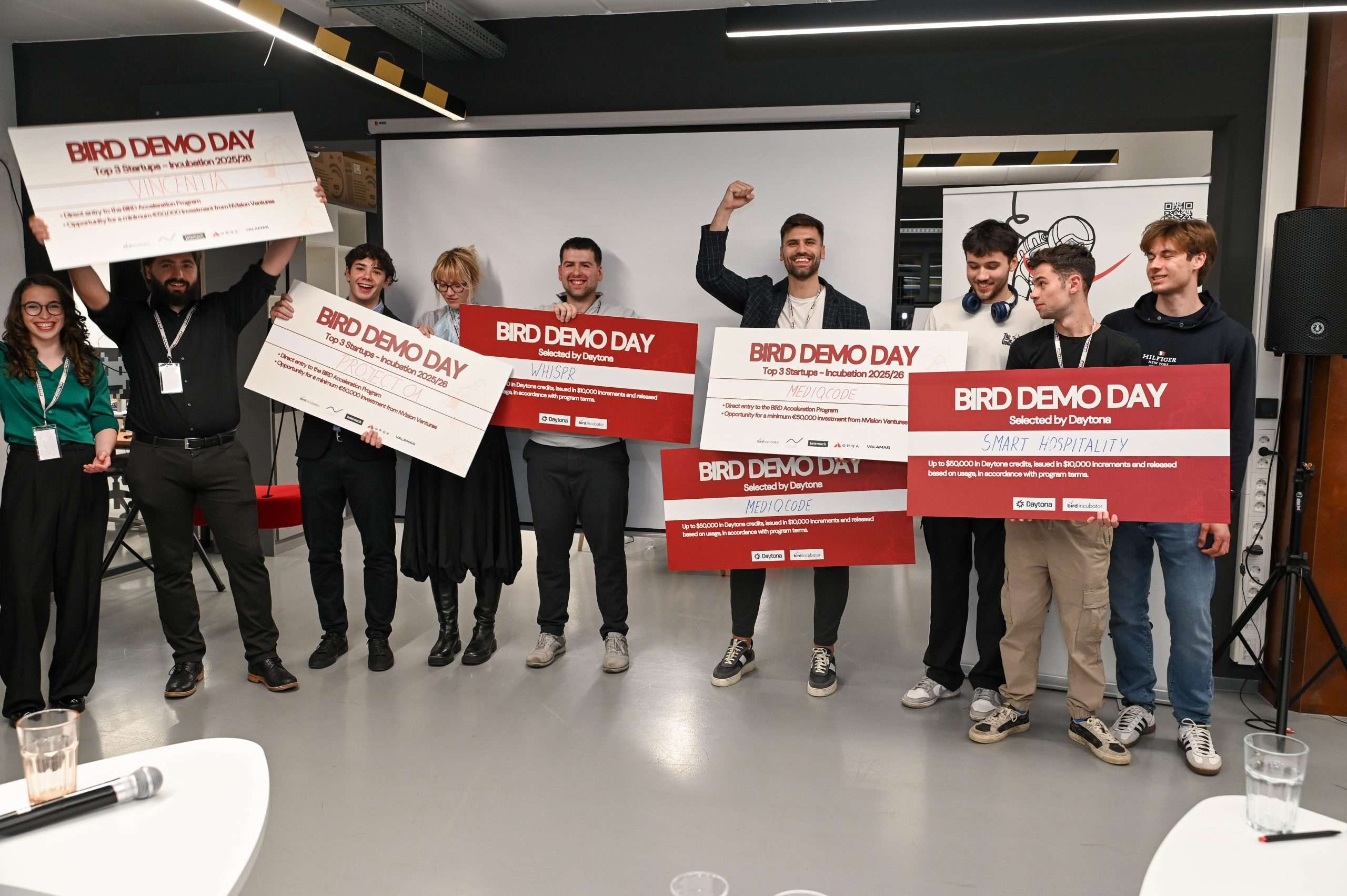
The revealing moment in an AI startup’s life often arrives after the software works. Someone asks what it is worth. Mediqcode, a participant in Zagreb’s BIRD Incubator, confronted that question in a hospital setting. A medical-coding model could be technically interesting. A system that identified missed diagnoses and improved billing had a buyer’s problem attached to it.
In BIRD’s account of its April 2026 Demo Day, chief executive Andrej Matić described testing real clinical cases and adapting the model to local practices. The team’s explanation became more precise: hospital revenue, rather than a general promise about artificial intelligence. Mediqcode won first place. The useful part of the story happened before the trophy.
- Start with the stage: seven-week pre-incubation, six-month incubation, then tailored acceleration.
- Expect to show up: the first two programs meet in Zagreb; acceleration is hybrid.
- Read the small print: incubation is advertised as free, with a €75 administration fee.
- Bring a question: mentors and investor connections help founders test assumptions.
A data business makes room for beginners
BIRD grew out of Poslovna inteligencija, the data business now known as Solvership. It formally opened on February 9, 2021, although the first teams had started the previous December. The founding company already had space and resources. Its founders, Dražen Oreščanin, Lidija Karaga and Anita Cvetić Oreščanin, worked with the company team to turn the incubator idea into a place.
The original workspace had six named zones: Hello, Think, Meet, Work, Eat and Rest. It is an amusingly complete description of office life. More consequential was the network around those rooms: technical specialists, business mentors, corporate partners and investors. BIRD’s proposition was to put a young team within reach of people it would otherwise spend months trying to meet.
That makes its place in the market fairly specific. BIRD supports founders building companies, particularly around AI and data. It offers practical business education and access to expertise. The building is part of the service; the relationships are what make the building useful.

The missing step before incubation
By 2024, BIRD had noticed an awkward gap. People arrived with ideas and enthusiasm but little sense of where to begin. Programs aimed at more developed teams assumed knowledge these beginners had yet to acquire. BIRD responded with its first pre-incubation program: customer research, problem definition, business planning, mentor feedback and pitch practice.
The inaugural report provides a modest, useful set of numbers. Twenty-one teams applied, twelve entered, ten completed. Completion is a measure of participation, not proof of commercial success. Two teams did not finish; the report supplies no reason to turn that into a morality tale. By 2026, the published offer was seven weeks, with no previous experience required.
For a founder, the benefit is sequence. An idea can seem to demand a company name, a website and a fundraising deck simultaneously. Pre-incubation puts some order into that noise. Identify the customer. Understand the problem. Explain why this solution belongs in that customer’s day. Then practise saying it without requiring a patient audience.
Evidence gets the first appointment
The published 2026 incubation schedule begins September 29 and runs to April 13, 2027. Its first phase groups work into four blocks: Evidence, First Value, Investable and Tell the Story. That ordering carries an editorial opinion. The story comes after the evidence.
One session proposes testing demand before making a product. Another cuts the roadmap down to the smallest thing that creates value. These are sensible constraints on a founder’s affection for features. A landing page or a manually delivered service can test a promise before a team commits to months of development.
After the first phase, the classroom recedes. January through April centres on milestones, accountability every two weeks, and mentor and investor access. The lesson a reader can copy is practical: give each meeting an observable result. A customer conversation, a live test or a shipped improvement makes a better discussion than another declaration that progress is happening.
A prize is useful. A narrower claim is better.
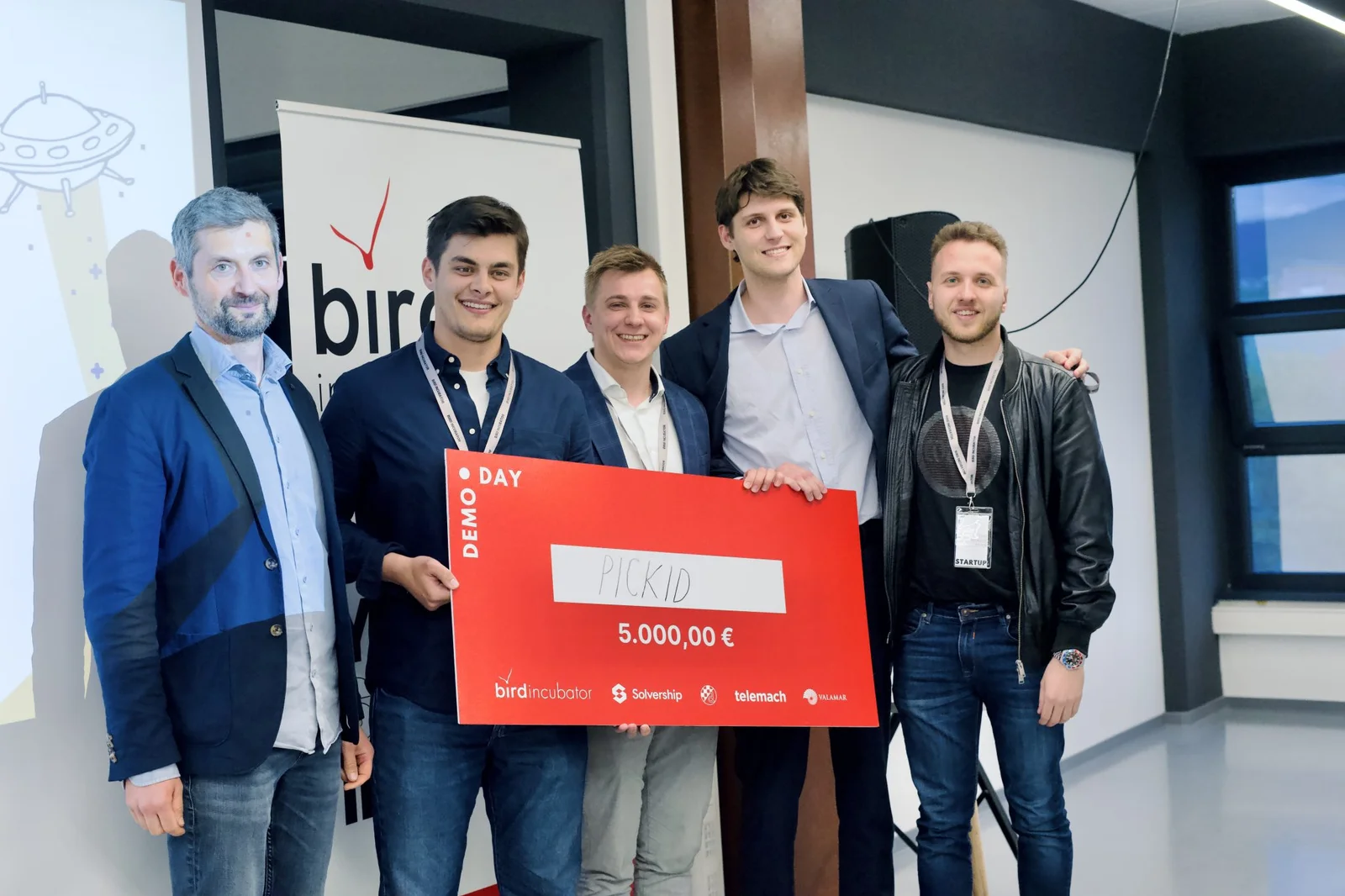
Pickid, a platform for safe child transportation, won BIRD’s April 2025 Demo Day and €5,000. Co-founder Amer Nakić described the second phase as the point when the team put advice into practice and validated its idea in the market. The distinction matters. Attendance gives founders information; application gives them something to defend.
A year later, eleven teams presented at incubation Demo Day. Mediqcode led the field; Vincentia, a home-care platform, placed second, and startup-building platform Project01 third. This variety is instructive. AI is the incubator’s focus, while the problems belong to hospitals, households and founders.
“We moved from a generic ‘AI for medical coding’ concept to a concrete solution with a clear impact on hospital revenues.”Andrej Matić, Mediqcode CEO
Introductions have their own economics
BIRD’s model rests on company backing, sponsors and partners rather than a published tuition business. Kaufland supported the 2026 pre-incubation cohort. Telemach, Valamar Riviera, Orqa, Daytona and NVision were represented around incubation Demo Day. BIRD also describes its acceleration as NVision Ventures’ official acceleration program.
Connections are valuable, but the terms deserve separate attention. The 2026 report announced that one team would receive at least €50,000 from NVision. That is a stated opportunity, not evidence that every participant receives investment. Daytona credits awarded to three teams are service credits, not cash funding. Founders should budget for what is actually offered.
Who should take a seat?
BIRD suits teams willing to test ideas, accept direct feedback and spend time with other founders. Its in-person requirement brings a practical limit: travel and attendance can be expensive even when tuition is free. Later-stage teams seeking flexible support can consider hybrid acceleration. A founder expecting guaranteed customers or capital will need a different set of expectations.
The portable lesson is smaller than joining an incubator. Write down the claim your product makes. Find the person who benefits if it is true. Test it in that person’s world. Mediqcode’s account suggests why this matters: a more specific promise is easier to examine, easier to buy and harder to hide behind a splendid slide.