The number is $342. In BioMarin’s account of its beginnings, that is what a family’s first bake sale raised for research into the rare condition threatening their son’s life. It is an absurdly small sum to place beside a pharmaceutical company. That is precisely why it belongs there. Before a disease becomes a market, somebody has to insist that it deserves attention.
- BioMarin makes medicines for rare, genetically defined conditions.
- Its advantage combines biology, manufacturing and the work of getting treatment to patients.
- Revenue reached $3.221 billion in 2025. Two costly retreats show why scientific confidence needs an exit rule.
One missing enzyme. An entire business.
BioMarin was founded in 1997 by Christopher Starr and Grant Denison. Its early opportunity was unusually concrete: some inherited conditions leave people without a working enzyme. Replace the missing function, and there is a plausible route from molecular explanation to treatment. Plausible, of course, is where the expensive work begins.
The MPS I program that became Aldurazyme grew from research associated with Elizabeth Neufeld and Emil Kakkis. BioMarin supplied the organization needed to develop and test it. U.S. approval arrived in 2003. Sanofi now markets the medicine globally, while BioMarin supplies it. The scientist, manufacturer and commercial partner occupy different parts of the same long chain.
That division of labor helps explain the company’s place in biotechnology. BioMarin specializes in genetically defined conditions where understanding a mechanism can point toward a medicine. Its expertise includes protein engineering, clinical development and making complex biologics consistently. A convincing experiment is the beginning of the product, rather than the finished article.
The patient is not the purchase order
Ask who BioMarin’s customer is and the answer splits into several people. A patient receives treatment. A specialist decides whether it fits. A specialty pharmacy or distributor may handle delivery. An insurer or government often pays. Each can introduce a delay; none can be replaced by a cheerful launch announcement.
The company’s RareConnections program helps eligible families understand insurance coverage and financial assistance options, obtain product support, and coordinate specialty-pharmacy delivery. These services make the business less abstract. For families, the useful next step is a conversation with a treating specialist and the appropriate support program, rather than a shopping cart.
The medicines also solve different problems. Naglazyme and Vimizim are enzyme replacements for distinct forms of mucopolysaccharidosis. Brineura treats CLN2 disease, a form of Batten disease. Kuvan and Palynziq address phenylketonuria through different mechanisms. Their names can look like a spelling contest; their eligibility rules are far more consequential.
“Meeting patients face to face reminds our team why our work matters”Terri Christianson · BioMarin employee story
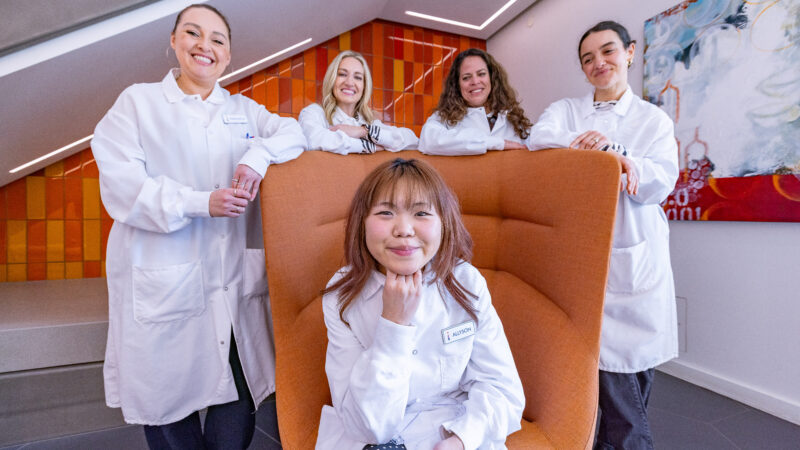
BioMarin describes patient visits to its laboratories as an established practice. That is a specific expression of its stated culture: bring the people affected by the research into the workplace. It does not settle questions about pricing or access, but it gives an otherwise distant manufacturing task a visible human consequence.
The daily injection that changed the mix
Voxzogo took BioMarin beyond its original enzyme-replacement franchise. The daily injection promotes linear growth in eligible children with achondroplasia whose growth plates remain open. In the pivotal year-long study, the difference in annualized growth velocity versus placebo was 1.57 centimeters per year. That result is a defined clinical measurement, not a promise about every child’s final height.
Commercially, the shift is easy to see. Voxzogo generated $927 million in 2025 revenue, up 26%. BioMarin’s overall revenue rose 13%. A company associated with a collection of metabolic conditions now had a substantial skeletal-condition business. The opportunity also attracted competition: Ascendis Pharma’s once-weekly Yuviwel received U.S. approval in February 2026 for eligible children aged two and older.
Voxzogo contributed approximately 29% of total revenue. Rounded figures.
Convenience is therefore part of the contest. BioMarin is developing its own longer-acting CNP candidate, BMN 333. Meanwhile, September 2026 publication of positive Phase 3 hypochondroplasia results supported another potential use for Voxzogo. That use remained investigational. Expanding a familiar product still requires a separate evidence file and a regulatory decision.
Approval was not the finish line
Roctavian supplied the uncomfortable counterexample. In June 2023, the FDA approved the one-time gene therapy for certain adults with severe hemophilia A. The treatment sought to enable liver cells to produce clotting factor VIII. Yet patients faced eligibility testing and follow-up, while established treatments already offered alternatives.
The first commercial warning was weak uptake. Clinical benefit did not create an automatic stream of people ready, eligible and able to switch. BioMarin explored a sale, could not find a qualified buyer, and announced voluntary market withdrawal in February 2026. It recorded approximately $240 million in related fourth-quarter 2025 charges, including inventory write-offs and asset impairments. That figure is an accounting charge, not the program’s lifetime development bill.
Buy the fit. Keep the stop rule.
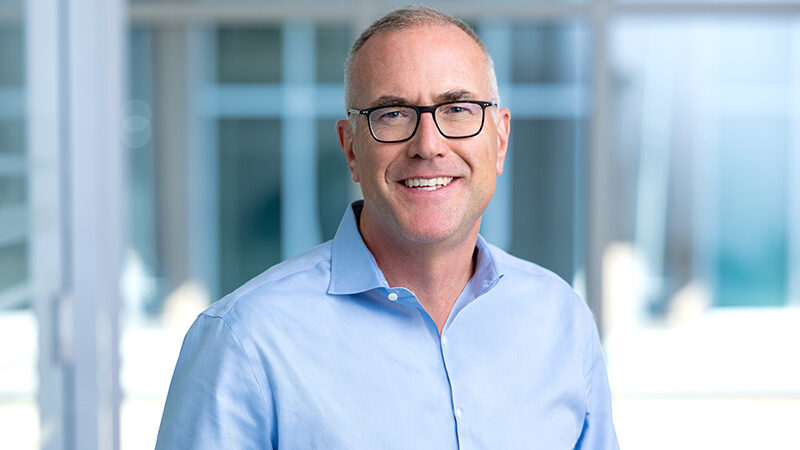
President and CEO Alexander Hardy’s larger portfolio bet arrived in April 2026: the approximately $4.8 billion equity-value acquisition of Amicus. Galafold for Fabry disease and Pombiliti plus Opfolda for Pompe disease fitted BioMarin’s metabolic expertise. The company acquired treatments it could place inside an existing commercial system.
Acquisition did not remove scientific risk. BioMarin paid about $270 million for Inozyme in July 2025. Its lead program, later called BMN 401, missed one of two co-primary endpoints in a pivotal trial. In its second-quarter 2026 update, BioMarin discontinued development across all indications. Familiar biology had not guaranteed the required evidence.
The lesson another builder can copy is operational: choose a precise problem, build the delivery capabilities around it, and identify evidence that would justify stopping. This approach depends on a tractable mechanism, measurable benefit, reliable production and funded access. Without those conditions, a small patient population can remain a small business opportunity, however urgent the need.
BioMarin’s achievement is making that difficult chain work repeatedly. Its setbacks reveal how many links must hold. The family at the bake sale was trying to buy time. The company’s continuing job is to turn time, evidence and manufacturing into treatments people can actually receive.