The bacteria were supposed to live. In 1999, a researcher in Marcin Filutowicz’s Wisconsin laboratory was putting two mutations into a plasmid, a small circle of bacterial DNA. Either mutation alone was manageable. Together, they produced no living hosts. An ordinary experiment had become an awkward mystery. Filutowicz suspected the plasmid was copying itself so enthusiastically that it destroyed the bacterium carrying it.
- Atterx develops bacteria-based therapies for drug-resistant infections.
- C-1205 aims to prevent catheter-associated urinary tract infections.
- GN-4474 targets Gram-negative pathogens through bacterial DNA transfer.
- Both are development programs; laboratory promise still needs patient proof.
That accident offered a peculiar possibility: engineer a bacterium that survives carrying the destructive plasmid, then let it pass the payload to pathogens that cannot. Filutowicz and Richard Burgess founded ConjuGon, the company later known as Atterx BioTherapeutics. “We harnessed this plasmid,” Filutowicz recalled. “Now, how can we use it?”
The question remains a good introduction to Atterx. Its business begins where the reflex to regard every bacterium as an enemy becomes inadequate. Some bacteria might deliver a treatment. Others might occupy a place that dangerous organisms would otherwise claim. Medicine, in this account, has a rather unexpected guest list.
A useful tenant for an inconvenient address
Consider a urinary catheter. It solves one immediate problem, draining the bladder, while creating an opportunity for infection. Atterx’s C-1205 approaches that opening through bacterial interference: introduce a selected organism and try to make the environment less hospitable to pathogens.
The candidate contains E. coli HU2117 and a gelling ingredient in a freeze-dried preparation. Add water, and it becomes a lubricant applied before catheter insertion. Atterx intends the procedure to establish a protective colony in the bladder. Its design gives an existing clinical action an additional job. Nobody needs to invent a reason for catheter lubricant to be there.
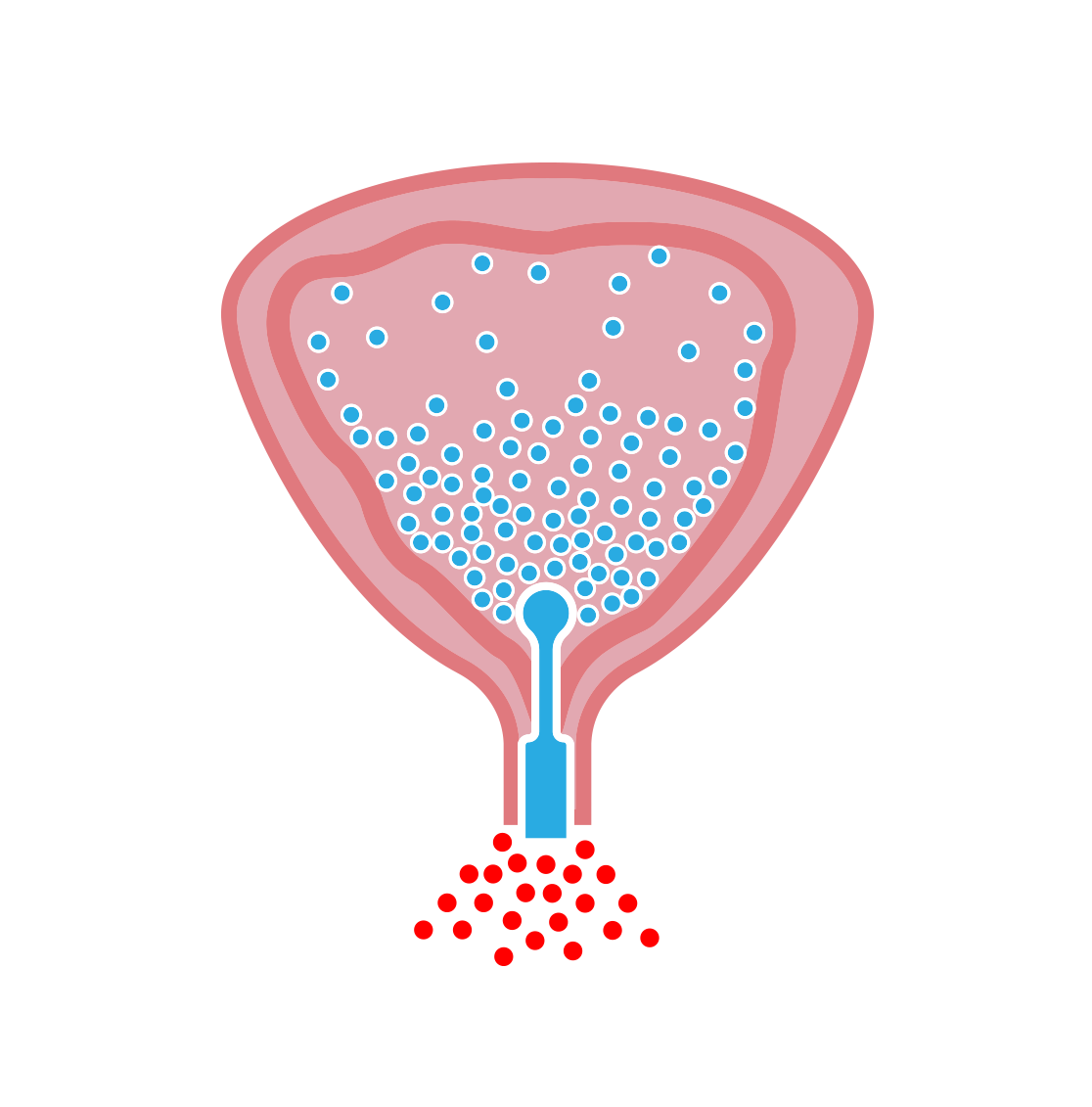
That is the practical attraction for prospective hospital users. If prevention works, an insertion step could help avert an infection and the treatment it requires. For patients, the intended benefit is fewer catheter-associated UTIs. For clinicians, the proposed tool fits a familiar procedure. These are intended benefits, rather than established outcomes for the finished candidate.
- 01Powder + water
- 02Lubricate catheter
- 03Introduce bacteria
- 04Seek protection
The word “protective” has to earn its keep
Academic research offers reasons to take the idea seriously. A 2011 randomized study enrolled 65 adults with neurogenic bladder after spinal cord injury. Of 59 who received bladder inoculations, only 27 were evaluable. Among those analyzed, the HU2117 group averaged 0.50 UTI episodes per patient-year; the placebo group averaged 1.68.
The small evaluable population matters. Those figures describe a selected group, with sustained colonization required for evaluation in the experimental arm. They are not a forecast of what an ordinary hospital should expect from C-1205.
Getting bacteria into the bladder and keeping infection out are two different achievements.
A 2015 pilot makes the distinction concrete. Ten older adults with long-term urinary catheters received catheters coated with HU2117. Eight became colonized. Yet five developed invasive UTIs associated with other urinary pathogens. The study ended early after consultation with its safety monitoring board. The researchers concluded that colonization had not prevented subsequent invasive disease.
That was a small, uncontrolled study, using an academic catheter-coating approach rather than Atterx’s finished gel. It does not settle C-1205’s fate. It does show why age, underlying illness, existing organisms and delivery method cannot be waved away. A successful tenant can still have dangerous neighbors.
A second bet on bacterial conversation
Atterx’s other program, GN-4474, uses conjugation, the process by which bacteria transfer DNA. This is the platform descended from the founding scientific puzzle. Its aim is to turn a bacterial exchange mechanism into a route for killing Gram-negative pathogens. In 2025, CEO Jim Millar described it as a topical candidate for burn and wound infections.
The company reports an average 98% infection reduction in an animal experiment and no evidence of emerging resistance when surviving pathogens were repeatedly exposed in laboratory tests. Those are preclinical findings. They support further investigation; they cannot tell a clinician how reliably a treatment will work in a patient.
The two programs therefore occupy different positions. C-1205 seeks to prevent infection through ecological interference. GN-4474 seeks to treat it through bacterial delivery. Their common distinction from conventional antibiotics lies in using living bacterial behavior as part of the therapeutic mechanism.
The laboratory needs a business around it
Biology is only part of the enterprise. Atterx’s leadership combines pharmaceutical development with finance: Steven Watt is listed as Chief Operating Officer and Chief Scientist; Millar is CEO. The company is developing therapeutics for clinical users rather than selling a consumer probiotic.
Its history includes investor financing and university technology licensing. A reported December 2006 financing brought $3.3 million from Rosetta Partners and Wisconsin Investment Partners to advance the predecessor’s work. That amount records one financing, not the total cost of building today’s pipeline.
In 2023, Boomerang Catapult backed a growth phase and the headquarters move from Wisconsin to Traverse City. Millar had discovered that working remotely from northern Michigan could suit him; investor support helped make relocation practical. The company still lists its research facility in Madison. In March 2025, Michigan Rise made another investment.
Millar described three full-time employees and many contractors. His account suggests a small central team drawing on specialist help, with entrepreneurial community and mentorship supplying another kind of infrastructure. The lesson for other founders is concrete: establish the support network before making the address change.
The next important result belongs to patients
In May 2025, Atterx announced FDA Fast Track designation for C-1205. The designation is intended to facilitate development and review for serious conditions with unmet needs. It is a regulatory milestone, not marketing approval.
Atterx’s most copyable product decision is to attach a new mechanism to an existing hospital task. Its hardest question is whether that mechanism provides dependable protection across the patients who need it. The founding experiment became interesting when the bacteria died. This program succeeds only if the patient benefits.