In 2018, Billy Gilmartin was working on a project in New York City and receiving dispatches by fax. Underground, his business dealt with substantial things: large pipes, cleaning equipment, the physical work of keeping a city moving. Above ground, a machine associated with hotel reception desks and forgotten office cupboards was helping tell people what to do. The future had apparently taken another street.
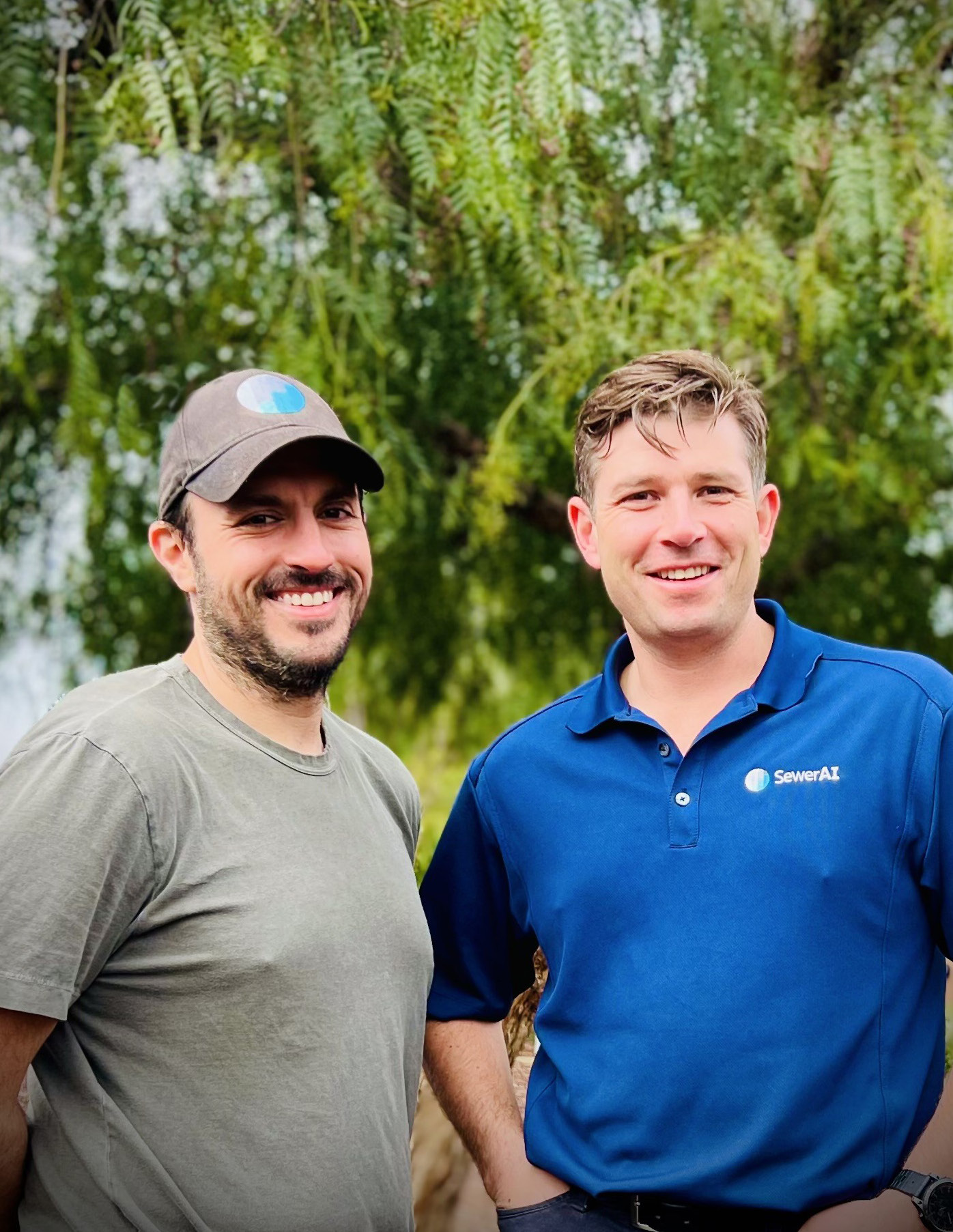
Then Matt Rosenthal called. Gilmartin remembers the encounter as a sudden change in what seemed possible. Rosenthal brought a technical approach to a business Gilmartin knew through crews, contracts and customers. They met late that year. In 2019, they founded SewerAI.
A fax makes a tidy villain. Gilmartin’s more interesting argument concerns what happens even when the information arrives. A pipe can be inspected. A warning can be recorded. The person who understands the danger can explain it. Somewhere on the journey toward a decision, the message can still lose its force.
A business big enough to stand inside
Gilmartin’s route into software began with construction. After the 2008 financial crisis, he wanted work with an environmental purpose. Wastewater collection systems gave him a practical place to put that ambition. In his account of those early years, he developed a proprietary cleaning system for large-diameter sewers in 2011 and began pursuing demanding projects.
The work took him to major urban systems. His early business served customers including San Francisco’s public utilities commission, East Bay Municipal Utility District, DC Water, Baltimore County, New York City’s environmental protection department and San Jose. These were places where a sewer contractor could find plenty to do without having to explain why sewers mattered.
Pipe & Plant, where he is listed as president, remains part of his professional story. That connection gives his software career a useful continuity. Before he had to persuade anyone to adopt an inspection platform, he had faced the operational problems of delivering the work himself.
One memory goes directly to his present concerns. Early in his career, he stood inside a San Francisco pipe with a city inspector who had spent more than 30 years in the trade. The inspector understood why the pipe had backed up. He had anticipated the failure and communicated his concern. Gilmartin remembers the warning losing its way between field knowledge and the authority to act.
It is an unglamorous scene for a technology origin story. It also supplies a precise problem. The expertise was already there, standing in the pipe beside him. What needed improving was its route out.
The phone call had a peculiar question
Rosenthal needed help labeling sewer inspection footage. Training computer vision meant getting people who understood the images to identify defects and features. He asked Gilmartin what it would cost to have operators sit in an office watching videos and annotating them. It was a new question for someone accustomed to selling the work of cleaning and inspecting pipes.
There was a natural division of experience. Rosenthal could work on the technical solution. Gilmartin could connect it to the economics of a contractor’s day. He had built a business on both coasts and encountered the difficulty of keeping work consistent across offices. Customers, meanwhile, were wrestling with similar problems in separate cities.
The partnership also exposed gaps in his own knowledge. Rosenthal asked basic questions about annual inspection volumes that Gilmartin could not immediately answer. The point was useful precisely because it sounded so ordinary. A company can be busy doing work while struggling to see its own activity clearly.
Today they are co-CEOs. Gilmartin describes his contribution in terms of explaining value and productivity to operators. There is an advantage in discussing a workflow with someone who has had to make money from it. An elegant demonstration still has to survive the working day.
“We saw the future the same way.”
Billy Gilmartin
Less typing, more pipe
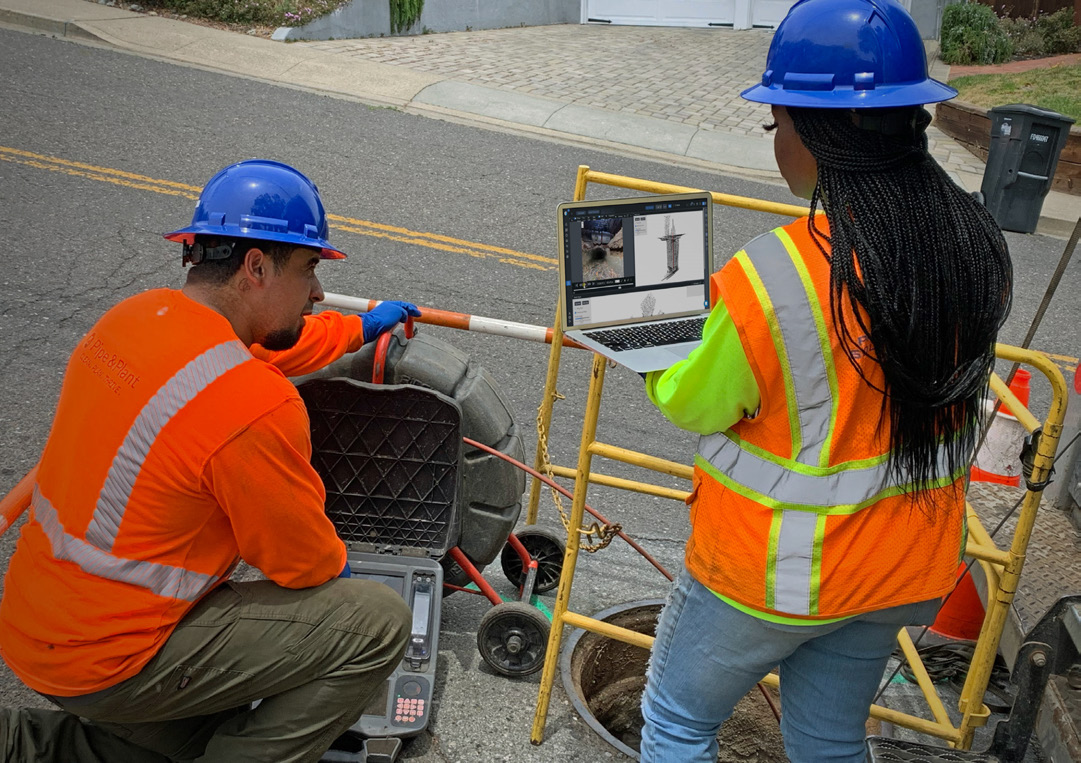
The product at the center of that early proposition was AutoCode. It uses computer vision to identify conditions in sewer inspection videos and help produce standardized inspection records. A camera still has to go underground. Someone still has to capture usable footage. The change concerns the painstaking work of recognizing and documenting what the camera sees.
That distinction matters to Gilmartin’s pitch. SewerAI’s software works with existing CCTV inspection equipment. Adoption need not begin with replacing a truck or buying a new camera system. The opportunity sits in the footage customers are already collecting, and in the effort required to turn it into something other people can use.
He has also had to address the people doing that effort. In 2024, he discussed AI as a way to help wastewater professionals cover more ground and spend less time reviewing video. Operators have specialist judgment. Their jobs combine moving equipment, interpreting images and producing records. Asking software to take on some of the repetitive work changes how that time can be spent.
The commercial proposition has a deliberately practical shape. A contractor can ask whether a crew gets more done. An engineer can ask whether the observations arrive in a useful form. A utility can ask whether its inspection program helps it decide where to spend money. Gilmartin has to make the same product legible to all three.
- 01 / CaptureCrews record what is underground.
- 02 / AssessAutoCode helps identify and code conditions.
- 03 / PrioritizeRisk & Rehab ranks assets for attention.
- 04 / PlanTeams develop rehabilitation and capital plans.
The office is part of the job site
Software that examines a video solves only one part of a contractor’s problem. Inspection work also produces files, reviews, submittals and questions from clients. PIONEER, SewerAI’s cloud platform, puts that material into a shared environment. Inspections can be passed to clients through digital links, reviewed, commented on and accepted.
Consider the difference between recording an observation and making it available to the next person. A file on a drive may contain the answer. A reviewer still needs to locate it, understand which asset it concerns and connect it to the rest of the project. PIONEER brings mapping, inspection records and collaboration into the same setting. The administrative work belongs in the picture because it affects what happens in the field.
Sewer3D extends the idea to a different way of seeing. The product turns manhole inspection imagery into three-dimensional models and point clouds, with flat views and measurement tools. It can work with affordable cameras such as a GoPro 360. For someone who began with large physical assets, a model that can be examined in a browser is a meaningful change of perspective.
A photograph or video asks the viewer to interpret a view. A navigable model lets colleagues examine the structure from different angles. Gilmartin has spoken about a future in which digital twins help engineers understand entire collection systems. The attraction is easy to grasp: fewer important details confined to one visit, one viewpoint or one person’s memory.
A defect needs a place in the budget
Risk & Rehab carries the workflow toward the question that follows an inspection: what should be fixed first? Its scoring considers both the likelihood of failure and the consequences. Utilities can adjust factors such as material, depth and location, then use ranked lists and maps to develop rehabilitation priorities.
That is where the business returns to the inspector in the pipe. Knowing that something looks wrong has to become a decision that survives comparison with other demands. A utility has many assets and competing uses for its budget. Giving an observation context helps explain why one repair should move ahead of another.
Gilmartin’s ambition in 2026 reaches into the interval between that decision and construction. Designing a project, advertising it, receiving bids, contracting and scheduling all take time. Faster inspection leaves those steps ahead. His focus on helping utilities act therefore leads naturally into planning and project development.
“In our industry, AI is all about speed of taking action.”
Billy Gilmartin
Seven years after the fax
The company has raised money to pursue that work. In June 2024, SewerAI announced a $15 million Series B led by Innovius Capital. Participants included Emerald VC, Epic Ventures, Suffolk Technologies, Bentley Systems and Burnt Island Ventures. The planned uses included hiring, model training, expansion and a broader product offering.
In June 2026, it announced a strategic investment led by JMI Equity, alongside continuing investors. SewerAI reported that its customer base had tripled over two years. Its disclosed scale included data from more than 2,000 cities and over 30,000 miles of managed pipe. Those are company figures, and they describe a much larger operation than the initial phone call.
September brought Command Center, a plain-language workspace inside PIONEER for asking questions of inspection data and producing reports, maps and rehabilitation plans. The same month, SewerAI announced a partnership with Burns & McDonnell. Its consulting arm, 1898 & Co., would lead implementation for utilities in the United States and Canada.
The partnership followed nearly three years of work together, beginning with a municipal project in 2023. It joins the software to engineering methods and cost information. For Gilmartin, that is another route toward the outcome his earlier contracting experience taught him to care about: information that reaches people who can use it.
The fax story is funny because its machinery feels so out of time. The inspector’s story stays with you for a different reason. He understood the pipe. Gilmartin’s work now concerns whether that understanding can travel far enough to change what happens next. A city has little use for a warning that arrives everywhere except the repair schedule.