Biju Mathew had moved to Silicon Valley to write software. Then his children needed a tutor. In India, extra help with schoolwork had been part of their routine. In California, the price of recreating that routine made an ordinary parental decision unexpectedly difficult. He knew teachers back home. He knew computers. The question was whether those two kinds of knowledge could be made useful to each other.
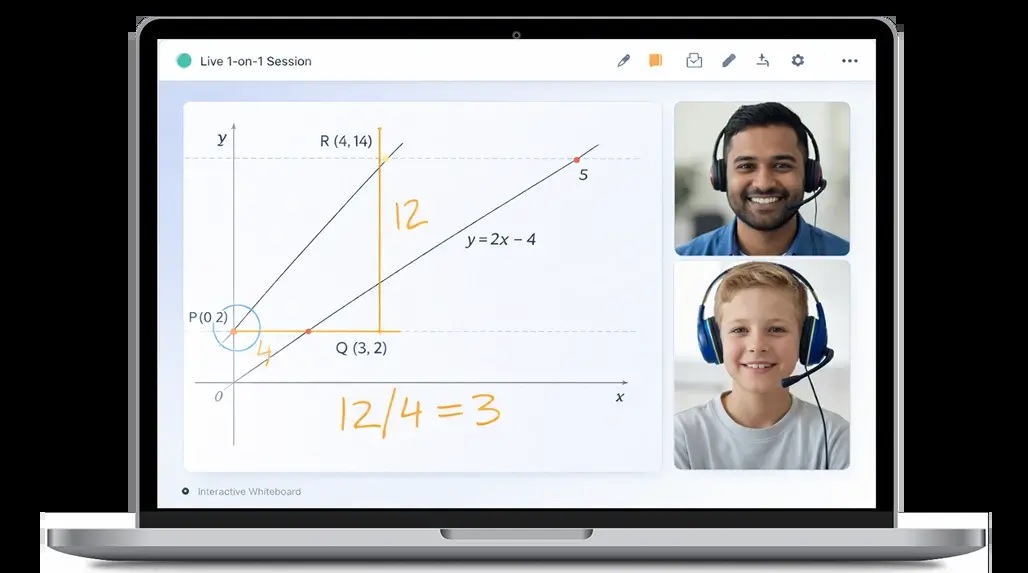
Growing Stars, the company he co-founded with Saji Philip, grew from that question. Its geography was unusual for the early 2000s: a student at home in America, a teacher in Kochi, a lesson travelling through headphones and a shared screen. The ambition was recognisably domestic. A parent wanted someone to help a child understand the work coming home from school.
There is something pleasingly inconvenient about this origin. Mathew had entered an industry famous for solving difficult technical problems and found himself caught by a school timetable. A programmer could work across borders. Why should finding a tutor require a parent to shop only within driving distance?
The teacher he already knew existed
Mathew arrived in the United States in 2000 to work as a software engineer at a Silicon Valley startup. His hometown was Kochi, the Kerala city also known as Cochin. That connection mattered. He could think about teachers in India as people with useful expertise, rather than as an abstract overseas workforce.
He recruited three engineers in Kochi to develop the software for online tutoring. The outline sounds straightforward now: carry a conversation, share a problem, let both participants work on it. At the time, putting those pieces together into a service that parents would pay for required a business as well as a working connection.
Philip supplied the initial financial backing. The venture began in November 2002, and live tutoring operations followed in January 2004. Those dates describe different jobs. Establishing a company creates the possibility of a lesson. Getting a child and a teacher into that lesson is where the possibility becomes a service.
For Mathew, the original dissatisfaction went beyond the bill. An earlier tutoring arrangement had failed to provide the individual help his son needed. “He needed personal attention,” he said in 2005. That is a small sentence to build a company around, and a demanding one. It leaves the business responsible for what happens after everyone logs in.
A parent can purchase an hour, receive a receipt and still wonder whether anything useful occurred. Mathew's starting point put that doubt at the centre of the enterprise. The screen had to deliver a relationship good enough to justify coming back.
A very early appointment in Kochi
By May 2005, tutors at the Kochi teaching centre were beginning work at 4:30 in the morning. American after-school hours had acquired an Indian alarm clock. The arrangement made use of the time difference, but its convenience belonged to different people at different hours.
One early customer, Johan Verzijl in San Antonio, enrolled his son Nick for chemistry and mathematics. The low price initially made him suspicious. Discovering that the teachers were in India added worries about language and technical reliability. He tried the service anyway. After an adjustment to the accents, his son developed a working relationship with the tutors.
The preparation was revealing. Teachers received copies of Nick's textbooks and information about his interests and activities. Knowing the assignment was one task. Having something to say to the person doing it was another. Rapport needed material of its own.
Mathew's engineering background helps explain the connection; the details of those lessons explain the business. A headset and a whiteboard could transmit a calculation. Keeping a student involved took preparation, listening and enough familiarity for another question to feel welcome. Geography changed the available teacher. It did not exempt the teacher from teaching.
First names, different expectations
By late 2005, Growing Stars was operating beyond the United States, reaching Australia, Canada and the United Kingdom. Expansion also meant learning how much a teacher needed to know about a classroom that the teacher had never entered.
Academic qualifications were part of recruitment. So were communication skills. In Kochi, academic directors supervised tutors, who spent time preparing for their students' curricula. Accent training was another practical component. The service depended on explanations arriving clearly, not merely arriving.
Mathew also described cultural preparation. A student might address an adult tutor by a first name, a difference the company helped teachers anticipate. It is an easy detail to overlook beside the international business story. Yet an unexpected form of address can alter the mood of a conversation long before anyone reaches the first equation.
His observation carries a useful limit on the idea of frictionless technology. Two people can share a language and still bring different expectations to the same appointment. The company had to make room for those differences in training. Broadband could carry the exchange. It could not explain the manners.
“I knew there are a lot of highly qualified teachers there.”
Biju Mathew, 2005
The decision to recruit in India gave Mathew a wider field of teachers. The obligation that followed was closer and more particular: help each teacher work with a particular student. That movement, from a large pool of talent to one useful conversation, is the most interesting distance in his story.
The business behind the next lesson
As the company matured, Mathew's public descriptions kept returning to individual attention. At Growing Stars' tenth anniversary in 2014, he credited tutors and education managers for helping students improve. He spoke about their knowledge, their attention and the care they brought to the work.
The company used the same textbooks students were using at school. That choice gave the remote tutor a concrete point of contact with the child's day. A lesson could begin with the page the student actually needed to understand, rather than with an unrelated sequence of exercises.
Education managers belong to the less photogenic part of the arrangement. They help connect the instruction to the family and its expectations. A service made up of individual lessons still needs someone to keep track of the larger relationship. Otherwise, each appointment risks becoming a fresh introduction.
In a 2018 company announcement, Mathew again discussed family budgets and the desire to motivate children to attempt more academically. The language linked affordability with continued participation. For a parent, a useful lesson is easier to value when it can be repeated. The second appointment matters to the business, and often to the learning.
- AssessIdentify the student's starting point.
- MatchChoose a tutor for the student's needs.
- TeachWork together in individual sessions.
- Follow upAn Education Manager tracks progress.
More than a working microphone
Today, Growing Stars describes a sequence of assessment, tutor matching, individual sessions and ongoing support. It reports more than five million hours of one-on-one online tutoring. That is the company's cumulative figure, rather than a count of current students or a promise about any individual result.
The sequence is useful for understanding what Mathew's original idea became. Connecting a teacher and a child is one operation. Deciding whether the match works, adjusting the plan and keeping a parent informed require others. The product includes the appointment and the work surrounding it.
The company's current software also reflects that administrative effort. Its staff app, published under Biju A Mathew, is designed for education managers and teachers to manage student information and communicate with parents. A separate parent app offers progress updates and communication. The tools concern the people keeping lessons organised.
That is an apt continuation for someone who began in software. The visible lesson depends on a collection of less visible exchanges: what needs attention, what changed, what the parent should know. Giving those exchanges a place in an app does not make them disappear. It acknowledges that they are part of the job.
The question that survives the connection
Mathew is still identified as Growing Stars' co-founder and CEO. His career joins two places he knew personally and two roles that did not initially appear to belong together: software engineer and parent searching for academic help. The overlap supplied a business problem specific enough to begin working on.
The temptation in telling an internet business story is to make distance the villain and connection the happy ending. Mathew's experience allows for a more interesting plot. Once the connection works, the difficult questions become intimate. Does this explanation make sense? Has the student understood? Will someone remember the difficulty at the next lesson?
His early remark about personal attention remains a useful way to read the enterprise. A company can add subjects, countries and software. The child still arrives with a particular piece of schoolwork. The teacher still has to find a way into it. Mathew built Growing Stars around making that meeting possible. Its daily test begins when the meeting starts.