A mother telephoned with a complaint about her daughter’s education. Damian Creamer was working in online learning, using curriculum and technology supplied by other companies. The experience, she told him, was falling short. StrongMind’s origin story turns on what happened next: Creamer and his team began building their own tools. A customer-service problem became a product-development brief. Somewhere in that transition lies much of his career.
It is an unusually useful beginning for an education entrepreneur. No sudden discovery that children learn differently was required. There was a particular child, a dissatisfied parent, and a service that needed improving. The complaint gave the business something more demanding than an audience: somebody to answer to.
Twenty-five years after founding Primavera Online School, Creamer is still working on that relationship between the individual learner and the machinery around them. His vocabulary now includes artificial intelligence, learner graphs and generative learning systems. The question underneath remains recognizable. Can an institution large enough to serve thousands remain attentive to the student having a bad experience on the other end of a screen?
Thirty-five students, then a second business
Creamer founded Primavera in 2001 with 35 students. His personal account describes a school built for children whose needs were poorly served by a standardized experience. Online education offered flexibility, but flexibility alone could not make the available lessons or software good enough. Building a school exposed the shortcomings of the products it had to buy.
That sequence matters. Creamer encountered education technology as an operator responsible for delivering schooling. The software business grew out of the school’s requirements. It is a practical route into entrepreneurship: buy a solution, discover how much work remains, eventually decide that making it yourself is worth the trouble. The trouble, of course, tends to arrive in installments.
In October 2016, FlipSwitch announced its rebranding as StrongMind and introduced digital curriculum for grades six through twelve. At the time, the coursework was being developed for more than 20,000 Primavera students. Videos, games, teacher-led lessons and formative assessments were part of the mix. Creamer’s explanation was direct: the company had started as a school and wanted better curriculum for its own students.
“Student success is our bottom line.”
Damian Creamer · 2016 curriculum launch
The production work attracted recognition. The 2016 launch announcement listed regional Emmys, Telly Awards, a CODiE and a Serious Play award for the company’s curriculum. By 2019, StrongMind had won an EdTech Cool Tool award for curriculum and instruction, while Creamer was a finalist in the Trendsetting Leader category. Those distinctions describe achievements in educational products. The harder, continuing question is what happens when students use them.
The unglamorous art of making school work
Listen to Creamer discussing StrongMind with then-president Mary Gifford in 2020 and the conversation becomes pleasingly concrete. He talks about enrollment, checking grades and following a child’s progress. Parents should not have to visit a succession of disconnected places to discover what is happening at school. It is the sort of complaint that rarely makes a conference banner and can nevertheless consume a family’s evening.
Gifford emphasized access regardless of where a family lived, alongside equipping teachers to participate fully in digital learning. Creamer concentrated on joining the pieces together. Content and the experience of using it belonged in the same conversation. A lesson can be carefully written and still be frustrating to reach, navigate or follow.
This is where the two businesses illuminate each other. Primavera supplies the daily obligations of a school; StrongMind supplies tools and curriculum intended to help schools fulfill them. The arrangement offers a close view of practical needs. It also places considerable responsibility on the person overseeing both. An inconvenient interface may be a product defect. An interrupted education carries a different weight.
A founder with a deadline for decisions
Creamer’s education includes a BA from Brigham Young University, an MBA from Thunderbird School of Global Management, and Harvard Business School’s Owner/President Management program. His professional recognition includes iNACOL’s 2012 award for individual contribution to K-12 online learning and congressional certificates for work in the field. His career has combined running organizations with returning to classrooms himself.
His account of an ordinary working day has a distinctive boundary: he aims to make important decisions by 2 p.m. Early focused work gives way to conversations with product, engineering, learning and leadership teams. Later hours are for carrying decisions through. Dinner at home is another fixed point. Even the founder of a digital school appears to appreciate a timetable.
He has also described an early weakness: deferring decisions when he already had a view of what should happen. The corrective, in his telling, involved taking responsibility for choices and learning from their consequences. That admission adds something useful to the executive biography. Decisiveness is presented as a practice he had to acquire, with mistakes attached.
“The best ideas get better when they’re challenged.”
Damian Creamer · January 2026 interview
The challenge for any founder with strong convictions is keeping that invitation open after the company grows. A team needs room to bring unwelcome information, especially when its product is somebody else’s school day. The first parent complaint in StrongMind’s story is a reminder of how valuable an uncomfortable conversation can become.
What he wants the machine to remember
In 2026, Creamer’s argument about AI centers on continuity. A learning system should retain an understanding of a student across lessons and sessions, tracking mastery and adjusting support as that student develops. StrongMind Intelligence is the company’s proposed foundation for that work. Creamer describes a Generative Learning System that can adapt pacing, feedback and instruction over time.
It is an ambition worth stating precisely. A student who answers a question correctly today may struggle with a related problem next month. Personalization requires some account of that change. A responsive interface is only one part of the job; the underlying record must help the adults involved decide what to do next. Creamer wants the system to support parents, teachers and administrators as well as students.
His January conversation with Gerard Gibert also discussed Lexi, StrongMind’s AI learning companion, and giving teachers time back. In April, he argued that the industry should concentrate on the design of learning systems instead of simply adding conversational features. The distinction is useful because an impressive demonstration can answer a question that a school never needed to ask.
By August, the platform plans had an organizational counterpart. StrongMind appointed Rui Costa as chief technology officer, bringing experience at Google, Amazon Web Services and Epic Games. His remit included a shared foundation for products, authentication, deployment and security. These are fairly dry nouns. They become more interesting when a family needs a message to reach a teacher or a student needs access to coursework.
On October 20, StrongMind unveiled CoursePro at DLAC Ignite in Atlanta. The platform uses StrongMind Intelligence to help educators and curriculum teams create standards-aligned digital courses. Creamer joined Megan Morkert and chief learning officer Scott Neil for a session about shortening course development. The company said availability details would follow in the coming weeks. That distinction matters: unveiling a product establishes a direction, while its use in schools will supply the next chapter. For Creamer, the practical promise is more time for educators to shape the learning experience.
The report card belongs in the story
Primavera’s record also includes a public accountability dispute. State regulators considered revoking its charter in 2025 after three consecutive D grades. The school subsequently received a B for 2024-25 under alternative-school accountability calculations. In April 2026, it was allowed to continue under a closely monitored operating plan. Creamer disputes the characterization that Primavera was failing.
The financial relationship has drawn scrutiny too. Primavera’s 2024-25 audit showed nearly $64 million, or 86 percent of its public funding, going to StrongMind for services. Creamer has defended the legality of the school’s for-profit structure and pointed to lower funding for online pupils. Those questions sit alongside the experiences of students who value a flexible schedule and a different pace. Growth, individual benefit and public accountability require separate judgments.
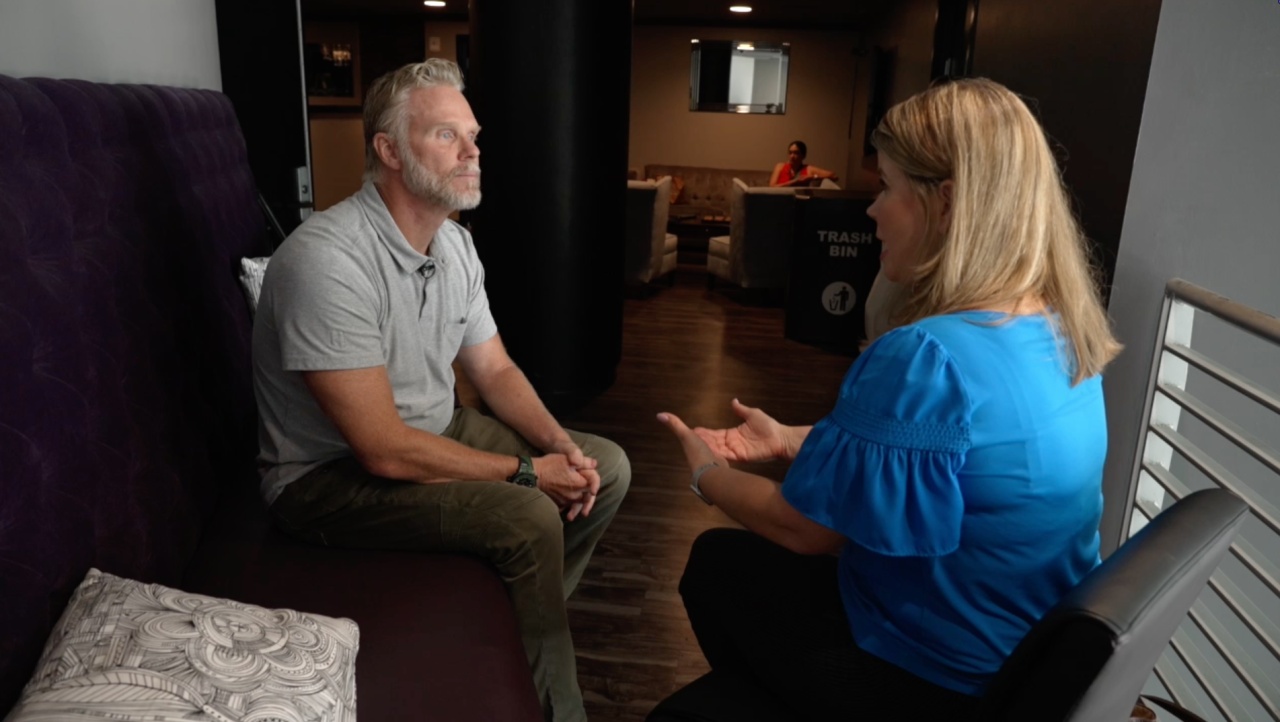
For a founder who puts student success at the center of the enterprise, scrutiny of the school’s outcomes belongs near the center too. Software awards and favorable student experiences are meaningful evidence about particular things. A public school must also answer for academic performance, the use of public money and the conditions under which it keeps operating.
A little distance from the dashboard
There are smaller details in Creamer’s account of himself that resist the usual executive silhouette. Born in Spencer, Iowa, he earned his first pay baling hay. As a child, he wanted to be a fighter pilot. At university, his favorite course was dialectology. He speaks English and Spanish, enjoys reading and cooking, and has described a trip to Peru.
His wife, Noelle, is the person he names as his greatest influence outside his parents. Family is his greatest joy. Those answers are modest beside the vocabulary of intelligent platforms, but they give the working-day boundaries some context. A person who wants education to accommodate individual lives has drawn a few boundaries around his own.
The parent’s phone call remains the best lens on the larger project. It contains a standard that is easy to understand and difficult to satisfy: somebody’s daughter should receive a better education. Creamer has spent years building institutions and tools around that promise. The next version comes with AI, new products and another round of decisions. Its most useful test still begins with the student.