In Indianapolis, the tutoring program grew. Then the budget shrank. By the 2023-24 school year, Tutored by Teachers had reached roughly 9,500 students across tutoring and vacancy-support programs, according to figures reported by Chalkbeat. Results looked promising. Yet the district planned a much narrower literacy effort as federal pandemic aid expired. Educational need had outlasted the money intended to address it.
- Schools buy live Math and English Language Arts instruction for small groups.
- Experienced teachers stay with students across a term.
- Attendance, scheduling, and durable funding determine how much instruction survives.
That tension makes Tutored by Teachers, usually shortened to TbT, worth examining. Its proposition is straightforward: give students who need help more time with someone who knows how to teach. Deliver that time virtually, coordinate it with schools, and keep the adult familiar. The technological ambition supports a surprisingly old-fashioned arrangement.
The teacher is the product
Childhood friends Shaan Akbar and Rahul Kalita founded the company in 2020. Kalita brought experience at the College Board, Amplify, and Imagine Easy Solutions. The company’s public benefit mission addresses opportunity gaps, particularly among high-need students. Its other constituency is teachers seeking additional earnings from the skills they already possess.
TbT’s teacher-community page reports an average of 12 years of classroom experience and says 62% of its teacher-tutors hold graduate degrees. Those are company figures, but they explain the pitch. Schools purchase access to educators accustomed to diagnosing confusion, adjusting instruction, and managing the small social negotiations that accompany learning.
The core offering, Virtual Intervention, targets Math and English Language Arts skills. Students are assessed, grouped around learning needs, and taught live through video. Lessons align with standards. The same teacher returns throughout the term. That continuity gives the next lesson a memory: what a child understood, what needed another explanation, and where to begin again.
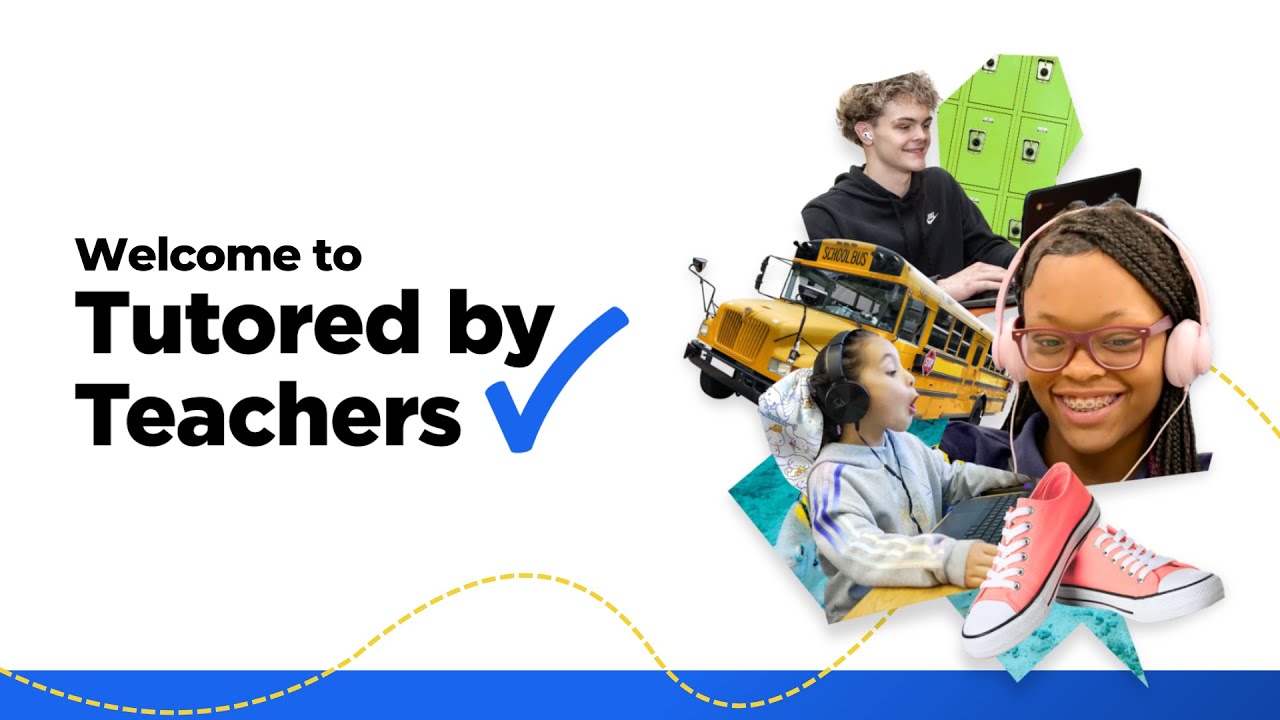 Watch the introduction ↗
The buyer is generally a district or charter school. For an administrator, the appeal includes coordination: turning student needs into groups, schedules, teacher assignments, and progress information. For students, the service is a recurring lesson. That distinction matters when a procurement document describes a platform but the useful thing being purchased is human attention.
“My teachers are very excited because it takes some of the lift off of them.”
Amanda Milliken, principal
George Buck Elementary School 94
Twenty hours, read carefully
Indianapolis supplies a concrete example. A company case study describes 1,600 students at 12 schools receiving in-school virtual Math and ELA tutoring during 2022-23, followed by expansion to 5,000 students. Sessions lasted 30 to 45 minutes and occurred two to five times weekly.
The same report describes a comparison involving students in grades four through eight who received at least 20 hours of tutoring over the year. Their ILEARN outcomes improved by 14 points in Math and 12 in ELA relative to students without TbT tutoring. The analysis matched students using prior scores and demographic characteristics. It was a matched comparison, with the limitations that implies, rather than random assignment.
ILEARN comparison · Grades 4-8 · At least 20 hours/year
Company-published matched study; not a randomized trial.
There is a smaller, easily missed distinction here. TbT has earned the National Student Support Accelerator’s Tutoring Program Design Badge. That recognizes a design aligned with research-backed characteristics. A buyer still needs to examine outcomes for the students, subjects, and schedules closest to its own. Program design and measured impact answer different questions.
The hours requirement deserves as much attention as the colorful numbers. These results concern a defined group receiving a defined amount of instruction. A district buying access should also count completed sessions. Otherwise it risks comparing a contract’s ambitions with another program’s delivered teaching.
One network, several school problems
The service extends beyond intervention. Tutoring for All offers additional instruction at school or home. Summer Academy packages Math and ELA into a 20-day sequence for K-8 students. Vacancy Support places certified virtual teachers into an interim instructional role using a school’s curriculum. English-learner support, special education, and SAT preparation address other district needs.
At Foundation Academies in New Jersey, a published 2023-24 case study describes 246 participating students and the matching of special education students in grades seven through twelve with certified specialists. The useful detail is the match. A large teacher network becomes more valuable when it can supply the qualification a particular group requires.
This is a competitive market. Varsity Tutors for Schools also offers recurring live tutoring, while Fullmind supplies certified virtual educators for staffing needs. TbT’s case rests on its combination of experienced teachers, consistent assignments, small groups, and school-level implementation. A district can also build tutoring locally. The comparison should concern the instruction it can reliably deliver.
The price of putting it on the calendar
A historical Connecticut approved-provider listing makes the economics legible. TbT quoted $85 for a 60-minute group session, plus a one-time $60 program-development and platform fee per student. With four students sharing 90 sessions, the example totals $1,972.50 per student. That is an illustrative historical scope, not a universal current price.
Group size changes the arithmetic. Contract scope changes the quote.
A more recent document shows a different scope. An October 20, 2026 Hillsborough County agenda item proposed $199,520 for approximately 250 students across six sites: 90 minutes weekly for 24 weeks. The proposal gives a purchaser’s view of the service, measured in students, minutes, locations, and a funding source.
The money ran out before the need did
Indianapolis’ retrenchment illustrates the constraint. Expiring relief aid and a new reading law shifted priorities toward roughly 1,200 second- and third-graders. Earlier growth had not secured permanent funding. For buyers, the practical lesson is to protect attendance and instructional time while planning the next budget cycle.
Copying the approach starts with a timetable: select a skill, assemble a manageable group, assign a qualified teacher, and reserve recurring sessions. It also requires working devices, a usable connection, and someone who makes sure children reach the lesson. If participation stays irregular or those arrangements are missing, the school cannot expect a purchased block of tutoring to become a completed block of instruction.
TbT has attracted capital for its side of that equation: over $10 million in a 2022 Series A led by GSV Ventures, then a strategic investment from American Student Assistance in September 2024. By October 2025, it reported nearly 20,000 students across 300 schools in 25 states. Continued demand is visible. Sustaining the lesson still requires a school to reserve the time, a child to attend, and money for the teacher who comes back.