Bharath Mundlapudi was coaching his child at soccer when he began thinking about business. Anyone with a ball could learn to kick it. Becoming a good player took work. Becoming a great one required something more demanding: practice, perseverance, planning and years of application. In May 2014, he put the observation on his blog. A parent’s ordinary afternoon had supplied an entrepreneur with a problem worth considering.
There is something pleasing about a software executive reaching for a soccer ball to explain progress. Technology promises an abundance of shortcuts. A ball is less accommodating. You can buy a better one, but it will still expect you to practise. Mundlapudi’s point was that improvement has stages, and the distance between them deserves respect.
That short reflection offers a useful way into his career. He worked on Java at Sun Microsystems, Hadoop at Yahoo and data science infrastructure at Netflix. He co-founded Orzota and later founded Enterprise Minds. The technologies changed; his writing kept returning to a practical concern: how to turn capability into something that works better.
The machinery beneath the screen
Before the founder’s title came the infrastructure. At Sun Microsystems, Mundlapudi belonged to the Java Virtual Machine group, working on the JVM and the Java EE application server. These are the layers on which other people’s software depends. Users seldom meet them directly. They notice when the machinery stops behaving.
At Yahoo, he joined the early Hadoop engineering effort. His particular responsibilities included leading the Hadoop Disk Fail Inplace project. Even the name has a useful lack of glamour. Disks fail. Large systems have to accommodate that fact. It is a different sort of education from designing a polished demonstration: the system has to keep living with its components.
He also worked as an architect in Netflix’s Data Science group. Together, those roles placed him close to the operating foundations of internet businesses: running applications, handling large datasets and supporting the work of data scientists. They help explain the technical specificity that survives in his later writing, even when the subject becomes corporate strategy.
His education included a bachelor’s degree in Information Science and Technology at B.M.S. College of Engineering. But the professional sequence has its own coherence. Java, distributed data and data science each supplied another layer of the same larger challenge: getting useful work out of complicated computing systems.
A founder with a diagram to explain
In April 2012, Mundlapudi co-founded Orzota, where he held the founder and CTO role. Conference biographies also described him as president. The business worked in big data and data science, bringing him into advisory work across sectors including retail, manufacturing and finance.
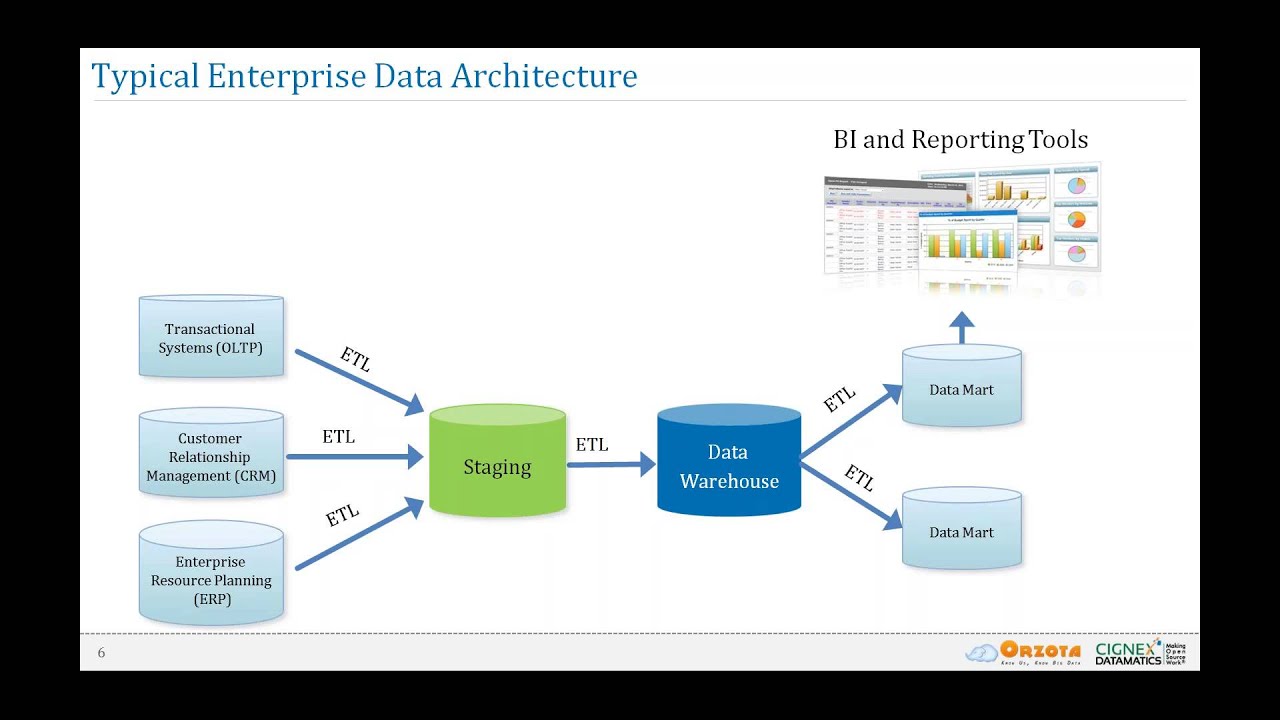
He was willing to explain the plumbing. In February 2016, he shared a webinar about augmenting a data warehouse with Hadoop. The subject was architectural: where data comes from, how it moves and how organizations prepare it for analysis. A warehouse diagram may be an unlikely calling card for a founder, but it gives a prospective customer something concrete to discuss.
His writing about visualization was similarly concerned with the journey before the chart. Data had to be brought together, cleaned, transformed and enriched before a display could yield useful meaning. Showing everything could overwhelm both the browser and the person looking at it. More information on the screen did not automatically produce more understanding.
That concern with understandable systems also took him onto conference stages. At the Global Big Data Conference, his retail presentation proposed examining three machine-learning use cases. The emphasis was on applications in a recognizable business, with examples specific enough to discuss.
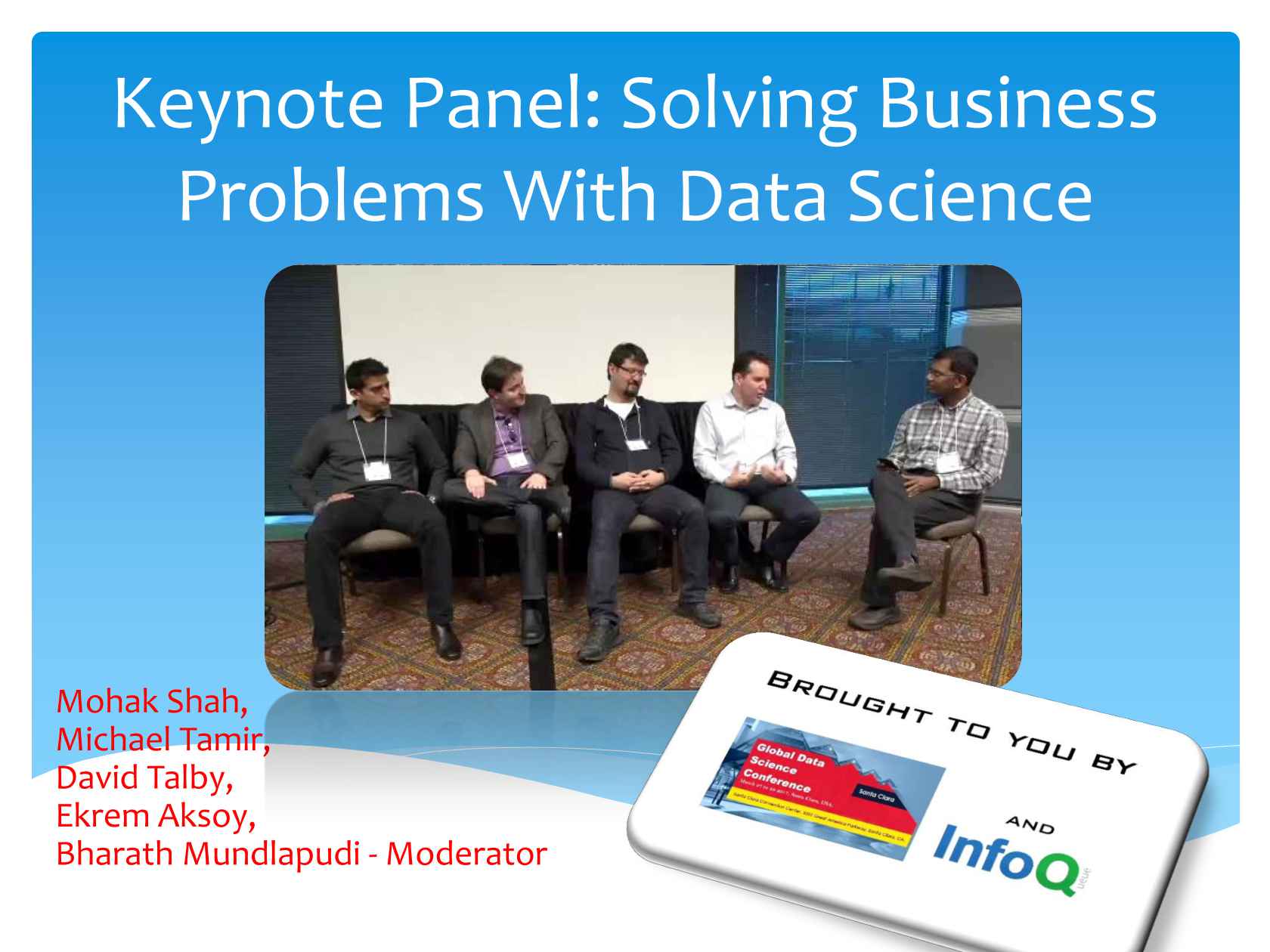
In March 2017, he moderated a Global Data Science Conference panel on solving business problems with data science. The participants included Mohak Shah, Michael Tamir, David Talby and Ekrem Aksoy. Bringing practitioners into the same conversation was another way of asking how technical work translated into organizational results.
Three verbs, in a particular order
One of his most economical explanations appeared in February 2016. A business improvement process, he wrote, could be broken into three activities: monitoring what happens, learning from those events and acting on the learning. They formed a loop. Their order mattered.
It was a small post, with none of the ceremonial complexity that can make a management framework resemble an airport map. Its usefulness lay in giving the reader something repeatable. Observe the business. Learn something. Change what you do. Then watch again.
Observe events. Understand them. Apply the learning. Repeat.
The same interest had appeared in his August 2014 discussion of a real-time enterprise. He described an organization that monitors events quickly enough to make faster decisions. Then he listed the complications: culture, business processes, existing technology and the people responsible for decisions.
The list is revealing. An engineer writing about speed had included the organization itself among the constraints. Buying faster equipment would address only part of the problem. A business would have to change how its people and processes worked together, and keep changing over time.
Another August 2014 post considered open-source software. Mundlapudi described code being developed, tested and certified across the world, and argued that companies needed an open-source strategy. He pointed to Linux and Hadoop as examples of a change in how software reached businesses. For someone who had worked inside Yahoo’s Hadoop effort, the subject also connected engineering practice with the choices a company’s leaders had to make.
It broadens the picture of his interests at the time. Alongside questions about faster decisions, he was considering where innovation came from and how businesses should respond when useful software was being built beyond their own walls.
Read beside his later work, these posts form a consistent line of inquiry. The observation comes first; useful action has to follow. Somewhere between the two sits the difficult business of understanding what is happening and deciding what to do about it.
Building Enterprise Minds
Mundlapudi founded Enterprise Minds in 2017. The company’s work spans product engineering, automation, data and AI. It has developed an international delivery presence, with operations across North America, the United Kingdom, the United Arab Emirates and India.
Its organization pairs teams with industry knowledge with teams that work across technology stacks. That arrangement reflects a familiar service-business problem: understanding a customer’s circumstances while having the engineering depth to build what those circumstances require. Mundlapudi’s earlier advisory work had already taken him across different kinds of businesses.
By September 2025, Enterprise Minds had received HFS Challenger recognition. A company fact sheet at that point listed 800 employees, more than 30 clients and bootstrapped funding. Those figures belong to that dated snapshot. They show the scale of the organization he had built without needing to turn every subsequent headcount claim into a growth chart.
Funding model: bootstrapped.
The service proposition also contains a demanding internal rule: apply automation within the firm before applying it for customers. Reusable engineering assets and internal learning are part of that model. The approach gives his interest in repeatable processes an organizational home, with the practical difficulty of making it work across a growing business.
The queue outside the algorithm
In May 2026, Mundlapudi returned to a problem he had been circling for years. Companies could deploy automation and still leave decisions marooned in approval queues. Exceptions moved between teams. Responsibility became unclear. Speeding up individual tasks did little to settle who could make the next decision.
His argument was that AI made these questions more urgent. Once software participates in routing, recommendations and approvals, the design of the workflow matters enormously. An organization needs rules for exceptions, human intervention and accountability. A faster system can carry an unresolved problem further before anyone catches it.
A second article that month focused on operational friction. He proposed a sequence that began with business objectives, moved through identifying delays and selecting worthwhile opportunities, and only then reached experiments, building and scaling. Technology had a place in the sequence. So did knowing what success would mean.
“Where are decisions slowing the business down?”
Bharath Mundlapudi, May 2026
That question is less theatrical than a prediction about machines replacing entire professions. It is also easier for a manager to take into a meeting. Somewhere there is an approval waiting, an exception nobody owns or information that has reached the wrong desk. Mundlapudi’s recent writing asks executives to start looking there.
Beyond the enterprise diagram
His activities extend into education. Young Innovators Academy lists him as an investor and board member, with responsibility for digital infrastructure supporting curriculum delivery, operations and educator development. The setting changes, but the work again concerns the systems that allow other people to do their jobs.
In May 2026, he took the automation discussion into housing at Future PropTech Miami. On a panel moderated by Abby Lindenberg, he discussed reducing the operating costs that discourage affordable housing development and improving application and income-verification processes for prospective residents. He also addressed how residents might retain agency over the technology around them.
Later that month, he described an ambition to work on high-impact problems connecting discovery, innovation and sustainability. Among the fields he named were energy, manufacturing, infrastructure, agriculture and education. It was a broad statement of intent, with a longer horizon than the next enterprise project.
The soccer post remains a useful counterweight to that scale. In 2014, he had described progress as something that needed patient, deliberate work. Years later, his subjects include automated enterprises and urban communities. The ball still supplies a fair test: capability matters, but what happens after the first kick is where improvement begins.