The next time an arcade machine swallows your dollar, look at the side of the cabinet, then imagine the invoice behind it. Somebody sourced that game, argued about where it should sit on the floor, arranged the financing, drove it there, and will be back when the joystick sticks. For a large slice of the United States, that somebody is Betson Enterprises - a family-owned distributor in Carlstadt, New Jersey that has spent 90 years as the layer between the companies that build games and the venues where you play them.
Betson does not make arcade games. It does something less visible and, it turns out, harder to dislodge. It decides which titles reach your local family entertainment center, lays out the room, lends you the money to fill it, installs the machines, and keeps the parts flowing when something breaks. The games get the attention. Betson gets the reorder.
01A jukebox, then everything after it
The origin story is almost too tidy. In 1934, a Greenwich Village restaurateur named Humbert Betti put a jukebox in his own tavern, then in the bars nearby. Betti was already a well-traveled operator - born in Argentina, raised in Italy, a chain of ice cream parlors in England before he emigrated to the United States in 1927. The jukebox was a side hustle that ate the main business. Soon the family was running amusement routes across New York and New Jersey, and at the peak had more than 7,000 pieces of equipment on the street collecting coins.
Running a route means owning the machines and splitting the take with the venue. Distribution means selling the machines to the operator and moving on to the next sale. By the early 1960s the Betti family had figured out which side of that trade scaled better. They reorganized the distribution arm, named it Betson Enterprises, and shifted the company's weight from operating games to selling them. That decision - to be the supplier rather than the operator - is the one the whole modern company rests on.
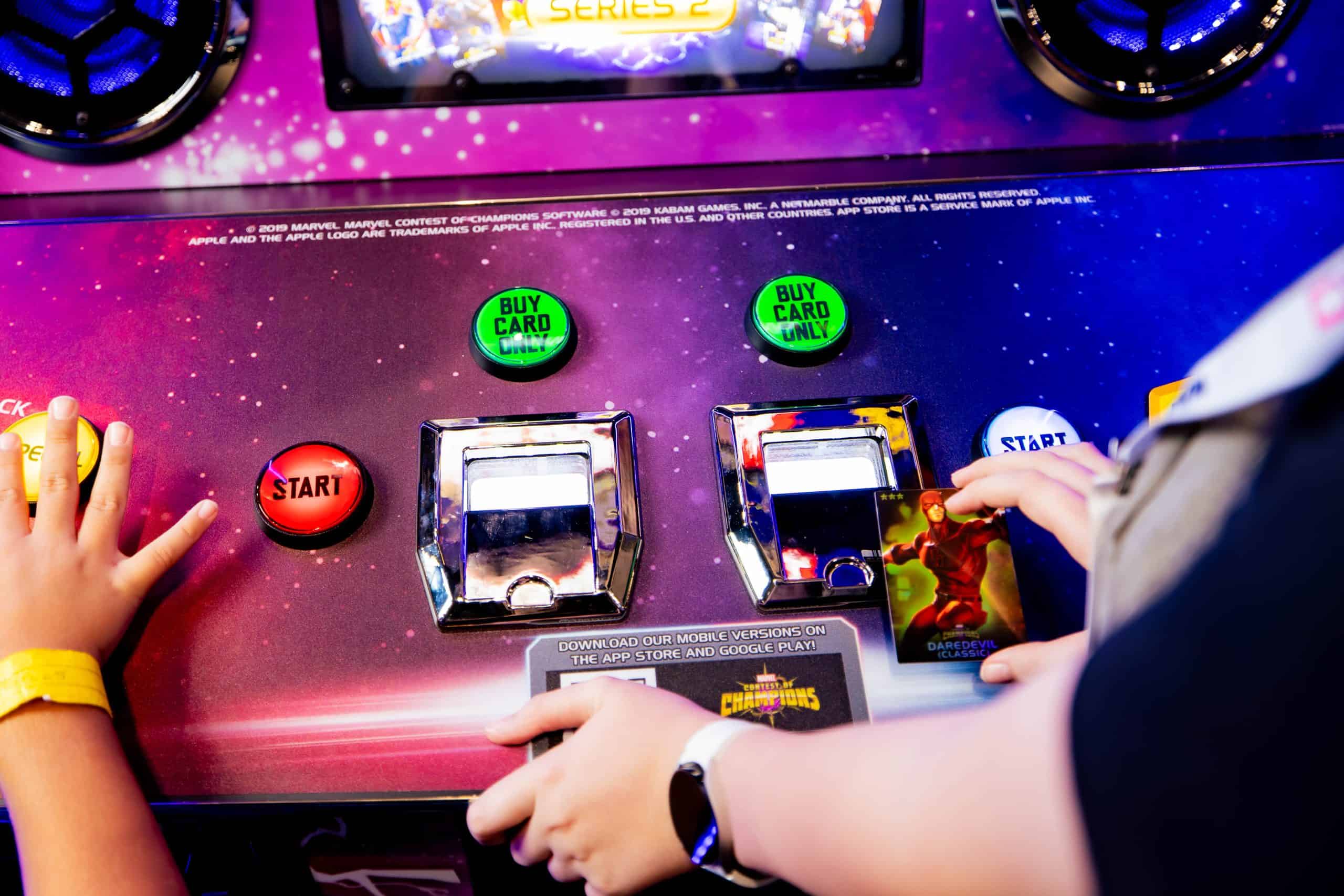
The growth after that came the unglamorous way: buying other distributors. Runyon Sales in 1978 made Betson the largest metro-area distributor and handed it the rights to Bally pinball machines just as Asteroids and Space Invaders were arriving. Portale on the West Coast positioned the company for California legalizing pinball in 1972. Later came Eastern in Philadelphia, Atlas in Pittsburgh, State Sales, and Spirit Distributing in Dallas in 2004. Each acquisition was another region, another catalog, another service depot.
02What Betson actually sells
Walk the catalog and the breadth is the point. New and used arcade cabinets. Redemption games - the ticket-spitting machines that quietly drive a family entertainment center's economics. Racing games, pinball, virtual reality rigs, photo booths, jukeboxes, pool tables. On the vending side, snack and beverage machines and office-coffee equipment, representing leading manufacturers across North America. Betson is one of the few places a buyer can get nearly all of it under a single account.
On the manufacturer side, the roster reads like the arcade itself: Raw Thrills and Play Mechanix (Betson is a leading distributor of their video and VR titles), Bandai Namco, Sega, Stern Pinball, Elaut, Bay Tek, LAI Games, Andamiro, Triotech. A single FEC install might combine a dozen of those brands. The value of a distributor is that the operator negotiates once, with Betson, instead of a dozen times with a dozen factories.
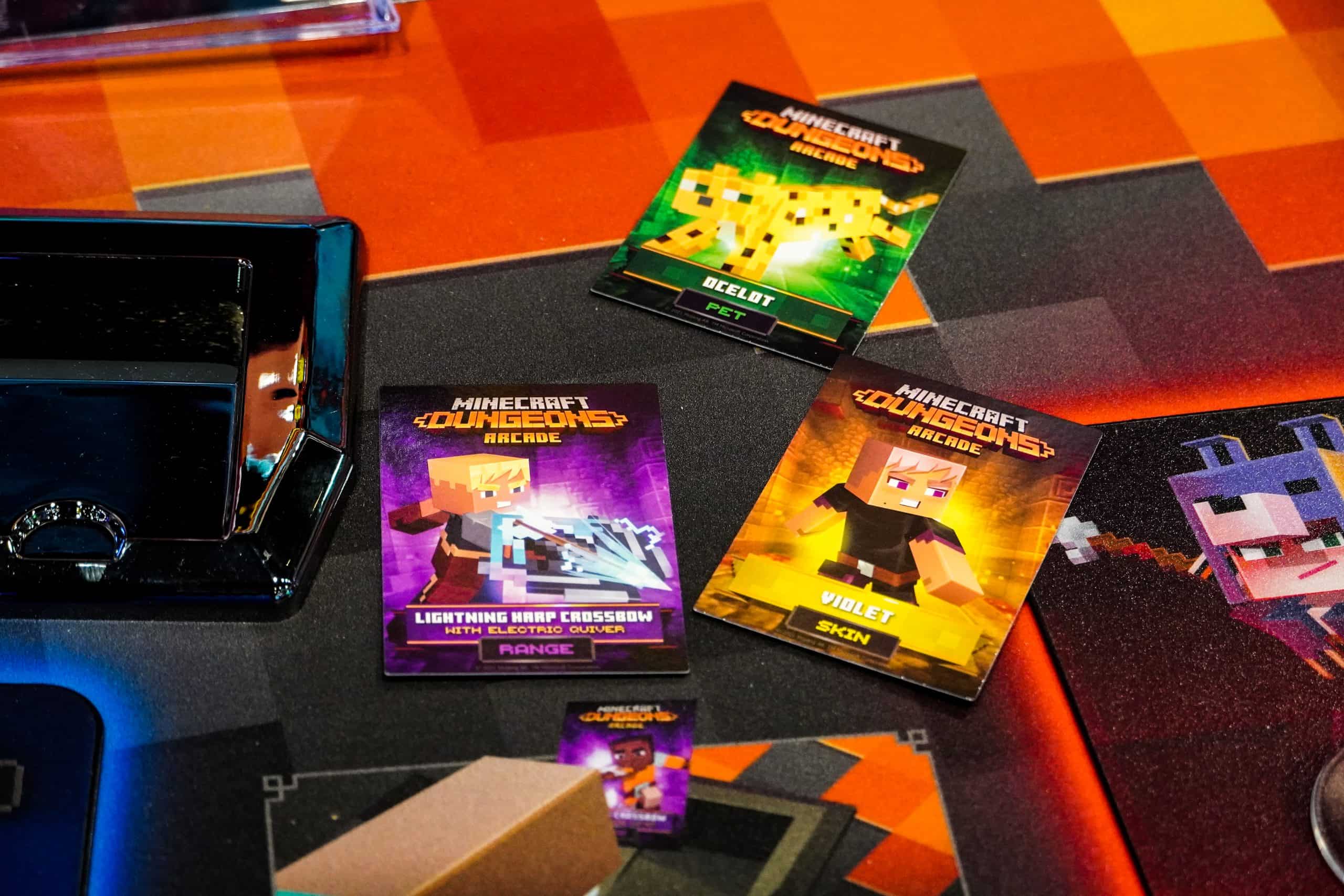
Then come the services, which is where a distributor becomes a partner. Betson's consultative team will design a game room in CAD, recommend the mix of titles, and lay the floor out to maximize both foot traffic and revenue per square foot. Betson Imperial Parts & Service stocks thousands of parts and the prize merchandise to go with them. And Betson runs private, in-house financing and leasing, so an operator can open a room without paying for every cabinet upfront.
An arcade game is a depreciating asset that needs a floor plan, a loan, a delivery truck, and a repair tech to earn its keep. Betson sells all five. Competitors that sell only the box compete on price; Betson competes on the whole problem.
03Who buys, and why they keep buying
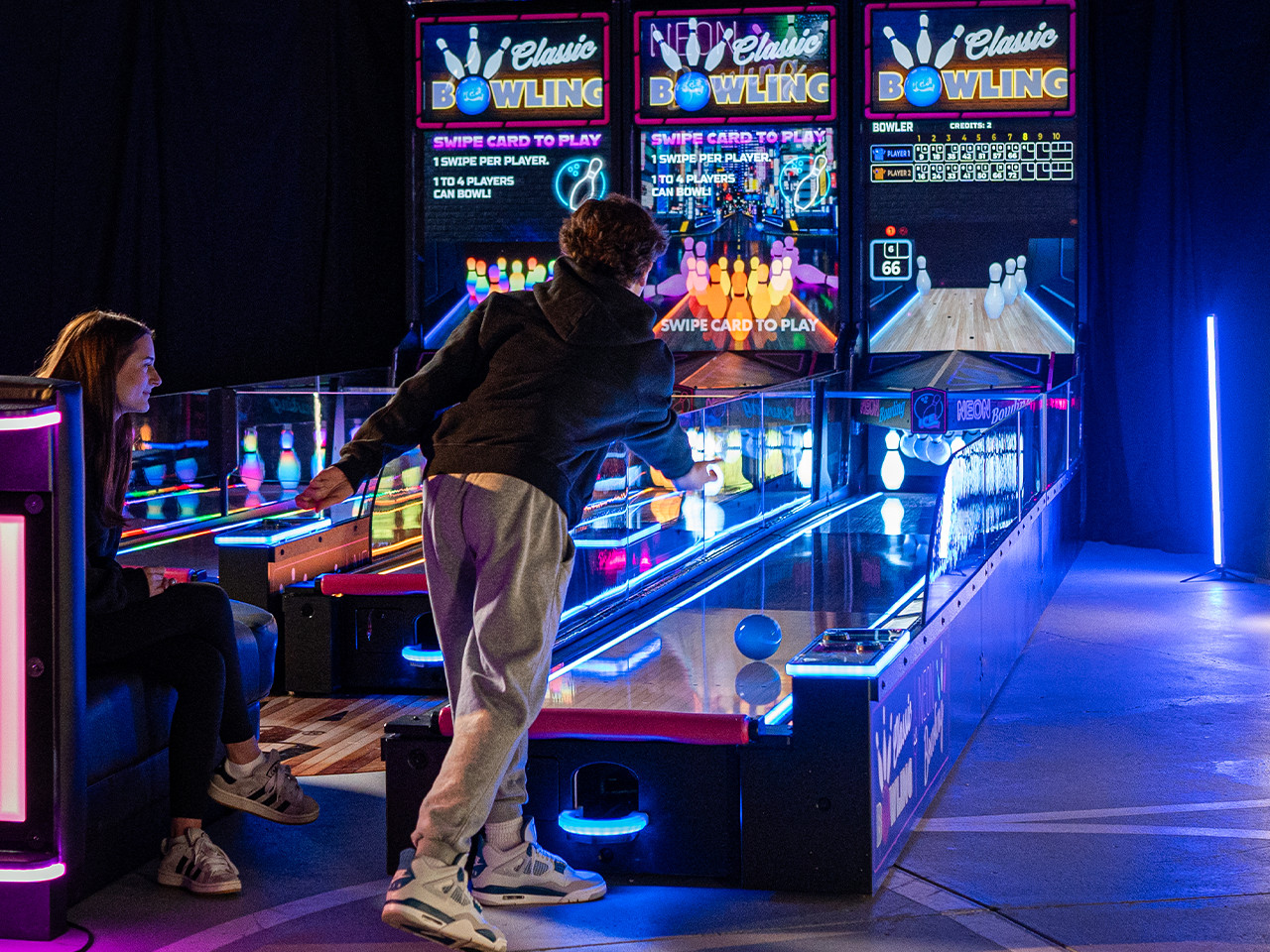
The customer list follows the arcade wherever it migrated after the standalone game room faded: family entertainment centers, bowling and entertainment venues, movie theaters, casinos, theme parks, bars, route operators, and independent arcade owners. The range runs from a single bowling alley adding six machines to a national chain outfitting a new build.
The clearest illustration is a job Betson did for Supercharged Entertainment in Edison, New Jersey - a two-story arcade with more than 140 games, VR experiences, and a large prize center, opened in December 2022. A Betson sales rep provided the game and layout recommendations; the installation team put it all in. In Orlando, Betson partnered with Arcade Time Entertainment on a 24-hour flagship arcade. These are not box drops. They are buildouts, and the operator comes back to the company that got the first one right.
Where Betson's games end up
Illustrative mix of venue types Betson supplies - relative, not to scale
04How it's different from the competition
There are other amusement distributors, and an operator can sometimes buy direct from a manufacturer or hunt for used cabinets online. What is hard to copy is the combination Betson has assembled over decades: catalog breadth across nearly every major brand, a nationwide parts-and-service network, in-house financing, and a design team that has laid out enough rooms to know which redemption game earns and which one gathers dust. Any one of those is a business. Stacked together, they are a moat.
The other quiet advantage is age. A company that has survived pinball bans, the 1983 video-game crash, and the long decline of the corner arcade has institutional memory competitors cannot buy. It knows how the last three technology waves played out because it distributed all of them.
05Ninety years, four generations
The timeline is the argument for durability.
The recognition is stacking up. Founder Humbert Betti was named to the inaugural AAMA Amusement Industry Hall of Fame. In 2025, longtime president Bob Geschine and former chairman Peter Betti joined it at the Amusement Expo in Las Vegas. That same stretch saw Todd Cravens promoted to president of the Betson Gaming Division, and the retirement of corporate controller Rick Urba after roughly four decades - the kind of tenure that only shows up at companies people do not leave.
06Where it fits in the market
Betson sits in the middle of the amusement supply chain - the position that looks least exciting on a slide and holds up best over time. Manufacturers rise and fall with hit titles. Individual arcades open and close. The distributor that connects them, finances them, and keeps them running collects a piece of every wave without betting the company on any single game. Estimated annual revenue is in the tens of millions, and the private, family-owned structure means Betson answers to operators and its own balance sheet rather than to outside investors chasing a quick exit.
The takeaway a reader can actually use is the one buried in the boring part: in a business built on novelty, the most durable position was not making the fun. It was owning the logistics, the financing, and the service that put the fun in the room - and staying there for 90 years while everything on the screens kept changing.
Explore Betson Enterprises
- Webbetson.com
- Partsbetsonparts.com
- LinkedIn/company/betsonenterprises
- Instagram@betsonenterprises
- Facebook/betsonenterprises
- X@BetsonSolutions
- VideoThe Arcade Game Room Specialists (YouTube)
- Contactbmurphy@betson.com