A drainpipe is an unglamorous place to begin a story about money. Yet Berkshire Partners’ investment in Advanced Drainage Systems lasted nearly 30 years, spanning private and public ownership. Consider the patience involved. Products changed. Markets changed. The investment survived several ordinary business lifetimes. For a firm selling its ability to help companies grow, that is a more revealing introduction than a photograph of a closing bell.
- Employee-owned investor backing established, growing businesses.
- Private equity plus Stockbridge, its public-stock business.
- Capital comes with help on hiring, acquisitions, systems, and expansion.
Berkshire’s proposition is straightforward: find a business with room to become much larger, then work with its leaders on the machinery of growth. The interesting question is whether an investor can make collaboration sufficiently concrete that it survives the first disagreement.
01 / A check comes with homework
Berkshire serves two constituencies. Fund investors supply capital and expect returns. Founders and management teams seek a financial partner to help expand their businesses. The firm invests across services, healthcare, industrials, and technology. Its published targets are companies with enterprise values of $200 million to $2 billion, with equity investments of $150 million to $500 million or more. Majority and minority positions are both possible.
That places Berkshire in the established-company end of the market. A founder might need capital for acquisitions, better distribution, or a stronger management team. Berkshire describes work on pricing, reporting systems, executive recruitment, acquisition integration, and capital structure. Each addresses a familiar problem: the methods that made a company successful at one size can become inadequate at the next.
The business model is investment management. Berkshire raises pooled funds and deploys their capital into ownership stakes; Stockbridge invests in listed shares. The economic objective is to increase investment value and generate returns for investors. Portfolio companies are operating partners in that process. Their products are sold to their own customers.
02 / Give the team a reason to share
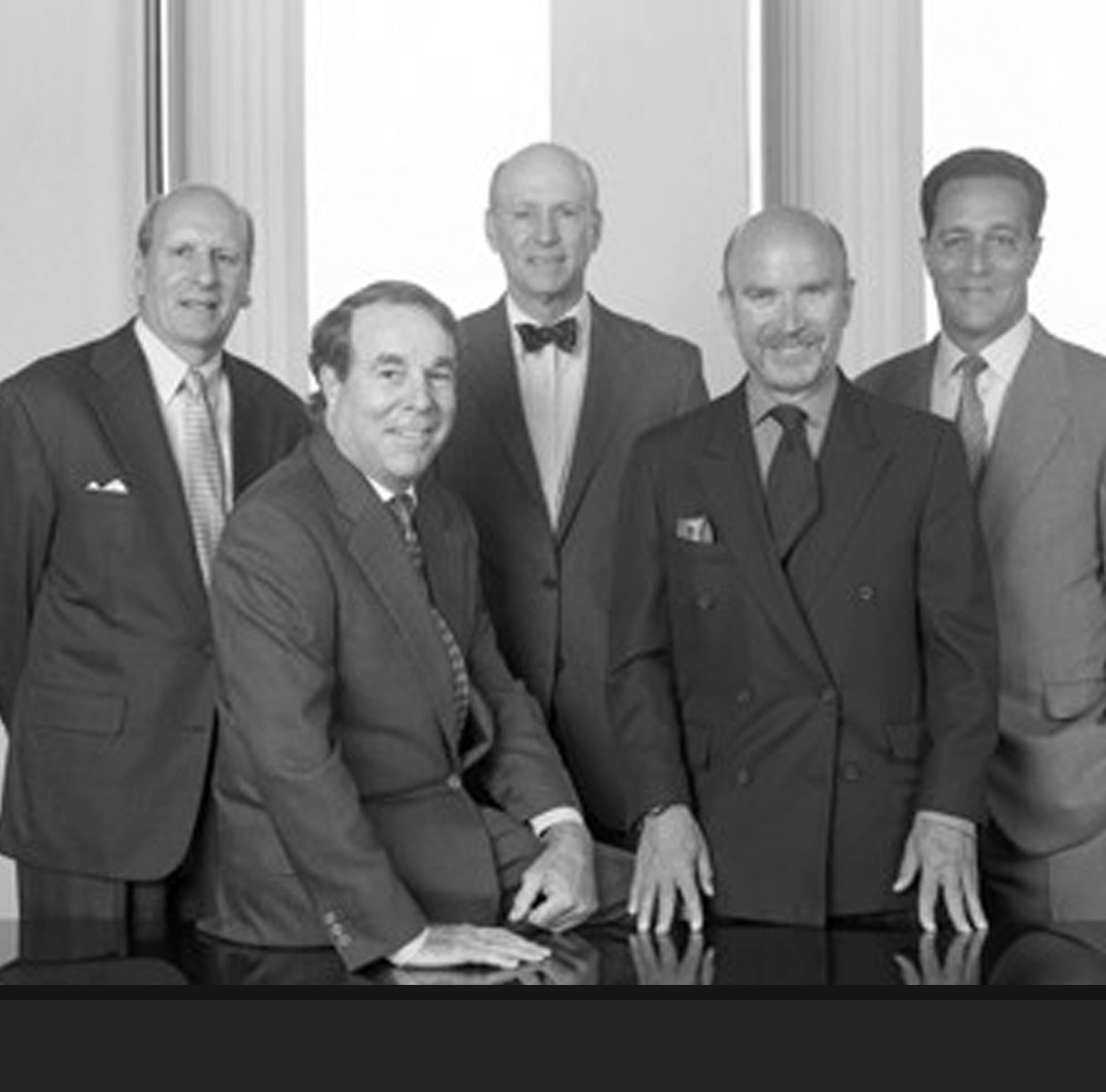
Five founders established Berkshire in 1986: Brad Bloom, Chris Clifford, Russ Epker, Carl Ferenbach, and Richard Lubin. Today, the firm describes itself as 100% employee-owned. Ownership becomes interesting when it changes behavior. In a January 2026 ION Analytics interview, managing directors Jon Nuger and Sam Spirn described fund-based compensation and collaboration across sector teams.
“We broadly share the economics and decision making.”
Bradley Bloom · The Deal · 2011
The practical implication is that a healthcare investor has a reason to bring a technology colleague into a healthcare software deal. The reward belongs to the wider fund. Specialists can contribute without making the opportunity someone else’s territory. That is the organizational argument behind Berkshire’s combination of sector teams and shared resources.
03 / The other side of the trading screen
In 2007, Berkshire launched Stockbridge, its public-equities business. The two teams share industry research and investment ideas. A company’s stock-market listing changes how its shares trade; its underlying customers, competitors, and operating challenges remain useful subjects for both groups.
There are plenty of competing middle-market sponsors. Charlesbank, for example, targets overlapping sectors and company sizes. Berkshire’s particular pitch combines employee ownership, sector specialization, operating support, and this public-private research relationship. Those features describe how it works. They do not, on their own, establish superior investment returns.
04 / Put the numbers in the right boxes
In October 2024, Berkshire announced approximately $7.8 billion in commitments for Fund XI, its largest fund to date. That figure measures capital committed by fund investors. It is different from the value of Berkshire itself, the revenue it earns, or the price paid for any single company.
- $7.8B
- Fund XI commitments
October 2024 - $1.8B
- Triumvirate valuation
February 2025 - 231
- TowerNorth towers
September 2026
The distinction matters at Triumvirate Environmental. Berkshire’s February 2025 growth investment valued that business at $1.8 billion. Founder John McQuillan and his team remained in their roles, and the deal introduced a broad-based employee ownership program. The valuation describes the company; it does not reveal Berkshire’s check. Expansion into new regions and services was part of the announced plan.
TowerNorth supplies a different measure of progress. After Berkshire’s September 2023 investment, its tower count grew from 64 to 231 by September 2026, when additional growth capital and a new debt facility were announced. The company described development, partnerships, and acquisitions as routes to expansion. More towers demonstrate operating scale. They cannot tell us the investor’s return.
05 / CrossFit rewrites the next chapter
CrossFit complicates any tidy account of patient ownership. Berkshire partnered with Eric Roza to acquire the fitness business in 2020. In March 2025, CrossFit announced it would seek a new owner, appointing Moelis & Company to review potential buyers.
Then the plan changed. In April 2026, CrossFit announced that former chief operating officer Bruce Edwards would return as CEO in May. It also said it was no longer seeking new ownership, linking that decision to the board’s confidence in Edwards and his vision. A planned exit had become a leadership reset. For anyone imagining ownership follows a neat timetable, this is a useful interruption.
06 / The question to steal
The most copyable practice comes before closing. In the ION interview, Berkshire’s leaders described sharing their investment hypothesis and value-creation plan with prospective CEO partners. Founders can borrow the question: what, precisely, do we agree must change? Ask who will recruit the executives, integrate the acquisition, and decide when an experiment has failed.
The fit has limits. A seed-stage company or small local business sits outside Berkshire’s published investment parameters. An owner unwilling to share governance will struggle with an equity partnership. Even aligned owners need customer demand and competent execution. Berkshire’s long investment in drainpipes offers a modest lesson: choose something worth building, agree on the work, and leave enough time to do it.