Ben McKean had a name for his first food empire before he had a shop: Captain Ben’s Candy Ship. As a child, he filled notebooks with drawings of the place and the sweets it would sell. The enterprise had the advantage of an excellent name and the disadvantage of existing entirely on paper. Decades later, his working life would involve grocery boxes, software, and the question that defeats otherwise capable adults every evening: what’s for dinner?
Hungryroot, the company he co-founded in 2015, eventually built its service around helping answer that question. Getting there required McKean to abandon some of his own answers. He changed how the food was made, what the company sold, and how customers chose it. His career is unusually revealing at the moments when the original plan ceased to be convenient.
A candy ship, with no launch date
Food entrepreneurship was already part of the family conversation. His grandfather ran Baileys of Boston, an ice cream parlor business from the 1970s. His mother worked there, wrapping chocolates. McKean grew up with stories about the pleasure a food business could give people, long before he had to think about the price of delivering it.
Growing up in Massachusetts, he was also absorbed by baseball. At Georgetown University, he pitched for the Division I team. A 2006 game report records the rather less glamorous business of a college start against George Washington. A founder’s biography tends to polish away ordinary competitive afternoons; the baseball archive is admirably resistant to polish.
He graduated in 2008. His early professional experience included technology investment banking at Merrill Lynch, but he had already started a business at eighteen. Entrepreneurship preceded the formal career. The candy shop remained imaginary, while the habit of building things became increasingly practical.
Before dinner, there were empty tables
In 2009, McKean founded Savored, initially called VillageVines. It addressed a restaurant problem that is easy to picture: a table earning nothing on a quiet evening. The service connected diners with discounts at participating restaurants, using pricing to help fill capacity. A dining room has a deadline built into its inventory. Yesterday’s empty chair is difficult to sell today.
Groupon bought Savored in September 2012. The acquisition terms were undisclosed. McKean joined the buyer, becoming a vice president and general manager in its food and beverage business. He had taken a business from an idea into an acquisition, then stayed to work inside a larger organization.
One conversation stayed with him. An older woman running a West Village restaurant told him, tearfully, that Savored had helped keep it open. He later described the encounter when explaining his interest in creating something with an emotional connection at its center. A reservation system had touched somebody’s livelihood. Food offered a chance to build that connection into the product itself.
Six products and a kitchen full of lessons
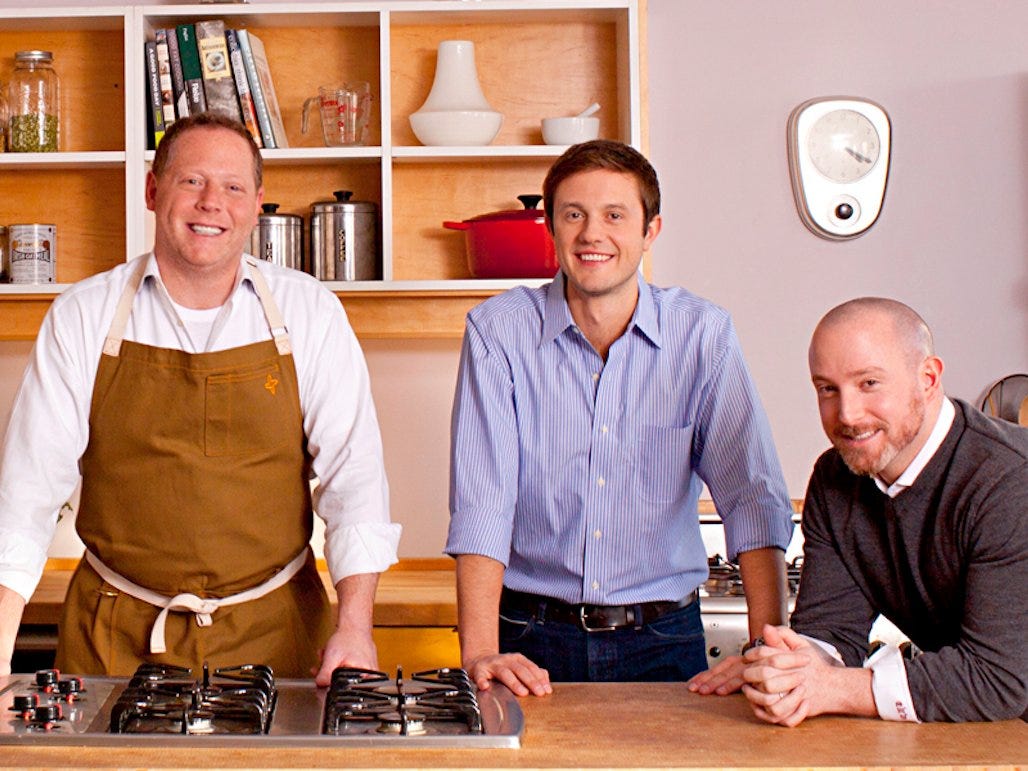
Hungryroot launched with McKean, Gregory Struck, and chef Franklin Becker. Its first offering consisted of six products, including vegetable noodles paired with sauces. The proposition was tangible: a packaged meal that could be prepared quickly. You could explain it with a photograph and a frying pan.
The company made food in a shared Long Island City kitchen. McKean recalls taking part in the spiralizing himself. There is a certain corrective quality to this detail. Food companies may be introduced through elegant packaging, but vegetables insist upon being processed one by one. A compelling concept still needs someone to turn the handle.
By May 2016, Hungryroot was expanding delivery nationwide and entering Whole Foods. There were multiple possible routes ahead: an online brand, a presence on supermarket shelves, a growing range of distinctive foods. For a young company, each could sound like progress. Together, they also created more work for the same organization to coordinate.
“Listening is a skill. Practice it.”
Ben McKean
The uncomfortable luxury of stopping
In 2017, McKean made a decision that sounds particularly awkward in a sales meeting: Hungryroot would stop shipping orders for six months. The company needed to move from its own production operation to outside manufacturing partners. Continuing to take orders while rebuilding everything was a promise it could not sensibly make.
The consequences extended beyond a pause on a website. Closing the Queens facility meant the company could no longer support more than seventy jobs there. A production change can sound bloodless in a business retrospective. This one affected a working team and required customers and investors to wait.
Hungryroot returned in September 2017 with a different production setup. By the following year, the company had secured a $22 million Series B. The restart gave McKean more room to work on the customer experience, though it did not settle the question of what kind of company he was building. A better way to make the food was only part of the answer.
Pause shipments. Move food production to manufacturing partners.
Add other brands. Recommend groceries and recipes together.
An empty cart asks a lot of a person
The next change arrived in 2019. Hungryroot moved toward being a grocery service, adding products from other brands alongside its own. McKean had learned that a customer’s weekly shop was bigger than any single interesting food. Buying a few items from several separate websites left the customer doing the joining up.
He also began with a different assumption about the shopping cart. Rather than asking someone to fill an empty basket, Hungryroot could recommend one. Customers would describe their household and preferences, receive groceries with recipes, and change the selection as they wished. The company would do the first round of planning.
That shift made the service itself a product. It also changed the meaning of a customer’s correction. Removing an item from the basket could teach the system something useful for next week. Disagreement, a common enough ingredient in dinner planning, became part of how the service improved.
- 01Tell it what you like
- 02Get groceries + recipes
- 03Edit your basket
- 04Refine next week’s plan
Dinner has to survive the warehouse
McKean calls the recommendation system SmartCart. In his 2026 explanation, he describes software connected to inventory and product information, with decisions the company can examine. The point is practical: recommending an appealing recipe is of limited use if the ingredients cannot be shipped.
He gives peanut sauce as an example of how the company thinks about assortment. One item can support several meals. Its usefulness depends on what customers can do with it, alongside the rest of their order. A bottle occupies shelf space; a set of plausible dinners earns a place in the week.
By May 2026, he described a network of five fulfillment centers and nearly a thousand grocery items. That physical operation sits behind the digital experience. The founder who once helped process vegetables now talks about connecting recommendations, sourcing, and delivery. The distance between those jobs is considerable. The need for a box to contain the right things remains wonderfully stubborn.
The people who come back next week
McKean’s interest in repeat business was explicit by 2019. He described retention as the central growth opportunity for a subscription service. The logic is demanding rather than decorative: people have to want the next delivery. An attractive first order cannot do the work indefinitely.
His attention to customer response could become quite specific. He noticed that describing noodles as yuba rather than tofu changed their initial appeal. Even a business built around data still has to reckon with the associations carried by an ordinary word. The shopping list has its literary critics.
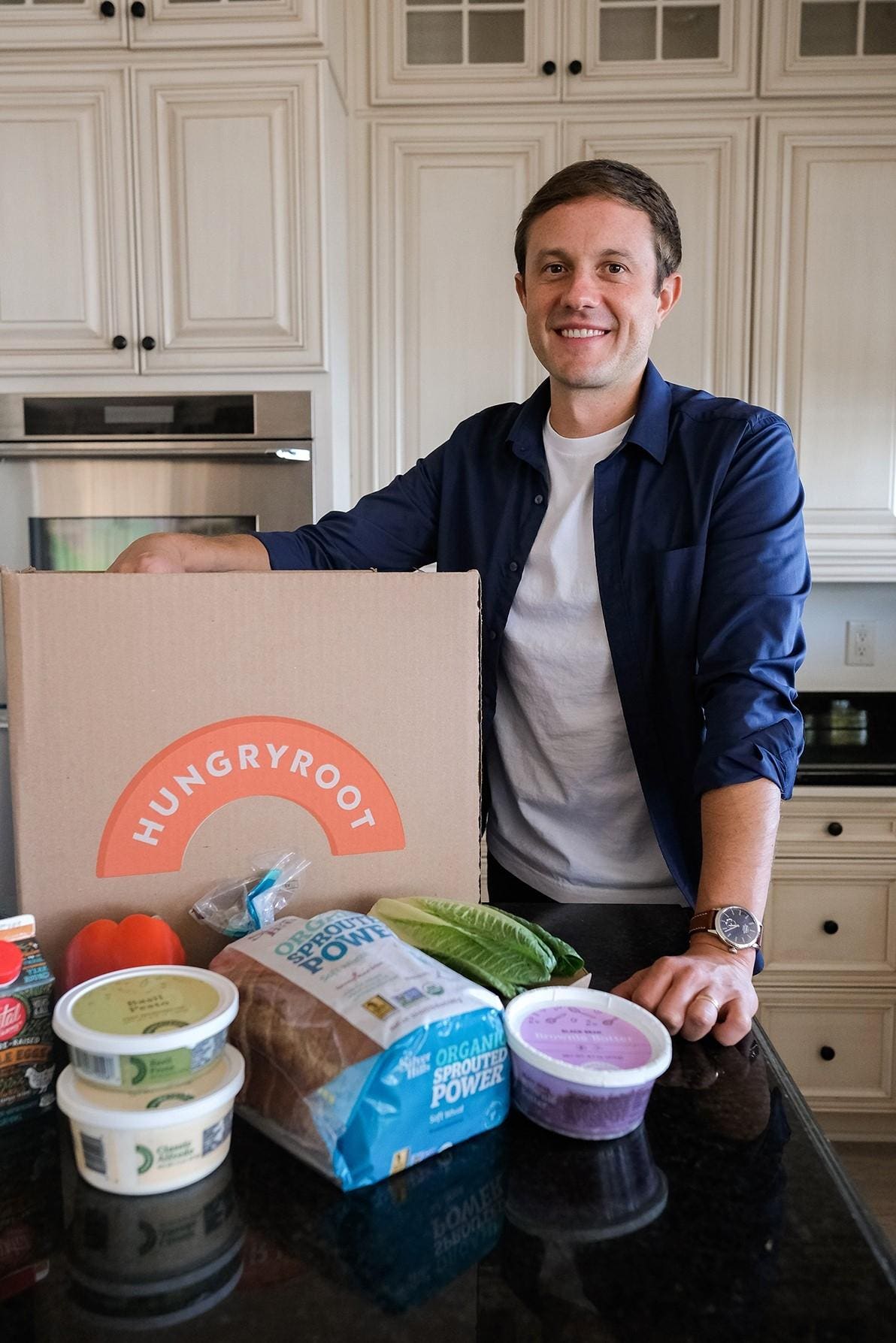
There is a human counterpart inside the company. When Mollie Chen joined in 2018 to lead brand and customer experience, she described McKean’s culture in terms of positivity, proactivity, and transparency. In 2023, he publicly recognized staff through Hungryroot Heroes, crediting work across recipes, code, logistics, and the employee experience. The operation depended on considerably more people than the founder in the photograph.
A bigger shop, and room to change the menu
In February 2026, McKean reported $700 million in Hungryroot net revenue for 2025, a 55 percent increase, with more than 700,000 households served. He also reported the company’s strongest year of EBITDA profitability. Those are business results, and they belong to a company whose earlier working arrangements he had been willing to interrupt.
Hungryroot net revenue
His work has also taken him beyond the grocery basket. He discussed Every, a conversational-games app intended to encourage connection, in 2023. In June 2026, he wrote about three years judging EY’s Entrepreneur Of The Year program. His attention keeps returning to how people understand and respond to one another.
Judging has given him a different seat at the table. He has praised Sameer Malhotra of Cafe Spice for building on a family restaurant background, and Ron Rudzin of Saatva for explaining his business clearly. Candidates have twelve minutes to make their case. McKean’s own career, with its changes in production and positioning, makes that compressed format an interesting test. An explanation has to survive questions as well as applause. He now gets to listen to other founders describe the decisions they have made, while continuing to make consequential ones of his own.
Later in 2026, he announced a Hungryroot experience with a Discovery Feed and digital Cookbooks for saving and sharing recipes. Importing recipes from elsewhere on the web was still forthcoming in that announcement. The shop continues to change shape.
Captain Ben’s Candy Ship never acquired a storefront. Its would-be proprietor has spent years learning what happens after the charming idea: production schedules, repeated orders, difficult pauses, a customer deciding whether to return. He still has digital shelves to arrange. The boy with the notebook would recognize the pleasure in that, even if he might ask why the candy selection had become so complicated.