Breaking
DAN LEAHY - Co-founder & CEO, MakerSights 2 BILLION+ purchase-intent votes logged Works with 10 of the 20 largest global brands Ralph Lauren · New Balance · Everlane · Madewell Founded Savored, acquired by Groupon Stanford MBA · Georgetown economics 84% of retail's carbon comes from making new goods
Founder Files Retail Tech

Dan Leahy

He taught the world's biggest fashion brands a radical idea: ask people what they want before you build the warehouse full of it.

Co-founder & CEO MakerSights San Francisco
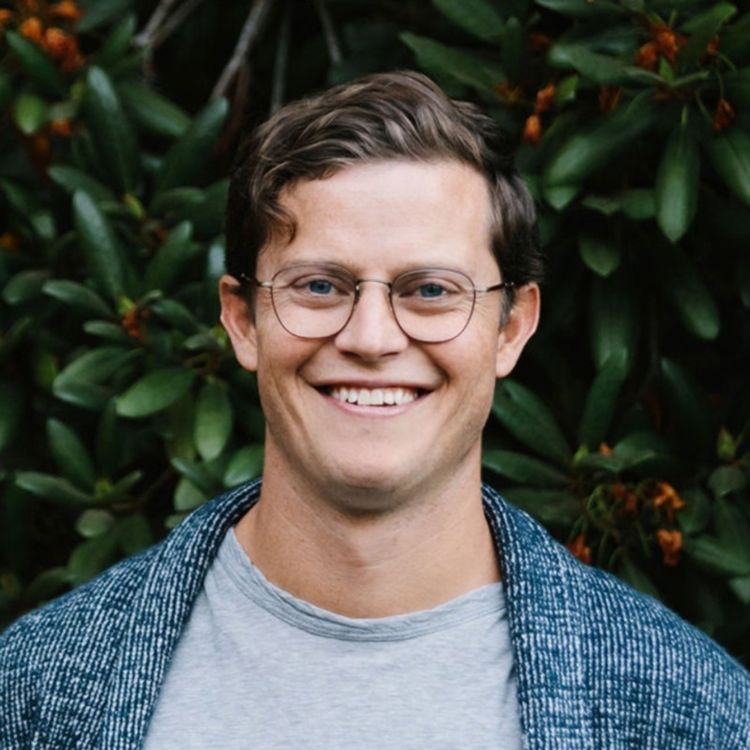
Dan Leahy, co-founder and CEO of MakerSights
Dan Leahy, photographed for MakerSights. The smile of a man who mailed a hundred letters and expected five to answer.

The founder teaching fashion to ask first.

Every season, apparel brands place enormous bets on what you'll want to wear next year. Most of those bets are guesses. Dan Leahy built a company to end the guessing.

MakerSights, the San Francisco company he co-founded in 2016 and still runs as CEO, is a consumer-insights platform for apparel, footwear, and accessories brands. The premise is almost embarrassingly simple: before a brand commits factory capacity to a jacket, a sneaker, a whole collection, it should ask actual shoppers whether they'd buy it - and it should ask thousands of them, fast, and tie their answers to real sales data. Leahy's platform has now collected more than two billion purchase-intent measurements. Ten of the twenty largest global brands use it, names like Ralph Lauren, New Balance, Everlane, and Madewell among them.

Leahy's argument is that retail is stuck. Consumer behavior has been turned inside out by e-commerce, social media, and direct-to-consumer upstarts, yet the way most brands decide what to make has barely changed since the 1980s. Designers and merchants sit in a room, look at samples, argue, and commit. MakerSights takes that closed-door ritual, the "line review," and opens it to the one constituency that was never in the room: the customer.

The payoff he pitches is two-sided. Brands that make more of what people actually want earn a margin lift he pegs at around five percent. And they make less of what nobody wants, which matters because unsold inventory is where fashion's environmental sins pile up. Leahy likes to point out that roughly 84% of the retail industry's carbon emissions come from producing new goods. Make fewer wrong things, and you cut waste at the source.

What makes the pitch land is that Leahy isn't selling a survey. He is selling a feedback loop. MakerSights correlates what consumers say they want with what they end up buying and layers in professional judgment, so a merchant gets not just a data point but a stage-specific recommendation - keep this style, cut that color, reorder now, wait. The company has grown to more than seventy people spread across San Francisco, Austin, London, and Vancouver, and it counts a decade of watching brands succeed and, just as usefully, watching where the approach didn't quite click. Leahy talks about both, which is rarer than it should be among founders.
2B+
Purchase-intent votes logged
10/20
Of the largest global brands
~5%
Average margin lift for customers
84%
Of retail carbon is new production

The kid in Maine who kept his rejections in a binder.

Long before the venture rounds, Leahy was a boy in Maine obsessed with sports memorabilia. He mailed handwritten letters to NBA players asking for autographs and kept a portfolio of the results, organized by conference. Most players never wrote back. That was the point. He learned early that if you ask enough people for what you want, and you say thank you, enough of them say yes to make the asking worth it.

It is not a stretch to draw a straight line from that binder to the two companies he would build. Both ran on the same engine: ask at scale, tolerate rejection, and count the yeses. He credits the discipline to his parents, who drilled into him two habits that turn out to be a founder's whole toolkit - write the thank-you note, and ask for what you want. He played high school basketball, went to Georgetown for economics, and did a stint in finance, first as an analyst at Silver Lake, then in mergers and acquisitions at Brown Brothers Harriman. Roughly a year into the buttoned-up world of banking, he left to start something of his own.

Later he added a Stanford MBA to the resume, but the schooling that shows up in how he runs a company came earlier and cheaper: a stamp, an envelope, and the patience to be told no ninety-five times out of a hundred. It is the temperament of a person who understood, young, that scale beats certainty. You don't need every player to sign. You need enough of them.

Selling the empty table.

The Idea

Savored, 2009

Leahy built a yield-management platform for restaurants - a way to fill empty tables during slow hours by offering a discount, while protecting full-price seats at prime time.

The Hustle

Feet on the street

He sold it in person, visiting restaurants during off-hours to win over owners. To prove demand existed, he recruited friends to go dine at partner restaurants. Grassroots, both sides of the marketplace.

The Exit

Bought by Groupon

Savored scaled to 1,000 restaurants across 10 cities, drew a feature in The New York Times, and was acquired by Groupon in 2013. Lesson banked: marketplaces are won on the ground.

A cabin, no WiFi, and an employee promise.

When Leahy and his co-founder Matt set out to build MakerSights, they did something most founders skip. They spent their first week together in a cabin in Maine with no internet, and they didn't touch the product. They wrote the culture instead - an "employee promise" meant to guide everyone they would ever hire. The bet was that the product would come and go, but the kind of company they were building would decide whether it lasted.

Then came the homework. Before writing a line of code, the pair conducted more than 300 discovery interviews with retail practitioners, asking a plain question: what is your biggest problem? The answers kept circling the same drain - inventory decisions made blind, without real consumer data. Their first customer was Taylor Stitch, a digitally-native menswear brand, and it validated the founding hypothesis: what shoppers say they'll buy before a product exists actually predicts what they buy once it does.

The company grew in two acts. From 2016 to 2019 it built on-brand surveys that let direct-to-consumer brands measure purchase intent on future products. Then the pandemic hit, in-person line reviews became impossible, and MakerSights shipped digital tools that let scattered product teams make those decisions together, remotely. COVID, brutal for so much of retail, accelerated exactly the shift Leahy had been betting on.

Waste is a data problem in disguise.

Leahy is skeptical of the fashion industry's favorite sustainability gesture - the tiny "conscious" capsule collection that generates a press release and moves nothing. If a sustainable line is a rounding error against a mountain of overproduced inventory, he argues, it is marketing, not progress.

His fix is upstream. If a brand only makes what people have already told it they want, it overproduces less, and overproduction is where the real damage lives - most of retail's emissions come from manufacturing new goods, not shipping them. Get the demand signal right early, and sustainability stops being a separate initiative and becomes a byproduct of making better decisions. He chose retail deliberately for exactly this reason: it is a massive, wasteful, slow-to-modernize industry, and the average six-figure contracts force him to build something customers genuinely value. He wanted a multi-decade problem. He found one.

There is a quiet optimism underneath the critique. Leahy points out that more shoppers care about a brand's sustainability commitments than ever before, which means the commercial incentive and the environmental one are finally starting to point the same direction. A brand that reads its customers accurately sells more, discounts less, and throws away less. For a founder who has spent his career insisting the customer belongs in the room, that convergence is the whole thesis - proof that asking first isn't just good manners, it's good business.

A career, in chapters.

'08
Finance. Analyst at Silver Lake and M&A analyst at Brown Brothers Harriman.
'09
Savored is born. A yield-management platform to fill empty restaurant tables.
'13
The exit. Groupon acquires Savored after it scales to 1,000 restaurants across 10 cities.
'16
MakerSights founded. 300+ discovery interviews, a WiFi-less cabin, and first customer Taylor Stitch.
'20
The pivot that fit. COVID pushes line reviews online; MakerSights ships digital decision tools.
'21
Series B. Total funding reaches roughly $37-40M.
'23
On stage. Speaks at the Footwear News CEO Summit on consumer-led product strategy.

Six things worth knowing.