Ben Kestenbaum has described WOLF Financial as an idea formulated on a bench in Philadelphia. It is a pleasingly modest piece of startup scenery. A bench asks for no credentials, charges no consulting fee, and has never insisted that a conversation be delivered in twelve slides. Before there was an app, there were people talking about something they cared about.
At Drexel, Kestenbaum and Michael Grant Warshowsky met after computer science lab and kept returning to finance. Their friends were using commission-free trading apps. Getting into the market had become easier; understanding the information around it remained a problem. The pair began working on WOLF in 2020, putting social research and accessible analysis into the same application.
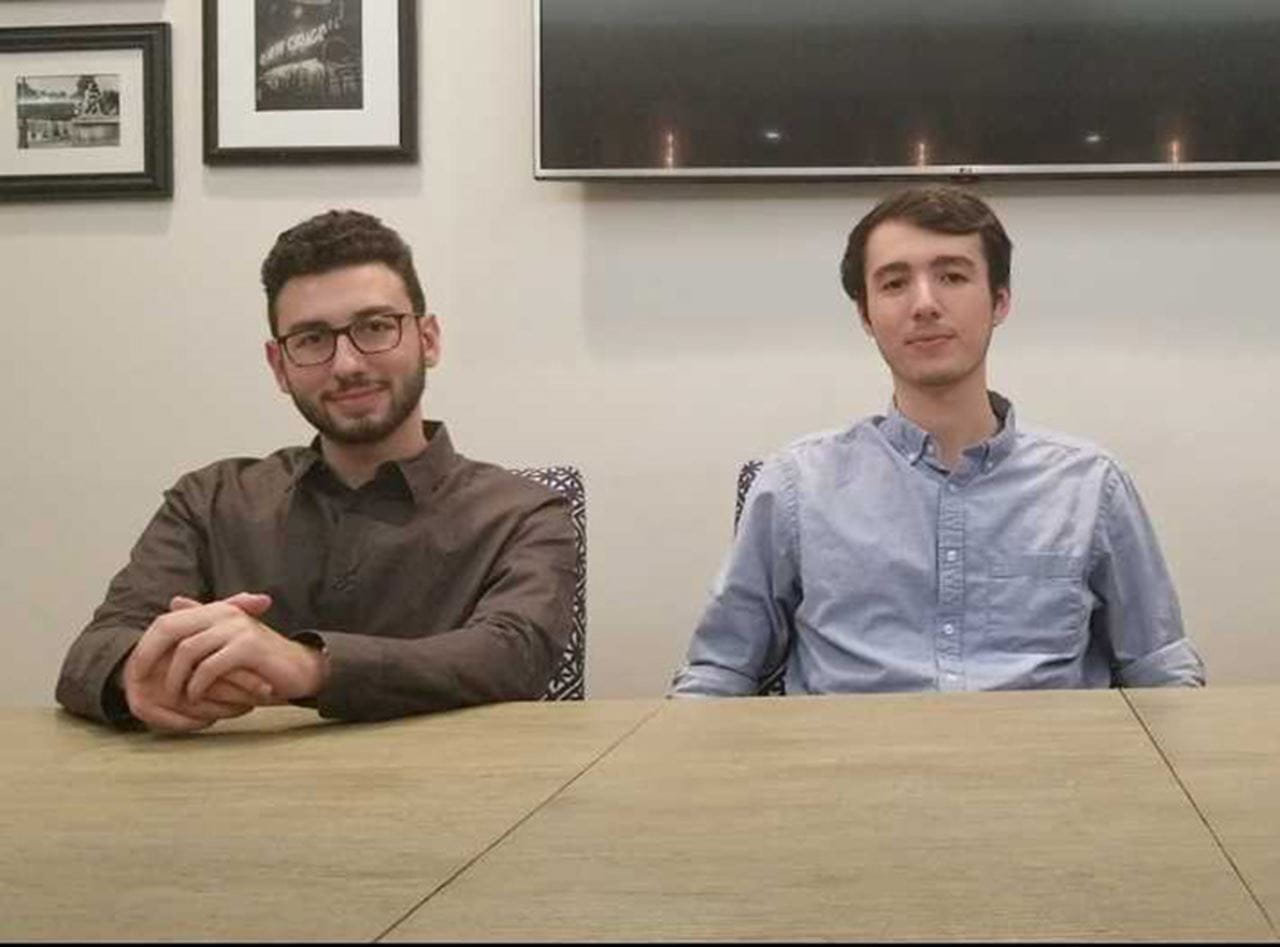
That origin gives the later career a useful point of entry. Kestenbaum now leads 228 in New York, where the company combines services, investment, and technology. The setting has changed considerably. The recurring question, as an editorial reading of these ventures, is how to make useful knowledge easier to reach and easier to act on.
A conversation can reveal a missing product because it exposes what people keep doing for one another informally. They explain. They compare. They ask whether an assumption holds up. Turning those exchanges into software requires choosing which parts to preserve. Too much structure can drain away the conversation; too little leaves a collection of opinions with a login screen.
The pack had work to do
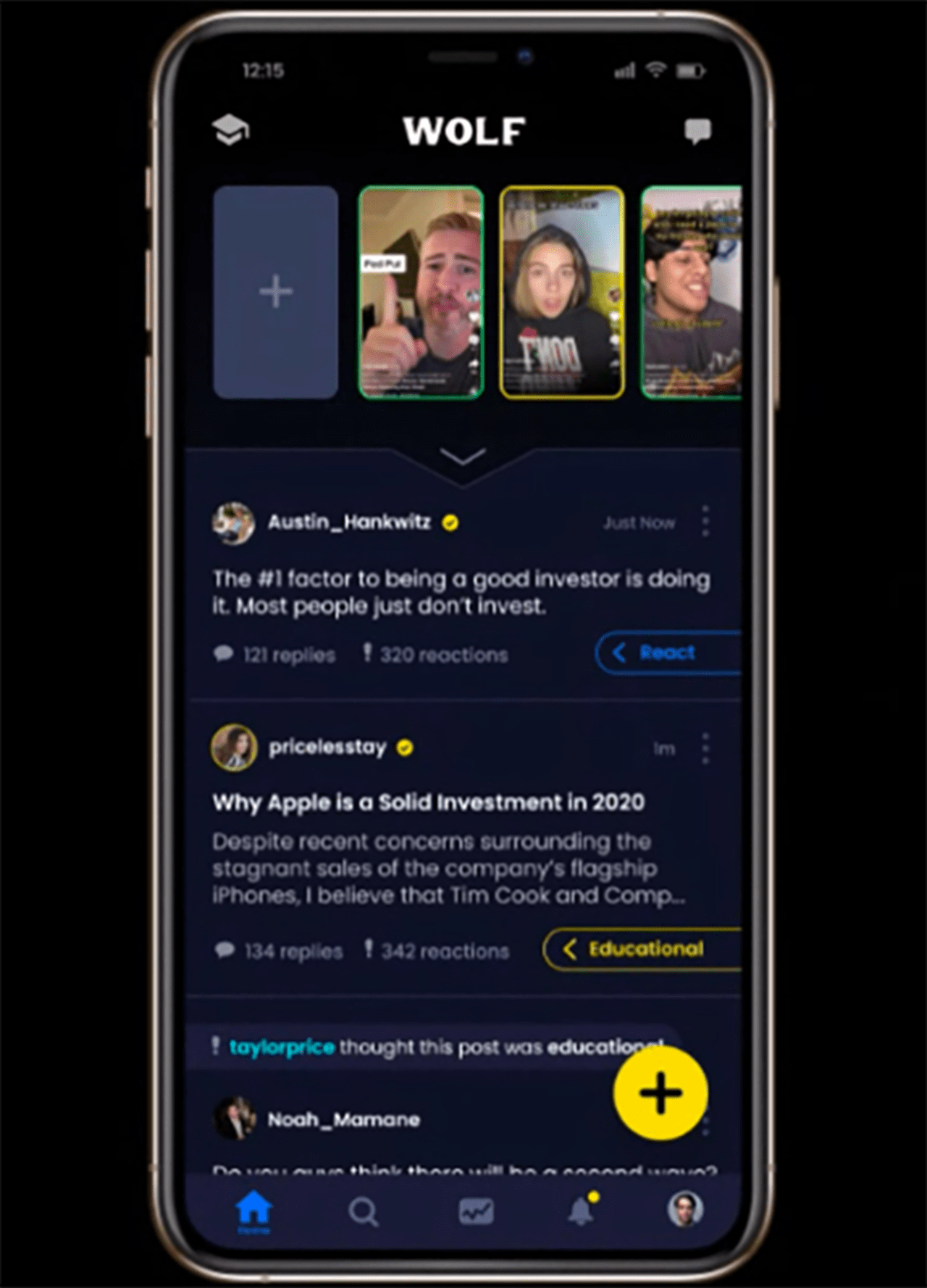
WOLF’s early premise was communal. Investors would have access to analysis and content from verified financial professionals, alongside the social experience of learning with others. Gav Blaxberg was part of the founding group with Kestenbaum and Warshowsky. Their Alpha Epsilon Pi connections supplied feedback and help with marketing. The community around the founders contributed to a product built around community.
By January 2021, the app had more than 400 users. Its creators also described a cumulative audience above four million. Those figures measure different things: people using the application and the broader audience around its content. Keeping the distinction matters. A crowd that hears about a product is a different achievement from a crowd that opens it.
At that point, WOLF was in a live alpha version, with a second version planned. New portfolio screens, more analysis, and premium creator content were on the agenda. Kestenbaum and Warshowsky were still combining the company with their studies. The early business therefore had two ordinary pressures at once: make the product better, and find enough time to do it.
The wolf metaphor did some useful work. It made membership sound social, and the idea of a pack suited a product whose value included other people. A name can carry an invitation before a user reads a feature list. It can also create an obligation. If the promise is a community, the experience has to give people reasons to return to one another.
A prize becomes a spending plan
WOLF won first place in Drexel’s 2020 Baiada Incubator Competition. The award included $12,500 in capital, office space, and legal and accounting services. Kestenbaum spoke about spending on software, personnel, storage, web services, marketing, and operations. His reaction was refreshingly specific: “The fifteen thousand dollars is going to help us improve our product in the short run.”
The distinction between the $12,500 cash award and the broader $15,000 figure used in contemporary coverage is worth preserving. Neither should quietly become a funding round or a valuation. These were early resources to help a student venture work. The story sits at the scale of a product being improved, rather than a company being priced.
The budget list has more personality than a victory photograph. Storage is rarely the guest of honor at a startup celebration. Accounting seldom gets confetti. Yet both appear when an idea starts accumulating responsibilities. Kestenbaum’s comments bring the win back to the application and the people needed to build it.
That is a useful way to read this chapter of his career: attention followed by allocation. The competition supplied recognition and practical support. The founders then had decisions to make about the next version. A prize ends an event; a spending plan begins another stretch of work. The unglamorous nouns are where the plot continues.
“The fifteen thousand dollars is going to help us improve our product in the short run.”Ben Kestenbaum, 2020
Learning in public
In January 2021, Kestenbaum joined Warshowsky and Blaxberg on Looking Beyond With Michael Sikand. The episode appeared on January 29, during the GameStop trading frenzy, and discussed their social investing app. Its description emphasized making investment research digestible and giving newer investors a place to network. The timing put their project beside a much larger argument about participation in financial markets.
Another appearance followed on Next Up Media, whose February 2021 episode identified Warshowsky and Kestenbaum as WOLF’s CEO and CFO. The conversation was presented as a discussion of the app, its beginnings, its name, and advice from the team. These appearances show a young company explaining itself in public while its product was still developing.
The job of explaining a product can be revealing. A founder has to move between the problem that prompted the idea and the experience another person will actually have. A social investing application has an additional complication: the conversation is part of what is being sold. The founders were talking about a tool designed to help other people talk and learn.
Kestenbaum also had a written contribution in WOLF’s publishing activity. An April 29, 2020 entry was titled “The Need for a New Trading Tool” and credited to him. The title alone places a question at the beginning of the work: what is missing from the tools already available? That is a more useful starting point for a product than simply deciding the world could accommodate another app.
From an application to 228
Kestenbaum’s subsequent work included Belay, where he held co-founder and executive roles. Belay described its offering as a way to manage investment risk. His 228 leadership role dates to February 2022. The progression spans a financial research community, an investment-risk business, and a company whose remit now includes helping other businesses build.
His earlier experience also included TD, the Point72 Academy program, and an analyst role at J.P. Morgan. The sequence places operating experience alongside exposure to established financial organizations. It does not require a grand conversion story. There is room in a career for learning inside an institution and then trying to assemble something of one’s own.
228 describes its current offering as a combination of product development, capital, and AI-enabled execution. It offers engineering, product leadership, advisory work, and a venture studio, while also investing. Its headquarters are in New York, and it says it serves partners globally. This is a wider brief than building a single financial application.
The company describes beginning with a “Jam Session,” where a team discusses its product, market, and constraints. A defined partnership and practical work follow. The musical name is informal; the questions are businesslike. Someone still has to decide what to build, what resources it needs, and how the participants will recognize progress.
Viewed together, these chapters suggest continuity in the kinds of problems Kestenbaum has chosen to work on. That is an interpretation of the work, rather than a claim about his private motivations. WOLF organized information and interaction for investors. Belay addressed investment risk. 228 brings several forms of support into one business relationship. Each concerns what happens between an intention and a decision.
The conversation moves courtside
228’s Brooklyn Nets Small Business Partner relationship supplies an unusually public setting for this work. Kestenbaum announced a partner showcase around a Nets-Lakers game at Barclays Center and invited people to join him. His post connected the partnership to services, capital, and technology for New York startups and small businesses, and described it as a multi-year commitment.
There was also a light basketball touch. In a separate post, he teased that LeBron had heard from 228. The joke works because an arena advertisement can reach people who would never attend a startup pitch meeting. Basketball fans, business owners, and founders can occupy the same row without having arrived for the same reason.
The accompanying Nets Fan Growth Session offer is specific. A typical session takes 30 to 45 minutes. Participants define a challenge, explore possible support, and receive a one-page Growth Snapshot with two or three next steps. The offer accommodates someone testing an idea, an owner facing an operational problem, or a company exploring capital and partnership.
The program also lists a longer strategy session, a credit toward services, and a three-session founder cohort. These are offers made by the company, rather than evidence of an individual participant’s outcome. Their interest lies in the shape of the invitation: arrive with a problem, spend time with a team, and leave with something small enough to use.
A one-page plan imposes a useful discipline on a business conversation. It leaves less room for the meeting to disappear into its own vocabulary. Two or three next steps have to survive the journey back to someone’s desk. In the context of Kestenbaum’s earlier work, the invitation has a familiar quality: make the exchange useful beyond the moment when it takes place.
The distance from a Philadelphia bench to Barclays Center is substantial in audience and setting. The documented story still begins with an exchange between people and arrives at another invitation to talk. Kestenbaum has built applications, held financial roles, and moved into helping businesses develop. The next chapter will be judged in the everyday terms that appeared in his early budget: people hired, software improved, and work put into use.
Continue the conversation
COMPANY / PROFILES / EARLY COVERAGE / AUDIO