A Detroit kid opened his first brokerage account in second grade. Two decades later he runs dub, the regulated app that lets anyone mirror vetted managers, hedge funds, and members of Congress.
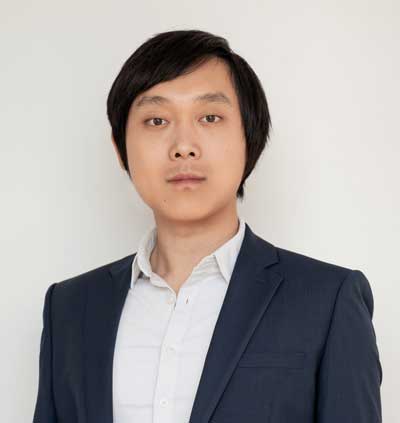
Right now Steven Wang spends ninety percent of his waking hours in an office a ten-minute walk from the New York Stock Exchange, shipping a brokerage that did not exist three years ago. dub is a copy-trading app: pick an investor you trust - an emerging manager, a famed hedge fund, an elected official whose disclosures are public record - and dub mirrors their portfolio into yours with a single tap. No stock picking. No guessing. You ride along with people who, in theory, know more than you do.
The twist that separates dub from the knockoffs is regulation. dub is an SEC-registered, FINRA-member broker-dealer with SIPC-insured accounts. The people you copy are vetted. Their performance data is transparent. Their reasoning is written into the app, so you are not just cloning a trade, you are reading why it was made. Wang likes to frame it as the opposite of a casino: a place built on accountability rather than adrenaline.
He is in his early twenties, and he has been preparing for this his whole life - though not in the way a polished founder story usually pretends. The preparation looked like origami, eBay storefronts, a VR startup, a job at Apple, and a Harvard exit. It looked like losing five thousand dollars in elementary school and never forgetting how it felt.
We're here to build trust, not trends.
Wang grew up near Detroit, the son of Chinese immigrants who worked in the auto industry. His grandmother had run noodle restaurants in China. The family did not take international trips, and he watched the post-2008 wreckage roll through blue-collar households around him. Money was not abstract. It was the thing that decided what a family could and could not do.
So he started early, and he started selling. Paper cranes in first grade. Drop-shipping storefronts on eBay and Amazon in middle school. The brokerage account at age seven turned into a genuine education at age twelve, when he poured five thousand dollars - everything he had earned - into a single stock and watched it lose nearly half its value over two years. He had even convinced someone else to buy in. "I felt so bad," he later said, "especially since I'd convinced someone else to invest with me and lost them money." The lesson stuck harder than any gain.
The wins came too, and they were wild. He bought Meta at its IPO and more than doubled his money. He minted an NFT for roughly five dollars in gas fees, watched it crest past a hundred thousand dollars on paper, and sold it for about twenty thousand. Boom and bust, profit and panic, all before he could legally drink. By the time he was day-trading from a Harvard dorm during the pandemic, he had a thesis: most new investors were getting wrecked by hype, misinformation, and bad timing - and the market had no honest on-ramp for them.
The VR company he started and sold at 17. The first time an idea in his head turned into a check in his hand.
At 18, an engineering product manager working on projects including the Apple Watch. He learned what shipping at scale actually costs.
At Harvard he spent more time on the other side of the table - investing in early-stage startups as a partner - than in lecture halls.
Copy whole portfolios with one tap. Regulated, vetted managers. Transparent track records. The reasoning behind each trade, in plain text.
dub lets users mirror the disclosed trades of elected officials. Public records, made one-tap actionable. It is the feature people talk about at parties.
Uber's Dara Khosrowshahi, a16z's Alex Rampell, Robinhood co-founder Nathan Rodland, and CNBC's Dan Nathan all wrote checks.
Learning how to make your money work for you is smart.
For a man whose business runs on retail enthusiasm, Wang is strikingly wary of it. He has watched rare meme-stock jackpots get amplified into a generational expectation - the belief that getting rich is one viral ticker away. The survivorship bias is brutal: you hear about the person who turned a thousand into a million, never the thousands who went the other direction.
That is the gap dub is built to close. Not by promising the moon, but by handing newcomers a way to learn from people with real, vetted track records, and to see the thinking behind the trade. The pitch is less "get rich quick" and more "stop flying blind." For someone who lost everything he had at twelve, it is a personal argument as much as a product one.
Wang optimizes his life the way he optimizes a portfolio: ruthlessly, and with very few positions. He shares a two-bedroom apartment in Manhattan's financial district with his sister, a short walk from the office. He quit coffee. He does walking meditation on his commute and winds down to the minimalist piano of Philip Glass. He exercises most days. And he eats, by his own count, roughly the same salads every day - Sweetgreen more than 365 times in a single year - because deciding what to eat is a tax on attention he would rather spend elsewhere.
The ambition underneath the routine is not another funding round. It is Paris. He dreams of living there for months at a time, spending long mornings in the existentialist cafes that Camus and Sartre once haunted. For now he stays in New York for ninety-nine percent of his holidays and has taken exactly one real vacation since founding dub: four days in Barcelona.
I'd say I was born with an entrepreneurial knack.
Sources: Fortune, TechCrunch, Crain's Detroit, DBusiness, Notable Capital, PR Newswire, NYSE. Facts drawn from public reporting and interviews.