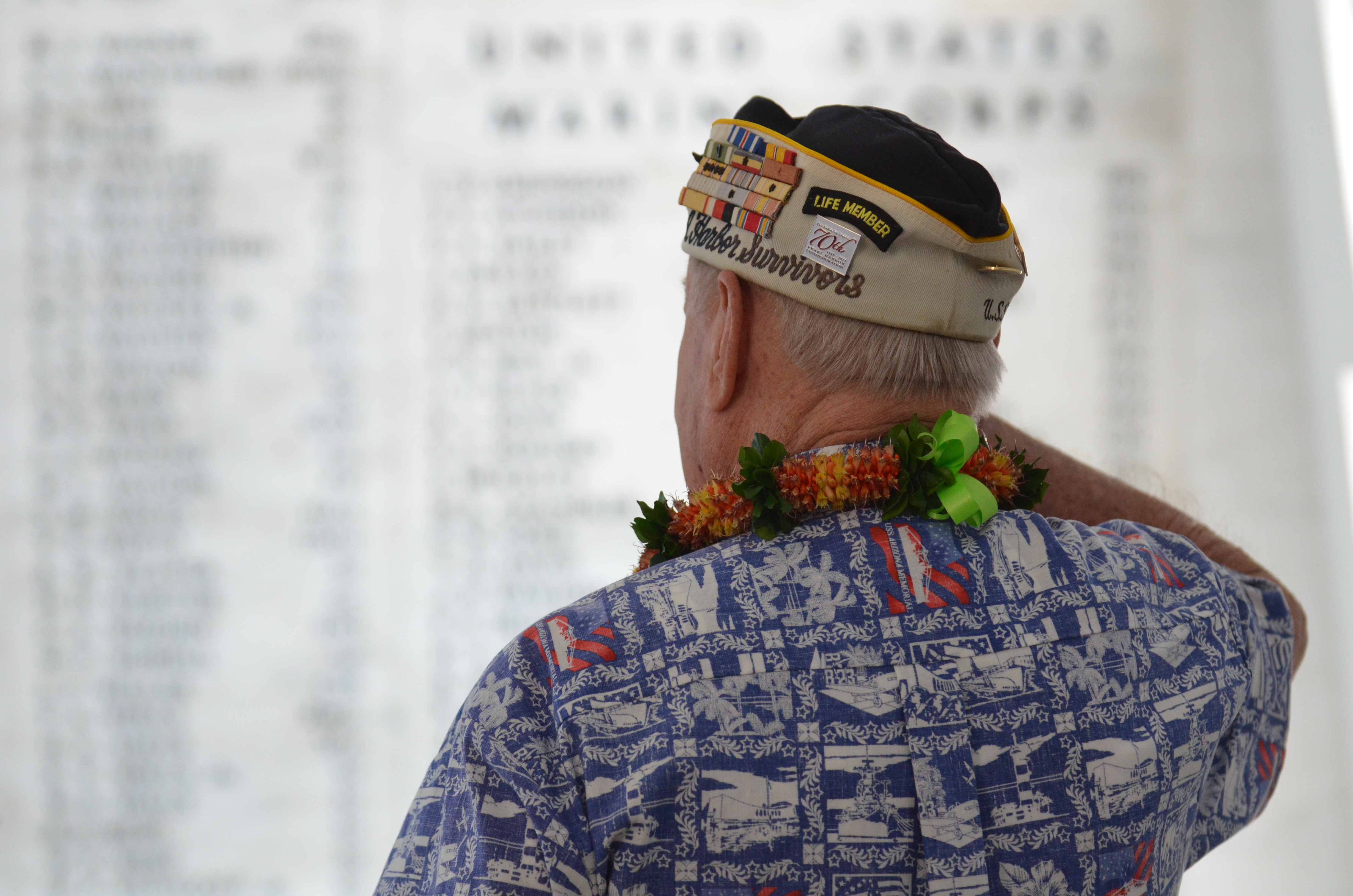
Eight weeks is not a great deal of time when the subject is Pearl Harbor, the audience is the world and the guests of honor are growing older. In 2014, Pacific Historic Parks asked Becker Communications to promote the 73rd formal commemoration of the attack. It would be the last Honolulu reunion for elderly survivors of the USS Arizona. It would also be the first ceremony broadcast live online. The assignment contained the two things public relations people both crave and fear: an event that truly matters, and a clock that refuses to care.
Becker built an integrated campaign around survivor stories, local and national media, public-service advertising and social posts for the webcast. In-person attendance rose 30 percent. The webcast drew a reported 16 million viewers. More than 5,000 news clips reached an estimated 1.5 billion people. The campaign later won top awards from PRSA Hawaii and its western district.
The local is not the small
Becker Communications was founded by Ruth Ann Becker in Honolulu in 1986. The firm now describes its work in three pillars: public relations, digital communications, and marketing and advertising. That tidy architecture hides a gloriously untidy list of deliverables. Becker writes testimony for government hearings and radio scripts, builds websites, buys media, plans grand openings, trains executives, manages crises, recruits sponsors and watches social metrics. It can make a brochure and arrange the meeting at which the brochure matters.
Its customers explain why. A cultural institution needs residents to rediscover a place tourists already know. A nonprofit needs to make homelessness comprehensible without flattening people into numbers. A national restaurant chain needs to return to Hawaii without behaving as if Hawaii were merely another pin on a franchise map. A public agency needs people to know a service exists. Each problem is nominally about attention. Each is actually about permission: who will listen, who will vouch for the message, and what will persuade them to act?
“To help our clients create a unified voice and assist them in ensuring that their ‘walk’ matches their ‘talk.’”Becker Communications mission
That line is less decorative than it first appears. In a market where the same institutions, reporters, executives and community leaders repeatedly encounter one another, inconsistency has a short half-life. The agency's advantage is not a proprietary platform. It is accumulated context: knowing which audiences overlap, which partnerships carry weight and when a local custom is part of the substance rather than a flourish.
What changed the brief
When Aloha Petroleum prepared to reopen Dunkin' in Hawaii in 2017, Becker began with market research. The finding that altered the campaign was simple: strong community ties would be crucial to the brand's return. So the opening became more than an opening. Local schools received check presentations. Neighboring businesses received products. Residents were invited to a job fair. There was a VIP preview, a Hawaiian blessing, elected officials, live radio, children's activities and an Instagram campaign.
The reported results were 4 million media impressions, more than $110,000 in earned-media value, an estimated 7,500 customers and over $15,000 in first-day sales. The interesting move was not the hashtag. It was allowing research to move the center of gravity from the product to the community around it. A national brand arrived through local doors.
A Becker campaign, stripped to the studs
The first thing to fail was paper
The most revealing Becker case study concerns a much smaller stage. Hospice Hawaii ran Hot Pursuit, an Amazing Race-style fundraiser through Kakaako. Teams followed different routes, solving riddles and completing tasks. The system had an ordinary weakness: people sometimes handed out the wrong clues. A team would race enthusiastically in precisely the wrong direction.
In 2018, Becker replaced that vulnerable handoff with a QR system. A scan checked whether a team was at the correct location before revealing its next clue. According to the firm's account, that year's race was the first in which no team experienced a routing problem. This is what “digital communications” looks like when the phrase is relieved of ceremony: not a transformation strategy, just a small piece of technology placed exactly where confusion occurs.
The same habit appears in campaigns that use no novel technology at all. To make hospice and end-of-life care less frightening, Becker placed chalkboards at busy Oahu locations and asked passersby what was on their bucket lists. The answers became a video. To help ProService Hawaii explain underused HR services amid new competition, Becker filmed customers telling their own stories, then built a reusable library for sales meetings, social posts and the website. The agency keeps turning claims into objects people can encounter: a chalkboard, a testimony, a race checkpoint, a person on camera.
The bars are not directly comparable - email growth, attendance growth and multiples of engagement benchmarks measure different things. That is the point. Integrated work does not have one universal score. Becker's Iolani Palace campaign grew the monthly email list by nearly 65 percent, increased attendance at annual events, and reported Instagram engagement at twice its industry average and Facebook at five times. A serious communications plan decides what behavior counts before choosing what to count.
What the client is buying
Becker is a private, fee-for-service agency. It does not publish rates, campaign budgets or a valuation, and its case studies do not say what the work cost. A supplied third-party business estimate puts annual revenue near $4.43 million, but the company does not publicly report the figure. The useful way to understand the model is therefore not by a menu price. Clients buy a coordinated team and a set of capabilities that can expand or contract around the brief.
A crisis engagement may require rapid message discipline, media preparation and executive counsel. A launch may add research, creative, paid media, influencers and an event. A government or nonprofit campaign may need testimony, stakeholder meetings and public education. The alternative is to hire specialists separately or assemble the functions in-house. Becker's proposition is that coordination has value - particularly when a market punishes a message that feels imported or contradictory.
Begin with the behavior you want, not the channel you like. Identify the people who already hold trust. Turn the message into something audiences can do, attend, scan, answer or repeat. Then measure the behavior and keep the useful asset - the partner network, subscriber list, testimony library or crisis plan - after the campaign ends.
The catch is geography
This approach depends on relationships that are real before the deadline arrives. It is weaker when an organization treats local partners as props, when executives will not align their behavior with the message, or when a campaign expects earned media to compensate for an uninteresting offer. It is also difficult to transplant wholesale. A network built over four decades in Hawaii cannot simply be copied into Phoenix or Pittsburgh.
That boundary is also Becker's market position. It competes with larger integrated firms, specialist PR shops and in-house teams. Its edge is not scale for its own sake. It is the ability to move between a press room, a community meeting, a social feed and a live event without losing the local thread. Pacific Business News ranked Becker first among Hawaii PR agencies by 2023, 2024 and 2025 gross billings. In 2026, the company turned 40.
The neatest explanation for that longevity may be hidden in the QR-code story. Communication fails first at the handoff: between a company and a reporter, a public agency and a resident, a mainland brand and an island community, one volunteer and the next clue. Becker has spent four decades studying those handoffs. Then it tries to make the next step obvious.