The first clue is the price. A native event app, communications 21 told the Atlanta Jazz Festival, could run from $15,000 to more than $85,000. The festival did not actually need a native app. It needed schedules, alerts and a survey that a person standing in Piedmont Park could reach without hunting for a paper program. So the agency built a mobile-first website that behaved like an app, launched it in four weeks and charged $5,000.
It could be maintained with Google Docs, Sheets and Slides. No app-store ritual. No bespoke content-management maze. No tiny icon waiting to be forgotten on the sixth screen of somebody's phone. Just the useful parts.
That choice is a neat introduction to communications 21, the Atlanta agency Sharon Goldmacher started in 1992. The firm does public relations, digital marketing, branding, social media, websites, crisis work, media training and events. The list is long because the real product is not any one tactic. It is an outsourced communications department for organizations that do not want to build one, or an extra pair of senior hands for those that have.
A program that could change in the rain
The Atlanta Jazz Festival is free, sprawling and gloriously inconvenient for static information. Artists have times. Times change. Heat advisories matter. A printed booklet begins aging the moment the ink dries. In 2019, c21 combined the mobile channel with email, social posts, more than 30 community calendar listings, artist interviews and a live street team. The Friday email before festival weekend carried Spotify playlists and a heat warning. On-site staff answered questions and pushed visitors toward the online survey.
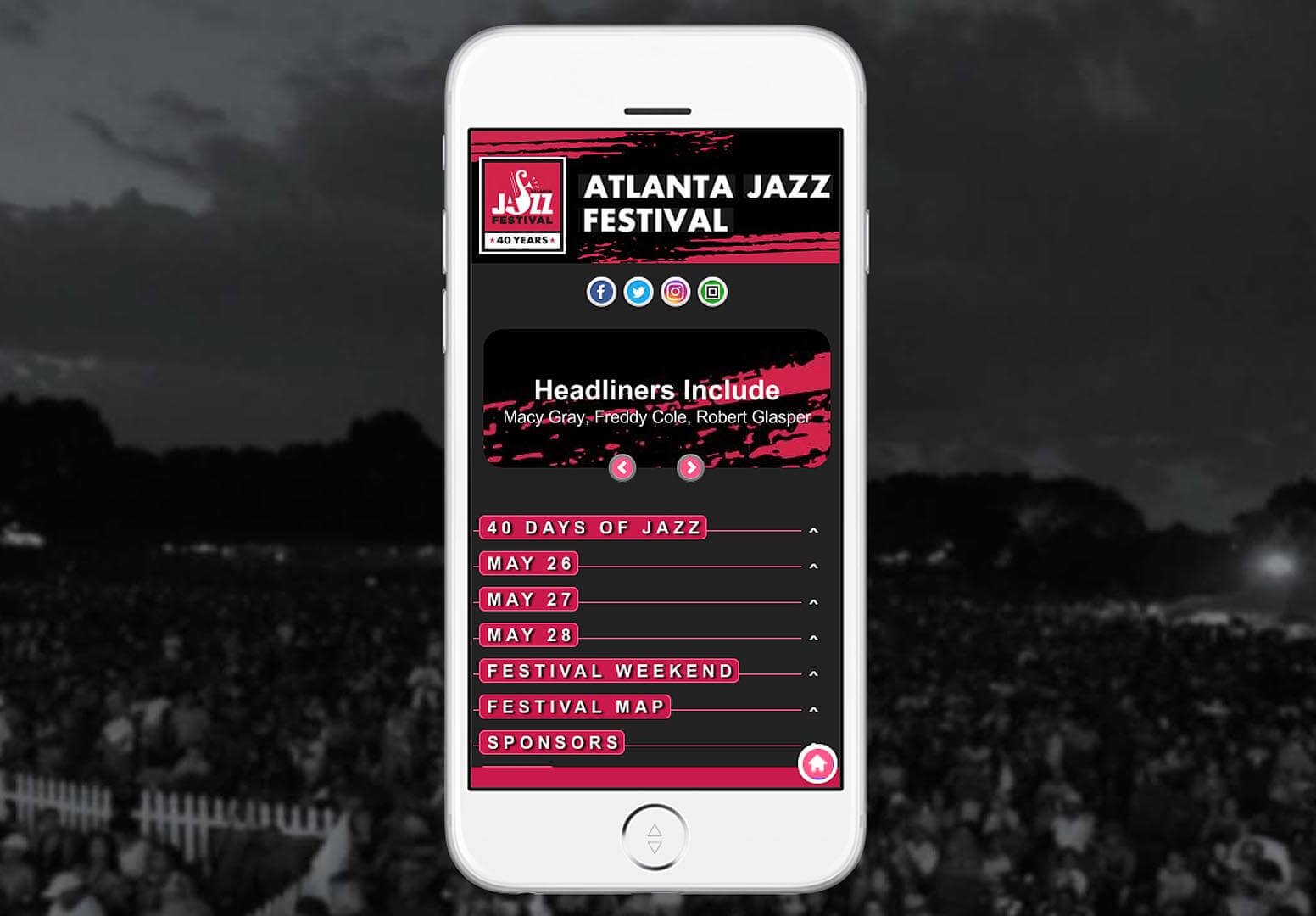
The result was 298,388,330 media impressions against a target of 100 million, more than 170 stories, over 50 radio and television placements and a leap in unique website visits from 9,393 in April to 40,021 in May. Visitors spent four to eight minutes on the mobile site, compared with roughly two minutes on the main festival site. More than 85 percent of surveyed attendees said they were satisfied and planned to return.
The figure deserves one caution. Media impressions are potential reach, not 298 million distinct minds persuaded to hear jazz. The more telling measures are the mix: attendance, time on site, survey responses, earned coverage and the festival's decision to bring the agency back for 2018, 2019 and 2020. One metric can flatter. Several metrics can cross-examine one another.
“I definitely was not flexible and I think I lost good people as a result of that.”Sharon Goldmacher, on her early management style
The first failure was the boss
Goldmacher was 28 when she founded communications 21. She had returned from visiting a friend in Australia and noticed that the people she met - a farmer, a business owner, people doing their own thing - seemed happier than she felt grinding away at her job. She started an agency partly to see whether she could.
Within two years, it had won the DeKalb Chamber's small-business start-up award. The founder's more useful memory is not the trophy. It is that she was inflexible, and good people left. That loss changed her mind. In a later interview, she argued that clients inevitably come and go, while a happy team creates the place people want to work. Her hierarchy became team first, client second - a surprising order in an industry famous for treating urgency as a personality.
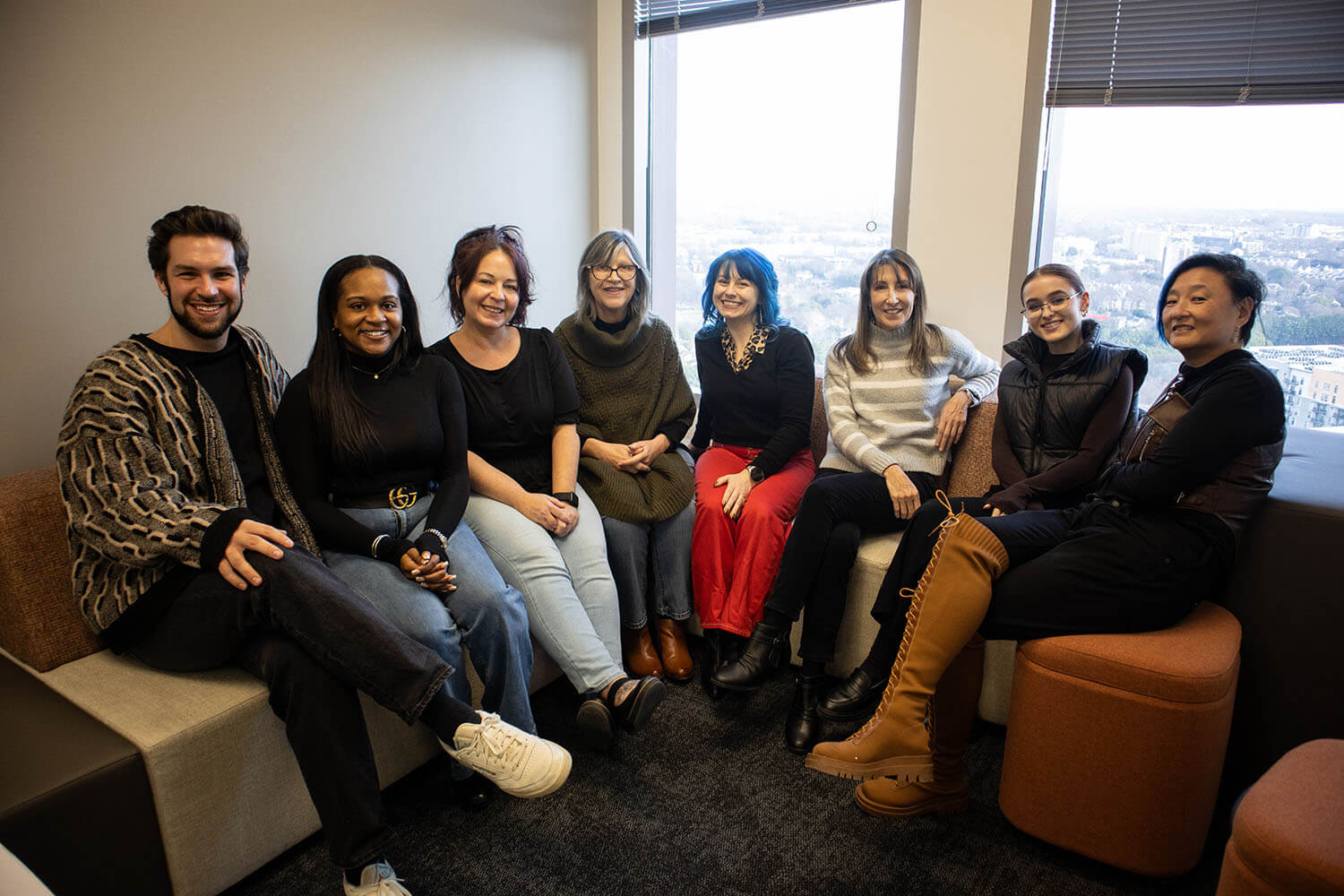
The company remains founder-led and woman-owned. It sells both projects and retainers, working with businesses, nonprofits, government organizations, professional-services firms, real-estate groups and community improvement districts. Public examples range from the National Highway Traffic Safety Administration to the Atlanta Botanical Garden, from Points of Light to the NCAA Men's Final Four. The category changes; the method is remarkably stable.
The agency as switchboard
For Atlanta's 2013 Men's Final Four, c21 did not merely issue releases. It built a local site, ran email and social channels, bought geo-targeted ads, organized contests and managed a social-media command center. About 35 volunteers carried donated AT&T smartphones as a street team. When Centennial Olympic Park filled before the Dave Matthews Band played, the same system that created excitement had to explain that the gates were closed.
Nearly 150,000 people attended the games. The local effort generated 136 stories and more than 97 million impressions. The mobile app was downloaded 25,000 times, ahead of a 20,000 goal, while campaign emails posted a 50.53 percent average open rate. The public Facebook ad spend is refreshingly specific: just over $1,500 bought 646,586 in reach, 4,321 clicks and 1,870 new likes.
Attendance, membership, downloads or trust - choose one people can actually do.
Compare the glamorous tool with the simplest reliable substitute.
One video can travel through social, email, a website and an event.
Put reach beside action so a large number cannot tell the story alone.
The same pattern appears in quieter assignments. For Gateway85 Community Improvement District, c21 and Avison Young identified more than 400 potential members, sent 175 pieces of direct mail, produced six videos and staged an Opportunity Zone event for 75 people. Two properties ultimately joined the district, increasing its funding. For the Atlanta Botanical Garden's Henry Moore exhibition, research became targeted events with names like Snore with Moore, S'mores with Moore and Moore Yoga. Attendance rose 11 percent and membership sales rose 19 percent.
This is where c21 sits in the market: between a single-discipline boutique and a vast agency holding company, and alongside the in-house team a client may not be ready to hire. Its advantage is integration without enormous machinery. Its disadvantage is the mirror image. A global brand seeking simultaneous work in dozens of countries may need a network with offices and buying power everywhere. A native app is also the right answer when users need offline access, push notifications, sensors or app-store distribution. The $5,000 trick works only when a browser can do the important job.
Do not begin with “we need an app,” “we need TikTok” or “we need press.” Begin with the behavior that must change. Choose the lightest channel that reaches the audience. Give every useful piece of work more than one home. Then place an action metric next to the attention metric.
A firm named for the future
communications 21 was named for communicating in the 21st century eight years before that century arrived. This could have aged badly. Instead, the name became a standing dare. The agency brought email marketing in-house in 2001, later added websites, video, search, paid social and mobile channels, and in 2025 announced that its work had collected more than 100 industry awards.
The awards are evidence of endurance, but not the most interesting evidence. Better clues are the small acts of correction: abandoning paper when a live webpage works, changing a management style when talented people leave, telling a client when its news is unlikely to earn attention. An agency stays useful by being willing to disappoint the tactic. The object is negotiable. The result is not.
Keep going