Thirteen hours is a long time to wait for a business to come back online. In a published Kimberly-Clark case study, Basis Technologies reports that technical downtime during an SAP migration fell from 18 hours to five. The entire project took 14 months against an 18-month estimate. For software that spends much of its life managing something called a transport queue, that is a rather good entrance.
Basis occupies a particular corner of enterprise computing: changing the systems that companies depend on while those companies keep working. Its software helps teams assess proposed SAP changes, check dependencies, coordinate approvals and move releases into production. The audience is the person responsible for getting a business request safely past a collection of systems, colleagues and deadlines. Their reward for doing it well is often that nobody notices.
The useful decision was to stop
Kimberly-Clark’s experience starts with an interruption. According to the case study, its greenfield global-template implementation encountered obstacles in user testing and readiness assessments. The company paused and switched to a brownfield approach. In everyday language, it moved from a fresh implementation toward transforming an existing system. Testing had delivered an inconvenient answer, and the project changed direction.
ActiveControl helped expose dependencies and sequencing problems, refine processes and automate approvals. The lesson is more specific than “buy automation.” Reconsider the migration approach, then organize the execution around what the systems actually require.
“The speed and success of our Brownfield migration was greater than we could have imagined.”Charles Ahn · Kimberly-Clark
Director of SAP Technology Integration & Enablement
The baggage inside a transport
In SAP, a transport carries software changes between systems. It sounds administrative until one change depends on another that has not arrived, or a later import overwrites work that somebody needs. A release can contain many interdependent pieces. Getting their order right matters as much as getting them out of development.
ActiveControl is Basis’s execution product. Its current description lists more than 75 analyzers covering problems such as object conflicts, sequencing and dependencies. It applies checks across the change lifecycle and supports approval controls and release automation. These are practical capabilities for teams that need a repeatable process instead of another spreadsheet somebody must maintain by hand.
The company’s earlier analyzer demonstrations make the technical problem unusually clear: a large enterprise release may involve thousands of transports. A human reviewer has to understand both what changed and what those changes depend on. Automation is valuable here because the administrative scale can overwhelm the attention available. The question for a buyer is whether the checks catch the failures their own estate actually produces.
A second complication appears during an upgrade. The existing SAP environment still needs repairs and business improvements while the replacement is being built. Those changes must be reconciled across parallel development tracks. Basis calls this dual maintenance. Its automation addresses the awkward possibility that the system prepared for tomorrow is already missing something fixed today.
Now it wants into the design meeting
Basis has been expanding toward the decisions made before a release exists. ActiveDiscover, introduced in June 2023, adds information about change impact and risk. It uses insight into an SAP environment to help teams decide where attention belongs. Availability on SAP Store followed in September 2024, giving the product another route to enterprise buyers.
Klario extends that move into planning. Announced in May 2025, the AI-powered platform was presented as a way for SAP Cloud ALM customers to define and compare change solutions. The launch described sanitized, aggregated knowledge from real implementations. By Sapphire 2026, Basis’s event material was promoting general availability and demonstrations connecting a business requirement with design, costing and deployment.
Today’s product description is specific about the intended output: clearer requirements, design alternatives and a recorded explanation of the decision. Klario can help evaluate whether to use standard SAP functionality, build an extension or refactor an existing customization. It also scores requirements for qualities including clarity and completeness. Those are useful questions to ask before commissioning development.
That is a plausible job for AI, provided the people responsible for architecture still interrogate the answers. A suggested design needs to fit local systems, business rules and operational constraints. An attractive blueprint cannot establish those facts by itself. The practical value lies in giving the team a structured starting point and making its assumptions easier to challenge.
A specialist among very large neighbors
The company dates its beginnings to 1997. Martin Metcalf became chief executive in February 2013, bringing experience that included a regional managing-director role at SAP. That background helps explain the concentration on one technically demanding market. Basis sells knowledge of SAP change as part of the product, not simply software that moves files.
Its named customers include P&G, Honda, Booking.com, 3M and Vistaprint. These organizations span different industries, but their SAP teams face overlapping coordination problems. Basis also offers BDEx, an analytics and data exchange product for utilities back offices. The portfolio therefore reaches beyond release management, while retaining its attachment to enterprise SAP operations.
Its position becomes clearer when viewed alongside partners. Basis lists technical integrations or plugins involving Jira, ServiceNow, Onapsis, Tricentis and smartShift. It also names Accenture, IBM and Cognizant among consulting partners. For a buyer, this means Basis can sit within a larger implementation and delivery arrangement. Purchasing its software does not require pretending that the rest of the enterprise toolchain will disappear.
There are alternatives. Rev-Trac also automates SAP transport movement, approvals and release management. Panaya emphasizes change intelligence, impact analysis and testing. SAP’s own lifecycle tools belong in the evaluation too. Basis presents Cloud ALM as complementary: an organization can retain its project and workflow oversight while adding specialized change capabilities. The differentiator to examine is the fit across design, analysis and execution, rather than the mere presence of an automation button.
The money has two different jobs
Scottish Equity Partners invested $25 million in April 2021. The announcement described growth capital for product development and wider sales and partnership capabilities. In a later investor interview, Metcalf said the backing also supported hiring and access to outside SAP-market expertise. He described a deliberate shift from leading with individual products toward addressing enterprise change more broadly.
That account supplies a business explanation for the newer products. The company sees demand moving beyond executing an agreed plan to deciding what should be built. Advice, customer pressure and SAP’s cloud and Clean Core direction informed that repositioning. ActiveDiscover and Klario let Basis participate earlier in a buying conversation that used to center on deployment.
Customer spending is a separate calculation. Basis’s published support terms refer to software license agreements and either subscription or support-and-maintenance fees. This is enterprise procurement, with implementation and ongoing operations to consider alongside the commercial agreement. A sensible business case compares the full commitment with the cost of manual effort, avoidable rework and disruption.
Three-year ROI in a Basis-commissioned Forrester study. A modeled outcome, not a promised customer return.
Basis’s summary of that Forrester study reports $1.24 million in economic benefits over three years and payback in under six months. The commission matters: this is a vendor-sponsored economic model. Buyers should rebuild the calculation with their own release volume, staff costs and implementation effort. Savings that free an engineer for other work have value, but they are different from cash that disappears from an expense line.
The people behind the quiet release
Basis’s careers material describes a culture centered on collaboration, trust and transparency. It reports that 93 percent of employees agreed it was a great place to work and highlights UK workplace recognition for women in 2023. These are company-reported signals, but they are more concrete than the usual careers-page promise that everyone is passionate.
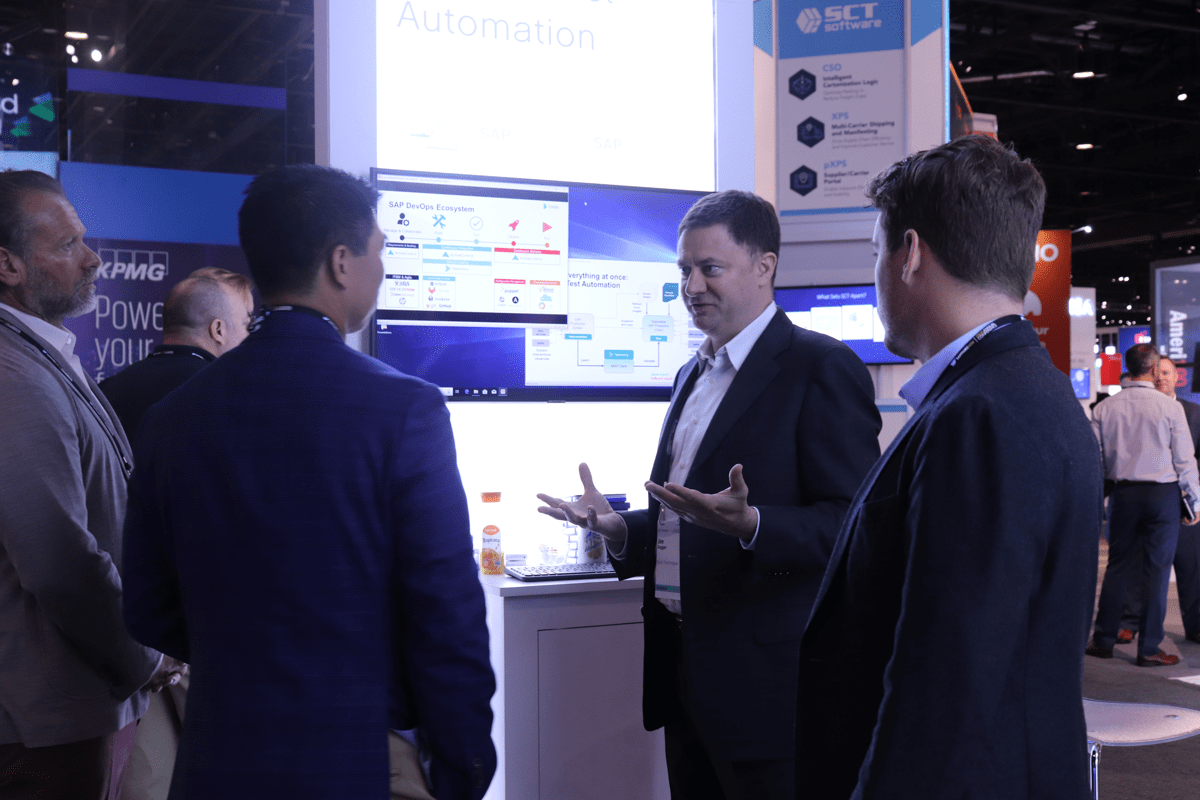
The human component also appears in implementation. Basis describes Kimberly-Clark starting with five development tracks and a basic Azure DevOps connection in 2022, then reaching a more integrated delivery pipeline across four landscapes and 16 SAP instances by 2024. That progression is a useful corrective to the notion that automation arrives fully formed on installation day. Teams develop the process around it.
Copy the sequence, then earn the result
A reader can borrow the operating logic before choosing a supplier. Start with a recent delayed release. Identify whether it waited for a decision, a test, an approval or a technical dependency. Record the time spent at each step. Then choose a bounded change stream where the team can compare the old process with the revised one.
Keep the measures separate: lead time, manual hours, failed changes and downtime answer different questions. A faster release with more repair work is a poor bargain. Likewise, a migration finishing sooner does not prove that every part of the improvement came from one product. The organizational decision and the execution machinery need to be assessed together.
The economics are most persuasive when change volume, parallel systems and coordination costs are substantial. A straightforward estate with infrequent changes may already have adequate controls. Automation also needs reliable inputs and accountable owners; it cannot settle a disputed business requirement merely by processing it quickly. Basis’s opportunity rests on making complex work repeatable. For the people watching the next release, an uneventful weekend would be a convincing demonstration.