The trouble with a digestive disease is that it does not keep office hours. It follows you into a grocery aisle, a restaurant, a meeting, the anxious minutes before leaving home. Then you get fifteen minutes with a specialist, describe a month of strange meals and worse mornings, and try to remember which Tuesday came before which flare. Sam Jactel knew this routine well. Diagnosed with ulcerative colitis in 2014, he says he had access to excellent doctors and still endured six major flares that sent him to the emergency room. The medical system could treat an acute crisis. The ordinary Tuesday was harder.
- Ayble is a virtual, insurance-billed digestive clinic with a shared plan for doctors, dietitians, pharmacists and coaches.
- Its app tracks meals and symptoms and offers nutrition and brain-gut tools between visits.
- Most insured patients pay an advertised $0-$30 per visit; plan rules and deductibles decide the actual bill.
- A 2024 Cleveland Clinic collaboration and a 2026 $16 million Series A mark its shift from app to broader care model.
That gap became Ayble Health, founded in Boston in 2020. It began with a patient's irritation at the distance between expert advice and daily life. It now sells a more ambitious proposition: a virtual clinic that can organize the many kinds of work digestive care requires. The company serves people with conditions ranging from IBS and reflux to Crohn's disease and ulcerative colitis. Employers, health plans and providers help people find it; the patients use it. That distinction matters. An employer may buy access, but a person with pain or diarrhea is the one who must decide whether the care is worth another appointment.
The first thing that failed was follow-up
Ayble's founding story has a useful inconvenience: Jactel's problem was not simply a lack of specialists. He says he had them. Yet a chronic condition kept slipping out of control. The lesson he drew was that diagnosis, nutrition, behavior and medication could not live in separate folders. In his account of building Ayble, he describes a move away from trial and error toward predictive, personalized care. The shift sounds technical until one asks who notices when yesterday's dinner made today's commute impossible.
Ayble's answer is a coordinated team. A patient starts with a video visit and a clinical plan. A doctor or nurse practitioner can evaluate symptoms and order labs; a registered dietitian can work through foods and trigger patterns; a pharmacist can address medication fit and side effects; a coach can help turn plans into habits. Messaging and follow-up visits keep that plan alive. The phone app records meals and symptoms, offers grocery tools and delivers guided relaxation and other brain-gut exercises. It is an unusually practical role for software: less oracle, more memory.
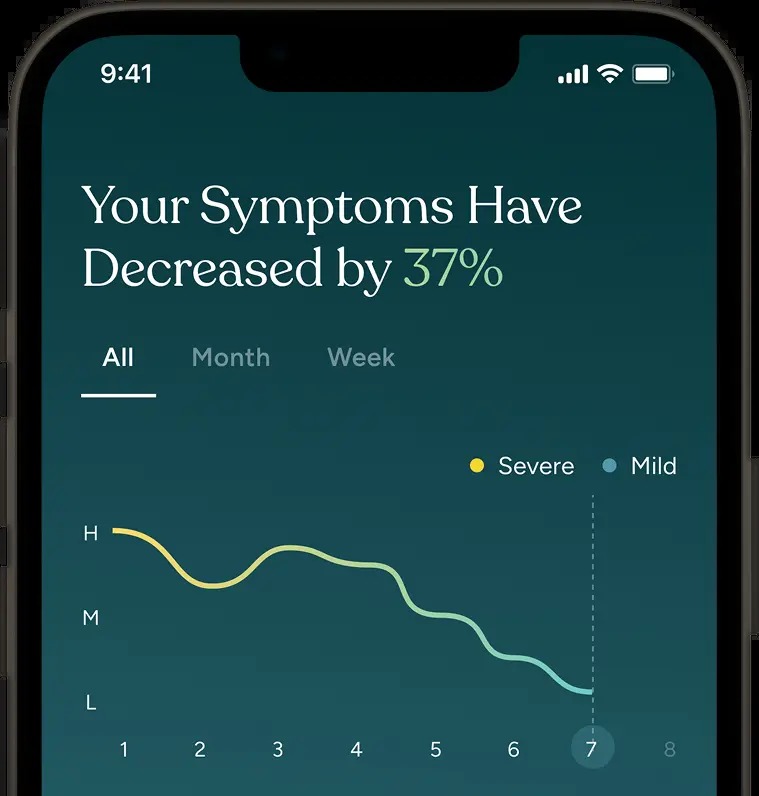
This is where Ayble differs from a basic wellness app. A food diary can show a pattern; it cannot prescribe, interpret lab results or decide whether an inflammatory condition needs different treatment. Ayble's clinical team can do those things. It also differs from a standard specialist visit by putting nutrition and behavioral tools in the same continuing plan. The distinction is especially important for IBD, where treating underlying inflammation cannot be reduced to avoiding a suspicious lunch.
A clinic in three tempos
The Cleveland Clinic partnership shows the model in a specific setting. In October 2024, Cleveland Clinic added Ayble's virtual tools to its care model for chronic digestive disease. Together they developed behavioral-health content and care pathways. Patients could use audio programs for breathing, mindfulness, hypnosis and cognitive behavioral techniques, alongside personalized nutrition and tracking tools. They continued seeing Cleveland Clinic providers when needed. The partnership did not turn an app into a replacement for a hospital; it made the time between hospital visits more structured.
“Ayble Health is the care I wish existed when I was diagnosed.”Sam Jactel, founder and CEO
There is evidence behind parts of this approach, and the limits of that evidence are worth keeping in view. A 2025 real-world study of Ayble's IBS care followed 202 participants who had active symptoms and completed at least one follow-up survey. It reported clinically meaningful improvement. Because it was not a randomized comparison against usual care, it cannot by itself tell a buyer how much better Ayble is than every alternative. The Peterson Health Technology Institute's 2026 review rated clinician-led virtual GI solutions, including Ayble, favorably as a category, while calling the certainty of some clinical evidence lower. Its report found no Ayble-specific study measuring healthcare costs or utilization among the studies it included.
The price of an ordinary Tuesday
Ayble makes money as an in-network virtual medical practice, billing insurance through claims. Its site says most patients pay $0-$30 for initial and follow-up visits, about what they would pay for another in-network doctor. Deductibles can make the early bill higher. For a patient, that is the cost question. For an employer or insurer, the question is whether quicker, better-matched care avoids more expensive episodes later. Ayble markets its claims-analysis tool, Ayble predict, to help identify members whose digestive problems may be driving avoidable spending and to route them to an appropriate level of care.
Ayble's typical advertised patient cost per visit. Insurance coverage and deductibles can change it.
The market gives that pitch a real complication. Lighter-touch digital programs can be cheaper and may suit many people with IBS. More intensive clinician-led care can serve people with IBD and complex needs but costs more to deliver. PHTI placed Ayble with the clinician-led group alongside Oshi Health and Salvo Health; it placed Cylinder Health and Digbi Health among wraparound solutions. The practical question for a health plan is not whether every patient needs the same Ayble program. It is who needs which level of help, and when. Ayble's business depends on getting that matching right.
The care can exist and still be invisible
Distribution has become as important as the clinical product. Ayble says it is in-network for more than 80 million people. That is a count of people who may have access through coverage, not a count of active patients. In 2025, Castlight Health agreed to offer Ayble through its employer benefits navigation platform. In September 2026, Ayble joined Amazon's Health Benefits Connector as its first GI provider, letting eligible shoppers discover the service, check coverage and enroll. A covered benefit buried in a directory is a theoretical benefit; making it visible at the moment somebody is looking for help is a different job.
The same month, Ayble announced a $16 million Series A led by Neon, with Unum Ventures, Upfront Ventures, M13, Cleveland Clinic Ventures, DigiTx and Accomplice participating. The company says the round brought total funding above $27 million. It plans to deepen its AI tools and extend the care model into autoimmune conditions. That is a considerable expansion of scope. The hard-won lesson from GI care is portable only if the new conditions also benefit from a shared clinical plan, repeated contact and good timing. A clever model cannot erase the differences between diseases.

What might another healthcare builder copy? Start with the moment a patient falls through the cracks, then design the handoff as carefully as the appointment. Give clinicians the record of what happens at home. Make the service easy to find and simple to pay for. Finally, measure outcomes with enough honesty to say where the evidence stops. Ayble has turned a personal frustration into a functioning clinic and a national distribution effort. The interesting test now is whether it can keep the care coherent as the company, and the range of conditions it treats, grow larger.