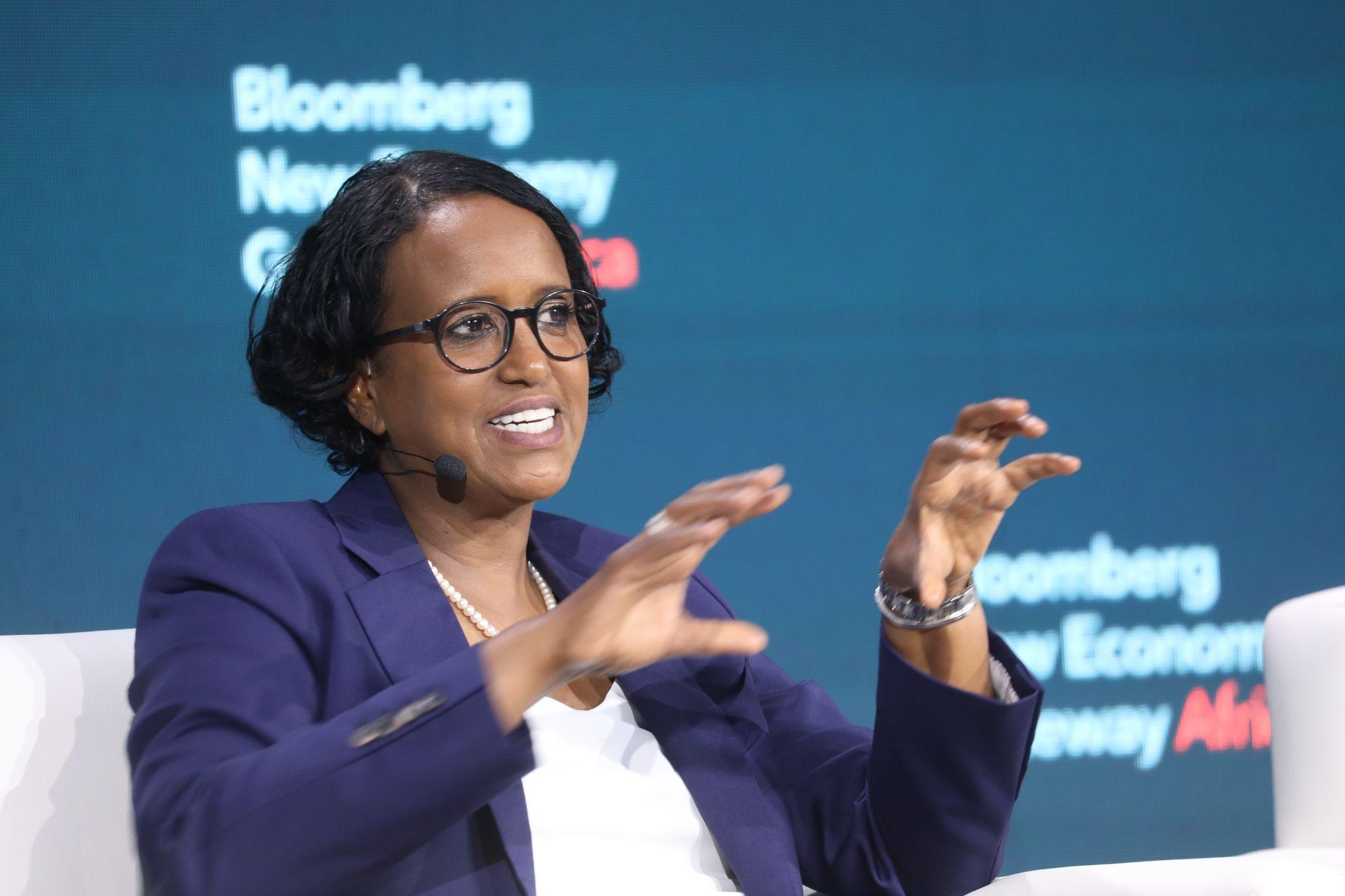
Ayaan Adam sat on a stage in Marrakech in June 2023, wearing glasses and a dark blazer, explaining a problem that an opening ceremony cannot solve. Africa needed infrastructure. The infrastructure also needed to survive a changing climate. A port could be financed, designed and built, yet its future would still depend on conditions beyond the assumptions in its original plans. The weather, regrettably, does not read the prospectus.
Adam was speaking as chief executive of AFC Capital Partners, the asset management subsidiary of Africa Finance Corporation. Her subject was the Infrastructure Climate Resilient Fund, or ICRF. The name carries the weight of an institutional acronym; the underlying question is easier to grasp. When an investor pays for an asset expected to operate for decades, how much attention should go to the world in which it will spend those decades?
“Africa has a huge infrastructure deficit,” she said. Building more was part of the answer. Accounting for climate exposure was another. Her career had brought her through private equity, development institutions and a global climate fund. In Marrakech, those experiences converged on an investment problem with physical consequences.
A mathematics degree, then a wider map
Her formal preparation began with mathematics. Adam earned a bachelor’s degree at Clark University, graduating summa cum laude, and an MBA at MIT Sloan School of Management. She was born in the United States and grew up in Somalia and Tanzania. Those are distinct pieces of her biography, rather than an invitation to manufacture a childhood revelation. The public record gives a route across countries and disciplines; it does not require a precocious young financier counting coins at the kitchen table.
In a later podcast appearance, she recalled a short period in private-sector consulting after her MBA, followed by her move to the International Finance Corporation. IFC became a 17-year stretch of her career. Her positions included Chief Investment Officer, with responsibilities that reached into investment strategy and portfolio risk in South Asia.
That work had several layers. A potential investment needed examination. Existing holdings needed oversight. Environmental and social risks belonged in the assessment alongside financial ones. Countries and sectors needed to be understood in their own circumstances. Industrial development could look different across neighbouring markets, even when investors were considering them within the same regional strategy.
The institutional setting matters to the story. IFC is part of the World Bank Group and works with the private sector in developing countries. Adam’s investment career therefore developed inside an organisation where commercial decisions and development purposes occupied the same desk. Her later roles would keep returning to the relationship between the two.
Learning to make capital travel
At CDC Group, Adam became Managing Director of Africa Funds. Her responsibilities included a $2.5 billion private markets funds portfolio, spread across more than 50 new and existing partnerships and 40 general partners working in Africa. Managing investments through other investment managers adds a further layer of judgement: choosing the people and partnerships through which capital reaches businesses.
She subsequently headed the Green Climate Fund’s Private Sector Facility, based in South Korea. There, she helped establish its mandate and expand its portfolio to $2.1 billion over three years, across Africa, Asia Pacific, Latin America and the Caribbean. The scale was international, but the recurring task was specific: finding ways for private investment to participate in climate-related projects.
One example took her to Ulaanbaatar in 2017. Addressing a sustainable finance forum, Adam discussed GCF’s work with XacBank, a Mongolian commercial bank. A $20 million business loan programme supported greenhouse-gas emission reductions. Its progress from accreditation through approval, signature and disbursement had taken less than a year.
The example put a local bank inside an international financing arrangement. It gave her argument a practical shape: a climate fund could work through institutions already connected to businesses in a developing economy. Moving capital required a route, participants and an agreed process. The diagram on a conference slide eventually had to become an agreement someone could sign.
In 2019, Adam and GCF Executive Director Yannick Glemarec met representatives of pension funds, sovereign wealth funds, asset managers and banks at GCF’s Private Investment for Climate Conference. The institutions represented held more than $8 trillion in assets. That was the participants’ collective asset base, rather than a sum pledged at the meeting. The discussions concerned investment barriers, usable projects and structures that could encourage climate investment.
“We need innovation both in finance, technology and thinking”
Ayaan Adam, Green Climate Fund, December 2018
The blank canvas acquires a balance sheet
AFC’s 2021 annual report records Adam’s appointment as Senior Director and CEO of AFC Capital Partners in January that year. The subsidiary represented a move into asset management: raising third-party money to invest alongside AFC and widening the capital available for its infrastructure pipeline. Adam’s responsibilities included strategy, organisation and the work of establishing the manager itself.
She later described the opportunity as a “blank canvas”. An asset management business needs quite a few unromantic items before it can hang anything on the wall. It needs an investment approach, an organisation capable of implementing it and investors prepared to entrust it with capital. For Adam, the new platform brought the institutional building of her earlier career into an African infrastructure setting.
AFC launched the ICRF initiative in September 2021. By January 2024, GCF listed the project as under implementation. The fund’s financing arrangements make an instructive distinction between different kinds of money. GCF’s project record identifies $240 million in equity and approximately $13.8 million in grant support. Its equity is junior capital, intended to absorb losses ahead of more senior investors.
That arrangement is described as first-loss capital. The term sounds forbidding, but its purpose can be stated plainly: investors enter with different positions in the loss-bearing order. A public climate institution accepts a more exposed position to encourage other capital to participate. It changes the allocation of financial risk. The project still requires careful selection, assessment and execution.
The $750 million fund target and the ambition to mobilise up to $3.7 billion in total financing describe different scopes. The larger number includes the wider financing the platform aims to bring into projects. Neither figure should be read as a tally of completed infrastructure. A useful financial story keeps its targets, commitments and outcomes in separate columns.
The forecast inside the financial model
Climate resilience changes the sequence of questions asked about an asset. ACP’s approach considers climate exposure from planning and design through construction and operation. Screening includes physical risks, such as extreme weather, and transition risks involving emissions pathways and climate governance. A project’s climate assessment is meant to influence decisions throughout its life.
Consider the logic, without attributing an imaginary project to Adam. If future conditions affect an asset’s ability to operate, they also matter to its investment case. Design decisions made early can influence exposure later. Once construction is complete, changing those decisions can become a different engineering and financial exercise. The timing of the assessment is part of its usefulness.
Assess climate exposure
Incorporate resilience
Deliver the design
Monitor over time
Adam’s role sits where these concerns meet the capital structure. A technical assessment has to be relevant to an investment decision; an investment structure has to support a workable asset. The fund targets renewable energy, transport and logistics, digital infrastructure and industrial development. Those sectors involve different assets, yet each places demands on financing that extends beyond a short reporting cycle.
Her experience at GCF helps explain this emphasis on the terms of participation. A pension fund, a climate institution and a development bank can support the same investment while bringing different mandates. The fund manager must create an arrangement in which those mandates can coexist. Good intentions are useful company. They are also insufficient paperwork.
Whose savings build the next road?
In April 2026, AFC announced a commitment from the Development Bank of Southern Africa to ICRF, signed during The Africa We Build Summit in Nairobi. The fund’s institutional participants also included the European Investment Bank, the Nigeria Sovereign Investment Authority and African pension funds. The partnerships brought African institutions into the financing effort alongside international ones.
Then, on 24 August 2026, ACP announced ICRF Nigeria. Registered with Nigeria’s Securities and Exchange Commission as a closed-end fund, the vehicle was designed for pension fund administrators, insurers, asset managers and other institutional investors. Its remit connected Nigerian capital with infrastructure opportunities in Nigeria and across Africa.
For Adam, the launch provided a dedicated route for those investors to participate. The attraction of the idea is its matching of time horizons: institutions managing long-term savings can consider infrastructure intended to serve economies for years. Making that match workable still requires portfolio discipline and risk assessment. The existence of savings alone cannot settle an investment decision.
The Nigeria vehicle also shows how her job has evolved. Establishing ACP was one task. Bringing institutions into its funds and adapting the platform for a particular investor base is another. The career now involves building the channels through which capital can move, as well as deciding where it should go.
The work after the opening ceremony
There is a small, telling detail in a recent interview: Adam joined the video call from San Francisco, where she was undertaking AI training. After years in investment leadership, she was still making room to learn. It is an appealing interruption to the usual executive biography, in which education finishes neatly before the first important job.
Her public career has included explaining the work to others, too. In 2017, she joined a women-in-development forum at Sookmyung Women’s University with Joyce Msuya, Mahua Acharya and Jiwoo Choi. In her 2025 ARISE Voices appearance, the conversation returned to private investment and Africa’s economic development. Different audiences, familiar questions about how institutions and capital can support activity on the ground.
The test ahead is concrete. Funds must progress into investments; assets must be built and operated; resilience must endure beyond the assessment that described it. Adam’s career has brought her to the part of finance where future conditions deserve attention before the money is spent. The opening ceremony will arrive eventually. Her work asks investors to keep the decades after it in view.