Imagine buying a car from a stranger who is buying it from another stranger, with money advanced by someone who may never see the car. Now imagine doing it before lunch. Wholesale vehicle auctions turn that arrangement into ordinary business. The impressive thing is how much checking must happen before it can feel ordinary.
AutoTec occupies this busy patch of doubt. Its customers include auctions, dealers, lenders and insurance carriers. Through businesses such as AuctionACCESS, AutoCheck Auctions and Auction Insurance Agency, it helps establish who can trade, what a vehicle’s records reveal and how a marketplace handles financial trouble. The car attracts attention. The permissions and promises keep the transaction moving.
- The person: AuctionACCESS centralizes dealer credentials.
- The car: AutoCheck Auctions supplies vehicle-history reports.
- The promise: Auction Insurance Agency protects against payment and title risks.
- The inventory: VIN CrossCheck alerts lenders to matches in participating data.
The club has a membership card
A dealer’s first problem can be surprisingly basic: proving that they belong. AuctionACCESS lets dealers manage credentials across more than 400 marketplaces in the United States and Canada. They can manage authorized representatives, check registration status and use a mobile credential. The attraction is repetition avoided. A business that visits several auctions has several occasions to explain itself.
This is a professional club with an unusually practical card. Membership is restricted to licensed, credentialed dealers and their authorized representatives. The mobile app lets a member present a QR code at participating auction kiosks. It also provides tools for resolving buying issues. Consider the ordinary inconvenience of discovering a paperwork problem only after arriving at an auction. A status check beforehand has a modest but very concrete purpose.
plus applicable sales tax
A credential can travel. An auction’s permission is still its own.
That distinction matters. The membership simplifies registration; it does not register a dealer automatically at every auction. AuctionACCESS’s terms leave purchasing privileges and credit to the participating customer’s discretion. A shared system handles the common checks while local businesses retain their decisions. Anyone designing software for independent operators should pay attention to that division of labor.
A polished bonnet cannot edit a record
The second stranger in the transaction is the vehicle itself. A car can present itself beautifully. Its documents may be less charming. AutoCheck Auctions offers exception reports, mileage discrepancy reports and full histories, giving auctions information they can use before dealers commit to a purchase. Its service also investigates discrepancies when a report raises a question during auction operations.
The human response is part of the product. In a sale moving quickly, an unresolved discrepancy becomes a delay or a dispute. A report that identifies an issue creates work; someone must interpret it and decide what to do. AutoCheck Auctions markets both the information and the support needed to handle that moment. Its published customer testimonials include Cox Automotive, McConkey Auction Group and Charleston Auto Auction.
AutoTec reports more than a billion VIN history checks and more than 300 million transactions insured since 1953. Those are cumulative company figures, rather than a count of unique cars or current customers. They describe a business built around checking and protecting transactions repeatedly. The unit of usefulness is a decision made with a little less uncertainty.
When “sold” leaves a bill behind
An auction can successfully match a buyer and seller and still have a financial problem. Auction Insurance Agency’s automotive services address payment defaults and title fraud. Alongside protection, it supplies underwriting information, loss prevention and a recovery team. Selling the car and collecting the money are separate accomplishments. An auction operator has reason to care about both.
Its Resolutions division works on buyer protection, arbitration and disputes involving higher-value online transactions. The advertised range extends beyond cars to equipment and other goods. That is a revealing extension: an expensive object, a remote buyer and an unhappy ending create a recognizable problem across several markets.
Physical damage introduces another kind of exposure. AIA’s program insures floorplan providers against damage to financed collateral, with dealers able to opt in when they lack existing coverage. Fees are assessed per vehicle, per day. Dealers pay those fees when making a payment or paying off a vehicle, and the floorplan provider pays premiums monthly. The billing follows the thing at risk and the time it spends at risk.
AutoTec also dates DealerPay’s introduction to 2020, describing its purpose as making payments easier and reducing risk among dealers, marketplaces and floorplan lenders. Across the portfolio, the business model combines paid credentials, data subscriptions, insurance and support. Each product attaches to a particular friction in the trade.
The car that a lender cannot watch
A floorplan loan finances inventory. That creates a simple monitoring question: what is happening to the vehicles securing the money? Walking a lot is one way to check. VIN CrossCheck adds another view, looking for unreported activity through records held elsewhere.
The lender supplies VINs and finance dates. The platform compares them with available retail, wholesale, state DMV, auction and online marketplace data, then delivers daily reports of matches. It requires no personally identifiable information for that matching process. Potential double flooring - the same vehicle being financed more than once - is among the risks the service is designed to identify.
- InputVIN + finance date
- MatchParticipating data sources
- ReviewDaily match report
A flag gives the lender something to investigate. It is not a verdict.
There is a limit built into this design: matching depends on the records available from participating sources. An unrecorded event cannot be discovered by comparing records. That is why the service describes supplementing lot audits. The sensible lesson is to combine observations, then investigate the exceptions, rather than treat an empty report as proof that nothing happened.
One vehicle, several interested parties
The same vehicle history can inform a different decision at an insurance carrier. Red Mountain Technologies supplies history data and Vehicle Risk Predictor models for rating, underwriting and claims. It lists sources ranging from DMV records and auctions to repair facilities, insurers and manufacturers. The carrier wants information relevant to insuring the car; the auction buyer wants information relevant to buying it.
This helps explain AutoTec’s place in the market. A consumer history report, an auction operator’s software and a lender’s inventory audit each address part of the transaction. AutoTec’s family serves several parties around it. Alternatives therefore depend on the job: registering directly at each auction, buying history information elsewhere or inspecting collateral physically. Comparing the whole company with a single vehicle-history report misses most of its work.
The support desk knows things
Donna Dukes entered the industry through AuctionACCESS customer support while studying at Samford University. In an April 2026 interview, the senior vice president of technology operations described how relationships with auctions and colleagues turned a college job into a career. She was recognized in that year’s Women in Remarketing program.
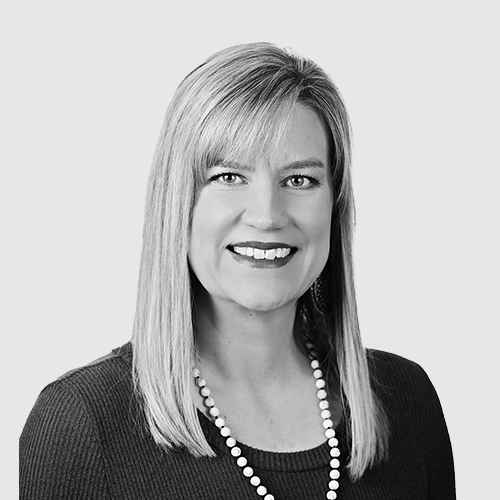
“No two days look the same”Donna Dukes
Women in Remarketing interview, 2026
There is a useful connection here between the software and the working day it serves. Support staff encounter the awkward details: the missing document, the disputed record, the representative who cannot buy. Those details identify where a product has to be clear and where someone needs to answer a question. Dukes’s career makes that connection visible without requiring a grand theory of innovation.
AutoTec’s own history offers a longer version of that continuity. Its predecessor, R.F. Manly and Co., began in Birmingham in 1898; the modern company’s profile lists a 1997 founding. Insurance, financial guaranty bonds and typewriters appear in the early business. The history is pleasingly unglamorous. Businesses have always needed to record agreements and worry about whether people would keep them.
What can a reader copy? Start with the recurring question that holds up a transaction. Make the common check reusable. Keep the decision with the party responsible for it. Build a route for resolving exceptions. AutoTec gives those principles specific forms: a dealer credential, a history report, a protection program and a lender alert. In a trade full of shiny objects, the paperwork deserves a second look.
Before your next bid
Explore the services, membership details and people behind the checks.