Before Assaf Wand asked Americans to trust a new home insurance company, he had a more intimate problem to solve: how to put something on a bathroom wall. The object needed to stay there. The person installing it needed to understand the instructions. Ideally, nobody would have to summon a contractor, buy a drill, or turn a modest domestic improvement into a weekend of regret.
At Sabi, the consumer products company he founded in 2009, Wand and the London designers at MAP Project Office worked through hundreds of adhesives supplied by 3M. The bathroom collection used a peg system that could support different accessories. A peg left behind after moving a caddy could still become a hook. Packaging helped people position the pieces. Wand wanted a customer to be able to install the system independently.
There is something pleasingly disproportionate about this. A former venture investor and management consultant, trained in law and finance, was devoting his attention to sticky tape. But the tape was where the promise met the wall. All the business strategy in the world would be little comfort if the shelf fell off.
A career with several departure gates
Wand’s route to that bathroom ran through the Israeli air force, trading, venture capital, business school, consulting and telecommunications. He has described serving for five years and reaching captain. While studying law and finance, he worked nights as a trader. Later came Intel Capital and an MBA at the University of Chicago, completed in 2005, followed by McKinsey in New York.
Telecommunications took him into physical infrastructure, including a tower business in India. His account of these moves is cheerfully aware that they resist the usual career narrative. When Peter Renton asked for his background in a 2021 interview, Wand warned him to get comfortable: “if you have coffee, sit down”. The résumé required refreshments.
The formal credentials matter, though they explain only part of the appetite. Chicago Booth gave him room to choose his classes and build his own course of study. In accepting its Distinguished Alumni Entrepreneurial Award in 2020, he emphasized independent thought and curiosity. He had wanted to experience corporate America. Business school offered an entrance, along with a way to think through unfamiliar problems.
His explanation of entrepreneurship was correspondingly personal: choosing the work, choosing the people, and helping create the culture around both. That is a revealing definition. It places the ordinary conditions of a working day alongside the idea for a company. The product may attract attention; the people are the ones you have to see on Tuesday.
The bathroom was a business education
Sabi brought Wand into the company of designers including Yves Béhar. It also made him confront a customer whose taste was too often treated as an afterthought. A product could be useful and still be something its owner would rather leave in a drawer. Wand saw room to give everyday objects more consideration.
Sabi Space made the argument in shelves, mirrors, towel rails and storage. Its 13-piece bathroom collection won the 2014 ICFF Editors Award for Best Kitchen and Bath. The installation choices included adhesive tape or screws, with templates supplied in the packaging. These details put the user’s experience into the product long before anyone admired it in a photograph.
The broader business question was how much work a seller should expect a buyer to do. Read the tiny print. Find the right hardware. Understand the mysterious diagram. Accept that an attractive room requires professional help. Each step looks small from the manufacturer’s end. Collected together, they make a purchase feel like an assignment.
Wand had another unglamorous research habit: reading Amazon reviews. In 2012, he recommended looking at both favorable and unfavorable comments to understand what people liked, what disappointed them, and which questions deserved further investigation. A complaint box, properly read, could become a design brief. It was available without a consulting contract.
Sabi was acquired by Urbio in 2015. Wand had learned about manufacturing, distribution and bringing physical products to market. His next company would sell a promise rather than an object, but the question of how much inconvenience customers should accept would follow him.
Insurance returned from the notebook
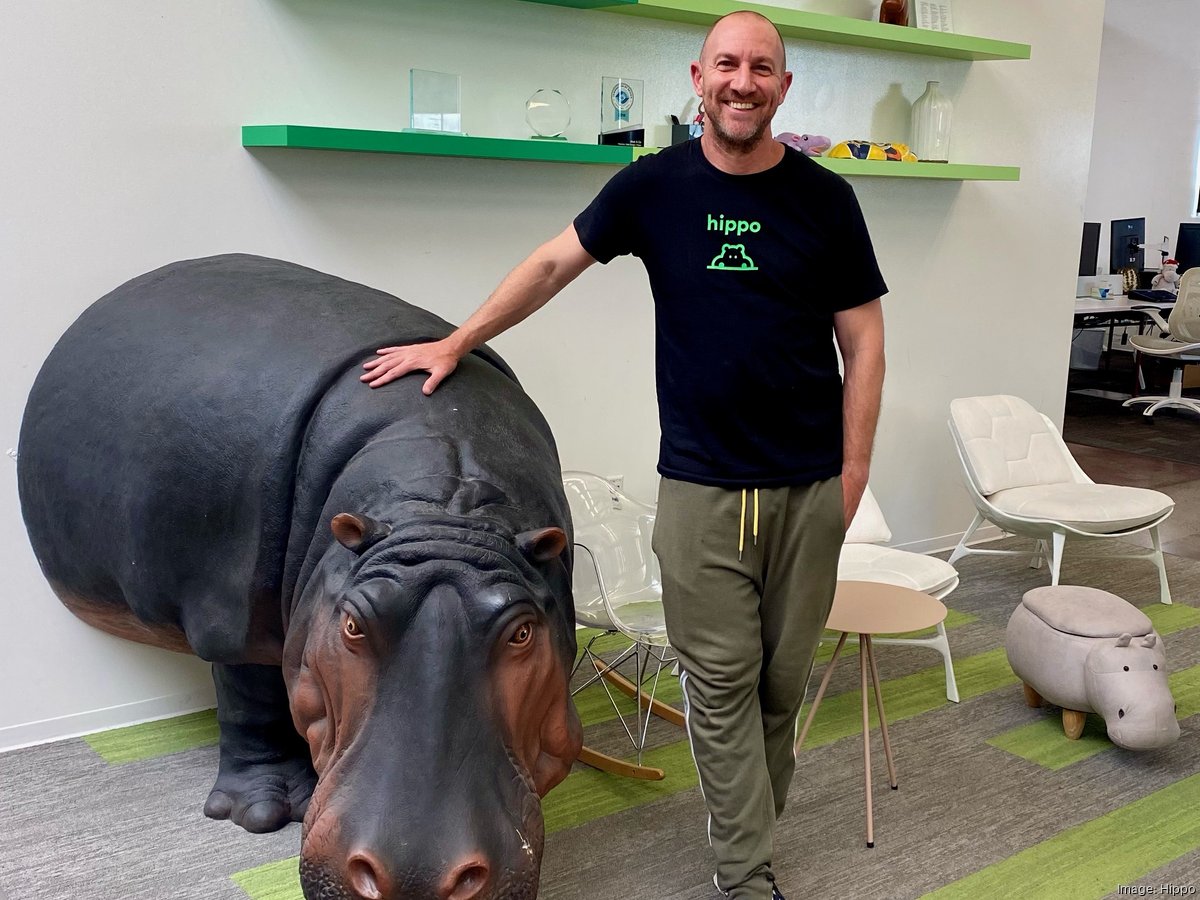
Hippo, which Wand co-founded with Eyal Navon in 2015, gave that question a different scale. Homeowners insurance had been on his mind since his consulting years. He returned to it after Sabi, when richer property data and more accessible software infrastructure made the prospect of starting a new business look more workable.
His concern was the whole customer experience: buying coverage, understanding it, and getting help when something happened. A home is complicated enough without its insurance becoming another household project. The appeal of a simpler transaction was easy to explain. Delivering one required more than making a form look pleasant.
Wand approached the unfamiliar industry by questioning experienced people, reading, attending conferences and obtaining insurance agent licenses. He asked contacts what they would build if they were starting again and which problems troubled existing executives. Curiosity had an itinerary. He was trying to earn enough confidence to act without acquiring so much reverence for established practice that action became impossible.
That preparation complicates the familiar picture of the outsider arriving with an obvious answer. Wand had earlier exposure through consulting and a father who worked in insurance. He still treated the business as something he needed to learn. The point of crossing an industry boundary was to bring a fresh question, then do the homework needed to ask it intelligently.
A career timeline, rather than a measure of financial performance.
A claim that never needs making
Hippo began selling homeowners policies online in 2017. Its proposition expanded beyond making the purchase easier. The company sought to help people look after their properties, including through smart home devices and home maintenance services. A water leak detected early offers a plain illustration of the ambition: trouble becomes more manageable if someone notices before the floor does.
In a 2020 interview, Wand described an insurance relationship that would continue between purchase and claim. The company could use technology to flag problems and help prevent damage, giving the customer a reason to hear from it before renewal. That was an aspiration about behavior, as much as a product feature. A useful message has to arrive at the moment someone can act on it.
The distinction became concrete during the California wildfires of 2018. Recounting the response the following year, Wand said Hippo used maps and aerial imagery to identify insured homes in threatened areas. Staff contacted customers and offered help with temporary accommodation, including arrangements for pets. He said the company preemptively filed claims for 80 percent of its customers before they contacted it.
That figure belongs to Wand’s account of that response, rather than a promise about every emergency. Its human significance is easier to grasp than its technology: someone facing an evacuation had one fewer call to initiate. Insurance usually becomes visible when something has already gone wrong. Hippo was trying to move the first useful conversation forward.
The customer test“Is this good for the homeowner or customer?”
Assaf Wand, 2018
A family policy inside the office
Wand’s description of Hippo’s working culture joined urgency to a clear place for family. In 2018, he talked about concentrating during work hours so employees could turn their attention to home when necessary. Insurance specialists, engineers and business staff shared a workspace. He described accessible leaders, all-hands meetings and weekly barbecues.
The combination makes sense for a founder who enjoys deciding whom he works with. A company selling help with domestic uncertainty has an obvious interest in understanding domestic obligations. For employees, though, a family-first claim is tested by schedules and decisions. It has to survive an inconvenient afternoon.
Wand’s question for changing established practices was direct: “Is this good for the homeowner or customer?” It is a useful sentence because it can interrupt a meeting. It asks people to identify who benefits from the proposed change. It also gives colleagues from different professions a common subject, whether their immediate concern is software, underwriting or answering the telephone.
The humor could extend to the product. Hippo worked on an Alexa Away Mode that played recorded conversations to suggest someone was home. The scripts included awkward family exchanges. Burglar deterrence had acquired dialogue. For a business concerned with what might go wrong in a house, it was an unusually comic acknowledgment of what already goes on inside one.
The bell, the handoff, the next chapter
Hippo began trading on the New York Stock Exchange on August 3, 2021, after combining with Reinvent Technology Partners Z. For Wand, the listing was a stage in building a lasting insurance business. In his letter that day, he linked the additional resources to smart home technology, prevention research and home services. He also stressed the need to combine insurance experience with technology.
Public markets added another set of expectations. By June 2022, when president Rick McCathron became CEO and Wand moved to executive chairman, Hippo’s share price had fallen sharply from its debut. A founder’s appealing account of an opportunity now sat beside the harder public assessment of results. The transition is part of the story, alongside the founding and the listing.
Wand’s own explanation of the handoff emphasized McCathron’s operational experience and their years of working together. As executive chairman, he intended to concentrate on strategic opportunities and long-term growth. In April 2025 he resigned from the board, ending a period of board service that had begun in October 2015. Co-founder and founding CEO remain accurate descriptions; the executive chairmanship ended.
What holds this winding career together is the attention given to a customer’s avoidable work. A bathroom fitting should come with instructions a person can follow. An insurance company should think about the homeowner before asking for another form. These are modest sentences with demanding consequences. Wand has repeatedly chosen businesses in which making them true requires a great deal of effort behind the scenes. Somewhere, someone still has to test the adhesive.
Continue the conversation
Interviews, writing and public records